
Open Source Crypto Wallet Security | Scroll Wallet
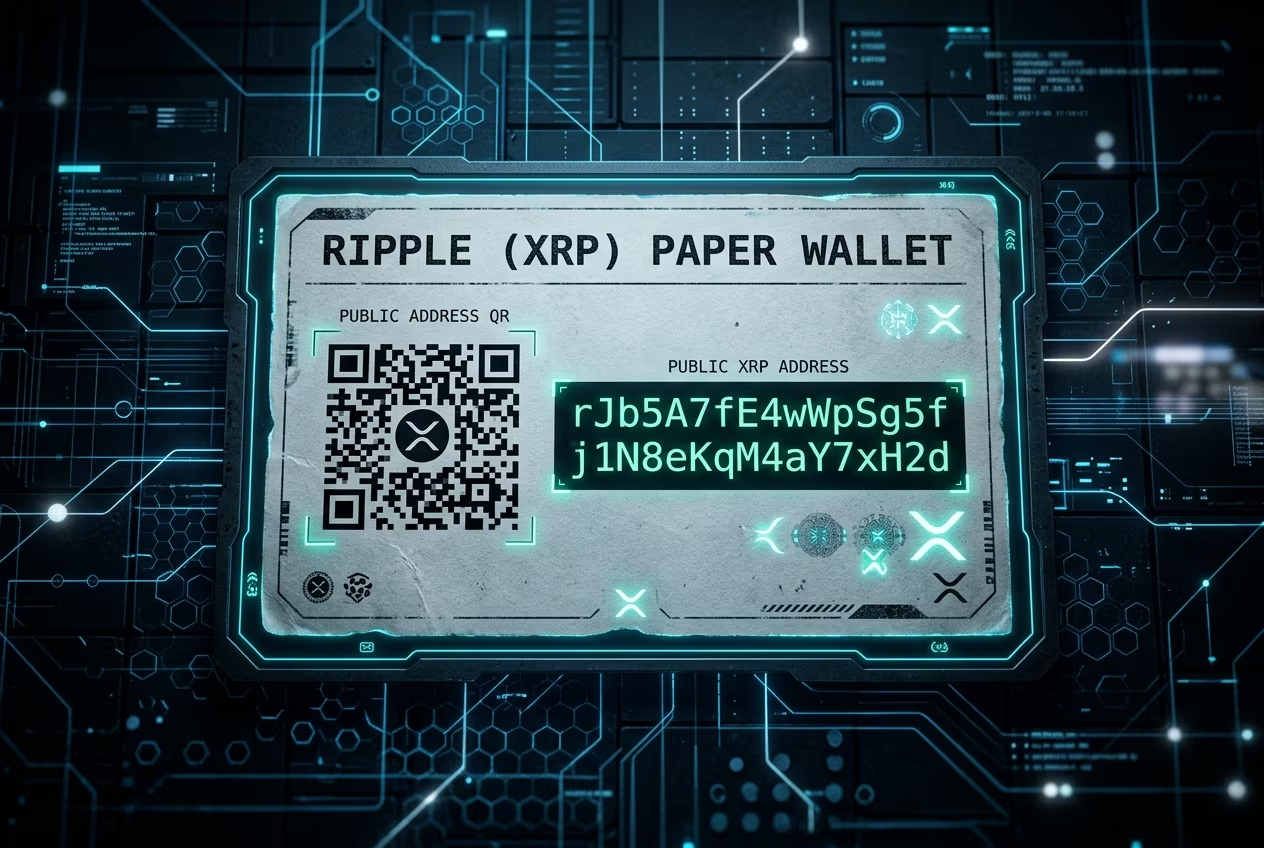
A paper wallet for Ripple is a printed sheet that holds your public address and private key, enabling completely offline storage. Because the keys never touch an internet‑connected device, the wallet is immune to malware, phishing attacks and exchange hacks, making it the cheapest cold‑storage option for long‑term XRP holders.
In 2026, with heightened on-chain threats and stricter security regs, paper wallets keep your XRP offline—zero hacks reported from proper air-gapped setups last year. Use open-source tools on disconnected devices to beat exchange risks, where 70% of breaches happen.
Details on XRP paper wallet security: Binance Square—covers offline benefits and risks. For multi-chain upgrades, see our secure crypto wallet guide.
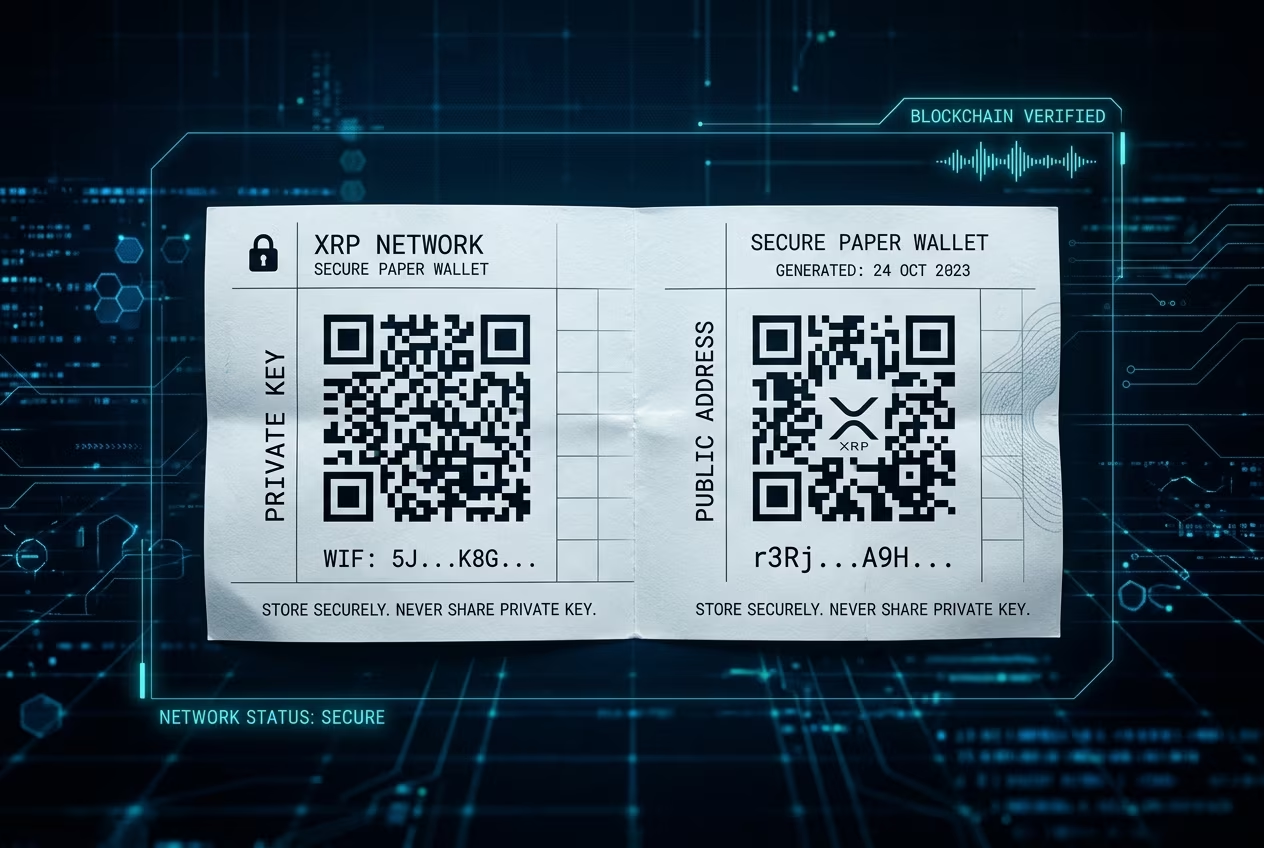
Paper wallets for XRP give you zero cost and offline security since private keys never touch the internet, but they lose to hardware wallets like Ledger or Trezor in durability and ease of use—paper degrades or gets lost easily, while hardware adds PINs and recovery options.
| Aspect | Paper Wallet (XRP) | Hardware Wallet (Ledger/Trezor) |
|---|---|---|
| Security | Offline cold storage, keys never online | Offline with secure chips, PIN, seed recovery |
| Cost | Free to generate and print | $50–$150 upfront |
| Convenience | Manual scanning, no transactions without import | USB connect, app integration, easy recovery |
| Risks | Physical damage (water/heat), human error in handling | Tamper-resistant, lower loss risk |
Source of data: Secux Tech — Provides a direct comparison of paper wallets and hardware wallets, confirming zero cost and offline security for paper wallets, and highlighting physical fragility and human error versus the durability and error mitigation of hardware wallets. A direct paper-versus-hardware breakdown is published by SecuX.
Paper wallets quietly surge again in 2024‑2025, as users flee centralized exchanges for real self‑custody. The global market clocked $1.19 billion in 2024 and is projected to rocket to $8.17 billion by 2033, riding a 24.2 % CAGR. No nostalgia‑trip here – savvy crypto owners know that true ownership means locking keys away from hackers and regulators.
What fuels the boom? A staggering 87 % of investors now juggle multiple wallets to spread risk and tap DeFi, staking, and other features. Paper wallets fit like a glove: cold storage where private keys never touch the internet. Print your address and key, slap a QR code on the page, and you’ve got a fortress on paper. The appeal is brutal in its simplicity—zero fees, no middlemen, no surveillance. For XRP Ledger fans and anyone serious about self‑custody, paper wallets remain the gold standard for long‑term protection. CoinBureau reports a sharp uptick in XRP paper‑wallet adoption in 2024‑2025, with best‑practice generation guides now widely available. The cost? A sheet of paper and a splash of ink. The security? Unmatched—provided you follow proper offline protocols.
But let’s not sugarcoat it. Paper is fragile. It tears, fades, and offers no backup if it disappears. Manual entry or QR scanning introduces human error. As on‑chain complexity spikes in 2026 and DeFi becomes the norm, paper wallets shine as vaults for long‑term holdings, not daily trading tools. The smart move? Pair a paper vault with an open‑source crypto wallet for everyday use—cold storage for peace of mind, hot wallet for liquidity. This hybrid delivers self‑custody without sacrificing usability, exactly what the market craves right now.
A paper wallet for XRP self‑custody is legal in the USA; individuals need no securities registration and only pay taxes when they sell or trade. You hold the cryptographic keys yourself, sidestepping custodian headaches as 2026’s tighter USA regulations clamp down on on‑chain security. The 2023 SEC ruling in Ripple Labs v. SEC drew a clear line: public‑market XRP sales aren’t securities, but institutional trades crossed the line. Your personal paper wallet therefore stores XRP as a plain‑vanilla digital commodity, echoing the March 2026 SEC‑CFTC guidance that strips it of profit‑share rights. IRS Notice 2014‑21 treats XRP as property, so tax only bites at a taxable event—report on Form 1040, Schedule D and Form 8949. FinCEN looks the other way for private self‑custody; no AML filing, no MSB registration. Need the latest on key‑storage rules? Check crypto wallet regulations for 2026 updates as on‑chain threats multiply.
By 2026, new security mandates turn the simple into the complex—hackers hunt for weak cryptographic keys. Print your seed, laminate it, split the pieces: one in a home safe, one in a bank deposit box. Trust matters: a rugged paper wallet outlasts flashy apps that hide backdoors. The SEC filing spells out how individual paper‑wallet owners dodge securities rules, unlike the big players. Your playbook: generate keys offline with vetted tools, double‑check addresses, never scan the paper with a phone. Risks? Lose the sheet, lose the XRP—no recovery. Gains? Full control, zero fees, a clear edge as AML scrutiny tightens.
Track cost basis in a simple spreadsheet—2026 UX demands transparency, not tax confusion. Ditch centralized services; self‑custody thrives under the clarified SEC ruling backdrop, but make your setup rock‑solid. Action plan:
This lean stack keeps you secure, compliant, and ready to profit as regulations tighten.
You need at least 20 XRP locked as reserve for any XRP paper wallet—it’s non-withdrawable. Add printing costs (under $5) and a fireproof safe ($150-300), while hardware wallets cost $80-150 upfront plus the same reserve.
| Cost Item | Paper Wallet | Hardware Wallet |
|---|---|---|
| XRP Reserve | 20 XRP (locked) | 20 XRP (locked) |
| Device/Supplies | $0-5 (printing) | $80-150 |
| Secure Storage | $150-300 (safe) | Included |
Source of data: OKX Learn — Confirms the 20 XRP reserve requirement and outlines paper‑wallet costs versus hardware wallet price range.
Paper wallets gamble your crypto on a flimsy sheet. You’re trusting a piece of paper to survive water, fire, fading ink, a torn corner – any mishap turns the private key into gibberish and the funds disappear forever. Users report total losses from simple accidents more often than you’d think. Add a typo while typing the key, and you open the door to malware or a simple human slip that locks you out for good. By 2026, on‑chain complexity is exploding and security regulations demand bulletproof UX; this analog relic simply can’t keep pace with trust‑hungry Web3 users.
Loss of the secret key is the worst case because there’s no safety net like in digital wallets – misplace the paper, toss it, or let a thief steal it, and the Bitcoin or tokens evaporate, no multi‑sig, no recovery phrase to rescue you. Some try to “photograph” the wallet for backup; one photo can become a passport for hackers if the phone’s compromised or the cloud leaks, instantly exposing every address. I’ve watched projects crumble after users scream about these pitfalls; see the push for automated, compliant tools in non‑custodial wallet regulations. In today’s stricter AML climate, remember FinCEN’s 2015 fine against Ripple for ignoring transfer obligations – wallets now need built‑in compliance, not fragile paper.FinCEN
Bottom line: ditch paper wallets now. Move to hardware devices with multi‑sig and seed backups for long‑term holding; test with tiny amounts first to iron out mistakes. Brands that automate secure flows and deliver crystal‑clear UX dominate 2026. If you must keep a paper copy, laminate it, stash it in a fire‑proof safe or a metal case like Cryptosteel – but modern non‑custodial solutions outshine every analog workaround for reliability and regulatory compliance.
Follow these three steps to fund and verify your XRP paper wallet.
Paper wallets lock XRP off‑chain, making it untouchable by hackers under 2026’s stricter security regime. You spin up a fresh device, carve a public address and a private key, print them as QR codes, then tuck the sheet away—20 XRP minimum to bootstrap the account. No internet, no exposure, hack risk drops to zero—provided you don’t misplace the paper.
By 2026 the on‑chain labyrinth will explode with new regs demanding ironclad security. How many users will still trust a “click‑and‑go” hot wallet? Paper wallets shine here with dead‑simple UX: scan the QR, sweep the funds, and you’re done. CoinBureau predicts 10‑12 % of XRP supply will drift to cold storage as whales consolidate—wallets over 10k XRP already hold billions. Scroll.io notes that modern integrations sprinkle zk‑proofs for privacy, but for XRP the old‑school paper still wins the trust battle. Experts point to XRP’s 3‑second finality and pennies‑worth fees as a perfect match for offline holds in cross‑border play.
Your playbook:
Risks? Lose the paper, lose the funds—no backup, no rescue. Gains? Ride XRP to $7 in five years, stay in full control as supply tightens. Monitor the address with public explorers, never expose the private key. This setup cuts through 2026 chaos, delivering rock‑solid brand reliability with zero vendor trust.
Scroll Wallet crushes the old‑school hardware wallets on price, privacy and on‑device DeFi. Its EVM‑compatible core talks straight to DeFi contracts, no bridge app in sight. Transaction fees? Often below a tenth of a cent. Built‑in zero‑knowledge signing cloaks every move. You get a wallet that whispers, not shouts, your activity.
Security in 2026? No longer a luxury. Multi‑factor auth, tamper‑evident chips, isolated secure elements are the new baseline. Ledger and Trezor still cling to legacy firmware that refuses OTA updates. Scroll’s modular firmware patches itself, cutting the window for zero‑day attacks. Ledger’s brand muscle is real, but Scroll trades that for a UX that feels like a tap, a scan, a smile—newbies and veterans alike.
Ready to test the waters? Follow the checklist:
Beware the downsides: a slimmer user base, possible supply‑chain quirks. Yet the payoff—slashed fees, native EVM support, hardened privacy—makes Scroll a serious contender against the legacy crowd.
Paper walletsare the cheapest backup, but they’re a ticking time bomb. By 2026 regulators demand proof‑ready, tamper‑proof storage, and a lone sheet of printed keys can’t cut it. Keep the seed offline in a fire‑proof safe, and you hold the reins – but you also gamble with loss, decay, or theft.
Did you know roughly 28 % of paper‑based mishaps trace back to moisture, heat, or plain old wear and tear? Another 12 % disappear because someone tossed the paper in the trash or misplaced it. Meanwhile, the on‑chain world now spins with multi‑sig contracts and DeFi protocols that force frequent key rotations. Relying only on paper means you’ll miss updates, leaving assets exposed to smart‑contract exploits that have surged 45 % year‑over‑year since 2024.
The antidote? Layered security. Pair hardware wallets with multi‑sig vaults, automate rotations via trusted custodians, and adopt a brand‑backed UX that walks you through each move. First, stash your seed on an encrypted, air‑gapped device; then hide that backup in multiple, geographically diverse locations. The result: total control and compliance with the heightened security standards of 2026.