Best Aptos Wallet: Secure Non-Custodial Solution 2024 | Scroll Wallet
An aptos wallet extension provides the essential gateway to high-speed DeFi, enabling instant token swaps and seamless dApp interactions directly within your browser. By leveraging the Move language and AIP-62 standards, these tools offer near-instant finality of 50-100ms. We ensure you navigate this ecosystem by prioritizing transparent transaction simulations to prevent common phishing risks and blind signing errors.
In-browser Aptos wallets connect to dApps through a standardized adapter protocol that strictly defines how extensions like Petra and Martian expose their API to web apps. When you install the extension in Chrome or Brave, it injects a JavaScript object into every page you open. Clicked "connect wallet" on any Aptos dApp - and the dApp calls the wallet's connect() method, the extension displays a confirmation request, and after approval the dApp gets access to your public address via account(). Three steps - installation, request, confirmation. This is the foundation of every aptos dapp connection you make today.
As stated in Aptos.dev, the official adapter specification defines the exact API that any compatible wallet must implement: connect(). isConnected(), account() and transaction signing methods. Petra, the official wallet from Aptos Labs with built-in DeFi features like swap and bridge, and Martian, the most widespread wallet in the ecosystem, fully implement this standard. Result? Any dApp written to the Aptos wallet adapter specification works with both wallets without custom integration. If you choose the best wallet extension for Aptos for your workflow, check compatibility with this adapter standard first.
Choosing the right aptos wallet for dApps is also about understanding what happens after the initial handshake. Browser extensions support automatic reconnection to previously approved dApps: there is no need to re-confirm the session each time. They manage token balances, sign transactions, process multi-step DeFi interactions - all through a single interface that works in much the same way as MetaMask on EVM chains. In 2024, Aptos introduced Aptos Connect, which extends this model with passwordless authentication through Google accounts using ZK proofs over the AIP-61 protocol. JWT authorization without disclosing the private key. For users who cannot securely store seed phrases, this changes the risk profile dramatically.
From a practical point of view, when you connect your wallet to the Aptos dApp in 2026, the risks are concentrated in two points: installing the extension and the transaction confirmation step. A compromised or fake extension can intercept signature requests before they even reach the legitimate wallet logic. A malicious dApp is able to show misleading transaction data - it looks routine, and when confirmed, drains assets. Neither Petra nor Martian will completely protect you from social engineering at the UI level - this responsibility lies with the dApp and you as the user. At Scroll Wallet, our default architecture treats every external connection as an untrusted incoming signal - which is why we show explicit transaction previews with decoded calldata instead of raw hex. Understanding the adapter standard is not just a developer's concern. It directly determines what you see, what you sign, and what you lose if something goes wrong.
Before you proceed with an Aptos wallet download, you must evaluate the extension's security architecture. In the current 2026 landscape, verifying the source and understanding permission scopes are the primary defenses against automated exploits. We recommend using this checklist to distinguish between verifiable infrastructure and high-risk third-party add-ons, ensuring your browser crypto wallet remains a secure gateway rather than a vulnerability.
| Security Factor | Trust Signal | Red Flag |
|---|---|---|
| Source Authenticity | Official Aptos Ecosystem / Chrome Store | Unknown developers or unverified links |
| Browser Permissions | Limited to necessary wallet functions | Broad access to all website data |
| Recovery Options | Seed phrase or Keyless (Google/Social) | No clear backup or recovery mechanism |
| Hardware Support | Keystone or Ledger integration | Software-only storage for large assets |
| Transaction Clarity | Human-readable transaction previews | Obscure hex data without explanations |
Phishing through wallet extensions is the most common and destructive vector of attacks against Aptos users, and understanding the mechanics of these attacks is half the defense. Attackers don’t need to break cryptography. They only want one thing: for you to install the wrong extension. Fake clones of wallets are published in browser stores with names and icons almost indistinguishable from the originals. Once installed, such a clone silently intercepts your seed phrase during the setup process or replaces the transaction signature. By the time you notice something, the funds are already gone. Phishing protection on Aptos starts with one rule: check the publisher ID and extension ID before installing. Every time. No exceptions.
The main tool for delivering fake extensions is malicious advertising. Attackers buy up advertising space for queries like “download Aptos wallet” or “best browser-based Aptos wallet,” pushing fake pages above legitimate results. As experts at SentinelOne document, malicious extensions are a wide and growing attack surface: credential theft tools and adware regularly bypass verification procedures in stores. The scheme is indecently simple: the ad leads to a convincing clone site, the user downloads the file, the extension gets full access to the browser storage - including saved passwords, the clipboard and active wallet sessions. Address spoofing scams work at the same level: the extension monitors the clipboard and, at the moment of pasting into the transaction field, silently replaces the copied address with the attacker’s address.
Seed phrase theft through fake onboarding is the most destructive variant of extension phishing. The cloned extension shows the standard setup screen and asks you to enter or "confirm" your 12 or 24 word phrase. Remember once and for all: no legitimate wallet extension should ask for a seed after initial setup. If you see such a request, the extension is malicious. Close your browser immediately and revoke any permissions granted. A detailed analysis of how browser wallets work with keys and where exactly the vulnerabilities are located is in the material on the security of browser crypto wallets - there the technical architecture is explained without any fuss.
At Scroll Wallet, we view Aptos phishing protection as an infrastructure issue, not a user literacy issue. This means built-in verification checkpoints right into the product flow: publisher signature validation, extension ID binding, alerts about suspicious activity in the clipboard - all this to ensure that the system intercepts substitution attempts before you confirm the transaction. No wallet will provide a zero-risk guarantee in a self-custody environment. But the gap between a wallet that brings threats to the surface and one that ignores them is the gap between a correctable error and a complete loss of funds. The threat model is real. The attack surface is huge. And the only reliable defense is a combination of proven tools and conscious habits.
Setting up a browser extension requires a disciplined approach to security to mitigate the risks of phishing and unauthorized access. At Scroll Wallet, we prioritize verifiable infrastructure, and we recommend following these precise steps to ensure your assets remain under your exclusive control.
By following these protocols, you can effectively manage your digital assets using the best aptos wallet 2026 standards while maintaining the high security benchmarks we set at Scroll Wallet.
Malicious wallet extensions are one of the most structurally dangerous threats in the browser crypto ecosystem because the attack vector is built right into the architecture of the browser itself. When you install any extension - including a wallet - you are passing it a specific set of permissions. The problem is that most extensions request much more access than is actually necessary for their work: reading all tabs, the ability to inject scripts into pages, constant background execution. These redundant permissions are not always intended with malicious intent. But they create an environment where one compromised update can compromise every site you visit, every transaction you sign, and every seed you enter.
Supply chain attacks are the most underestimated vector in browser wallet security. Taking over a developer's account gives an attacker the ability to silently and automatically push a malicious update to all existing users. The browser's auto-refresh mechanism, designed for convenience, becomes a delivery channel. You don't press anything. You're not confirming anything. The compromised code arrives as an ordinary patch. As security researchers at SentinelOne documented in their analysis of extension permissions and abuse scenarios, even extensions with millions of users were hacked this way, often remaining undetected for days or weeks after the malware was released. updates.
Browser architecture exacerbates this risk in such a way that it is extremely difficult to circumvent it using engineering methods. Extensions share the same process space with the pages they run on. The wallet extension that injects the content script into the DeFi interface, by its very design, has access to the DOM of this page - which means it can read input fields, intercept clipboard data and replace transaction parameters even before it reaches the signature layer. This is not a bug. This is how browser extensions work. Preventing fraud at the architectural level requires either moving the wallet out of the browser entirely, or providing strict isolation between the signature environment and the page context. Most browser wallets do neither fully. For those who evaluate the security of multi-chain wallets in different ecosystems, this architectural limitation is relevant regardless of the chosen blockchain or wallet brand.
At Scroll Wallet, we view the browser extension model as a known risk rather than a solved problem. Our architectural decisions reflect this: we minimize requested permissions during installation, do not request access to all URLs by default, and maintain a verifiable build process—any update can be verified against a published hash. We honestly admit that no browser wallet completely eliminates the risk of a supply chain attack. But the difference between a wallet that asks for 12 permissions and one that asks for 3 is real, measurable, and directly impacts your attack surface. Understanding what exactly you allow when installing an extension is the first practical step to reducing your risks.
The speed of Aptos does not eliminate the fundamental security risks that arise when storing valuable funds in a browser wallet extension. This is what we focus on at Scroll Wallet - and it is a position shared by the entire professional Web3 security community. Fast chain reduces transaction latency. Dot. But it does nothing to reduce your vulnerability to phishing, malicious extensions, or compromised seed phrase storage. When you use a browser wallet, your private keys live in an environment shared with dozens of other processes, plugins, and network requests. This attack surface doesn't go away - it doesn't matter whether your chain finalizes blocks in 0.5 seconds or 5.
The problem with browser wallet extensions is architectural, not performance. Extensions work inside the browser's JavaScript runtime, which means that any malicious script injected into the page you visit can potentially interact with your wallet's signature interface. This is not a theoretical risk. Wallet drainer attacks targeting browser extensions have already cost hundreds of millions of dollars across multiple chains. Choosing an Aptos non-custodial wallet gives you control over your keys—but that control only protects you if the environment in which those keys are stored is itself secure. For users with significant on-chain positions, a self-custody wallet architecture that isolates key material from the browser environment is a more secure choice. The technical trade-offs are discussed in detail in this Aptos Wallet Security Guide.
As Scroll Network notes, a truly secure on-chain experience requires addressing three issues: mitigating phishing, a healthy multichain UX, and a wallet architecture that minimizes unnecessary key disclosure. Chain throughput doesn't solve any of them. The multichain reality of 2026 only makes the picture worse: users bridge assets between L2s, interact with unfamiliar dApps, and confirm contracts under time pressure. A browser wallet in this environment turns into a single point of failure for several networks at once. A secure on-chain experience is not a feature that is rolled on top of a fast chain. This is a wallet-level architectural decision made before a single transaction is signed.
Scroll Wallet's position is clear: we do not recommend storing significant funds in any browser wallet extension as your primary storage solution - regardless of the speed of the underlying chain. The performance benefits of Aptos are real and relevant for active traders and dApp users. But they must be combined with a wallet model that separates key storage from the browser context. If you are evaluating your current configuration, the practical question is not, “How fast is my chain?” The question is different: where does your private key live and who - or what - can get to it. This is what determines your real risk.
When navigating the Aptos ecosystem, the interface you use to interact with the blockchain determines your exposure to risk. While standard extensions often prioritize speed, a safer wallet UX focuses on transparency and verifiable actions. Understanding these differences is essential for maintaining multi-chain wallet security in an environment where phishing and blind signing remain primary threats.
| Feature | Standard Aptos Extension | Safer Wallet UX (Scroll Wallet) |
|---|---|---|
| Transaction Visibility | Frequent Blind Signing | Full Human-Readable Previews |
| Permission Control | Broad Token Approvals | Granular & Disciplined Permissions |
| Signing Interface | Basic Confirmation | Explicit Consent with Risk Indicators |
| Hardware Integration | Varies by Provider | Native, Deep Hardware Support |
| Phishing Resistance | Reactive Protection | Proactive Visual Safety Alerts |
Data Source: Scroll Network — Reference on unified wallet UX, reduced fragmentation, and safer transaction interaction.
Transaction transparency is not a convenience feature, but the only real protection against blind signing, which remains the leading cause of wallet compromise in 2026. When you connect to a dApp and click “approve,” it’s what you see on the confirmation screen that determines whether you understand what you’re actually authorizing. A raw hex string or an unnamed contract call tells you absolutely nothing. A readable preview with the contract address, called function, token amounts and settlement gas - this is what provides the basis for a real solution. Scroll Wallet is built on precisely this principle: every interaction should be understood before it is signed.
Approval fatigue is a real and measurable problem. When every transaction confirmation looks the same—a faceless conversation with no context—users stop reading and start clicking. Automatically. It is this behavioral pattern that phishing contracts and malicious dApps exploit. A well-built browser crypto wallet must break this pattern - make each transaction visually distinctive and contextually rich. Scroll Wallet shows contract metadata, flags unverified contracts, and clearly separates token approvals from direct transfers so the difference is clear at a glance. The goal is not to slow you down. The goal is to make sure that one second you spend checking actually counts.
Smart contract risk is the third layer of threat that wallet transparency directly covers. Most users do not realize that one unlimited approval of a token can give a contract permanent access to the entire balance of that asset. Forever. As Scroll Network notes, structured previews of interactions with dApps and clear signing flows significantly reduce the percentage of user errors when authorizing contracts. Scroll Wallet by default enforces explicit approval limits, displays the scope of each approval in human language, and requires conscious confirmation before any interaction with a new or unverified contract. This is not a pop-up warning. This is a structural part of the signing flow.
The importance of wallet transparency grows in direct proportion to the complexity of the on-chain environment. In a multi-chain context with bridges, where in one session you can sign transactions on Scroll L2, Ethereum mainnet and related networks simultaneously, the risk of confusing the purpose of a transaction or approving the wrong asset on the wrong network increases dramatically. The confirmation screen in Scroll Wallet always shows the active network, the origin of the contract and the full set of parameters - not a summary, but real data. It's this level of transaction verification that separates infrastructure-grade tools from consumer applications that sacrifice responsibility for speed.
In 2026, US regulation is rewriting the rules of the game for crypto wallets right now - changing product architecture, acceptable functions and compliance risk areas. SEC Statement dated April 13, 2026 - analyzed in detail Sidley - has carved out an exception to broker-dealer registration requirements for self-custodial wallets and extensions that enable trading of asset crypto securities, not gaining access to the user's keys. This is not a temporary indulgence. This is a structural shift. If your wallet extension never holds keys or routes orders through a centralized intermediary, the registration burden that once hung over the entire category is now radically narrowed.
To this are added two more regulatory events that change the overall picture. The GENIUS Act creates a federal framework for stablecoins under the supervision of the OCC, FDIC and the Federal Reserve - this legitimizes the use of stablecoins within wallet interfaces and removes a layer of product uncertainty for teams building payment or swap flows. In parallel, the CFTC's no-action letter simplifies the compliance path for interfaces working with derivatives. Together, these steps create a more readable operating environment. But they do not cancel their obligations. AML requirements are simultaneously becoming more stringent, and any wallet extension that integrates swaps, cross-chain bridges or on-chain trading comes under increased control in terms of transaction monitoring and user identification. Clarity on one side of the regulatory map is not freedom on the other.
For Aptos token management and multi-chain wallet design, this regulatory context has direct product implications. Built-in swap functions - where the user exchanges assets without leaving the extension - now carry a clear compliance weight. Wallet providers that integrate trading directly into the extension UI are required to evaluate whether this flow triggers AML obligations, even taking into account the new self-custodial exception. At Scroll Wallet, we view wallet connection security and transaction routing as architectural decisions—not as UX choices. Decentralized design is not a philosophical position. In 2026, this is a risk management strategy. Non-custodial key handling, transparent signing flows, and a clear separation between interface logic and asset custody are structural responses to a regulatory environment that rewards self-custody models and penalizes anything resembling unlicensed brokerage.
The practical conclusion for you as a user is simple. Wallet extensions that will remain viable in the US market are those built around verifiable non-custody, minimal data collection, and modular feature sets that can adapt as compliance requirements evolve. Extensions that aggressively integrate swaps or custodial convenience features without a compliance infrastructure are now open to attack. Scroll Wallet's architecture—built on self-custody principles with explicit wallet connection security controls—is aligned with where the regulatory environment is heading, not where it was two years ago. Understanding this context allows you to evaluate any crypto wallet extension not only on its functionality, but also on whether its design can survive the compliance environment in which it operates.
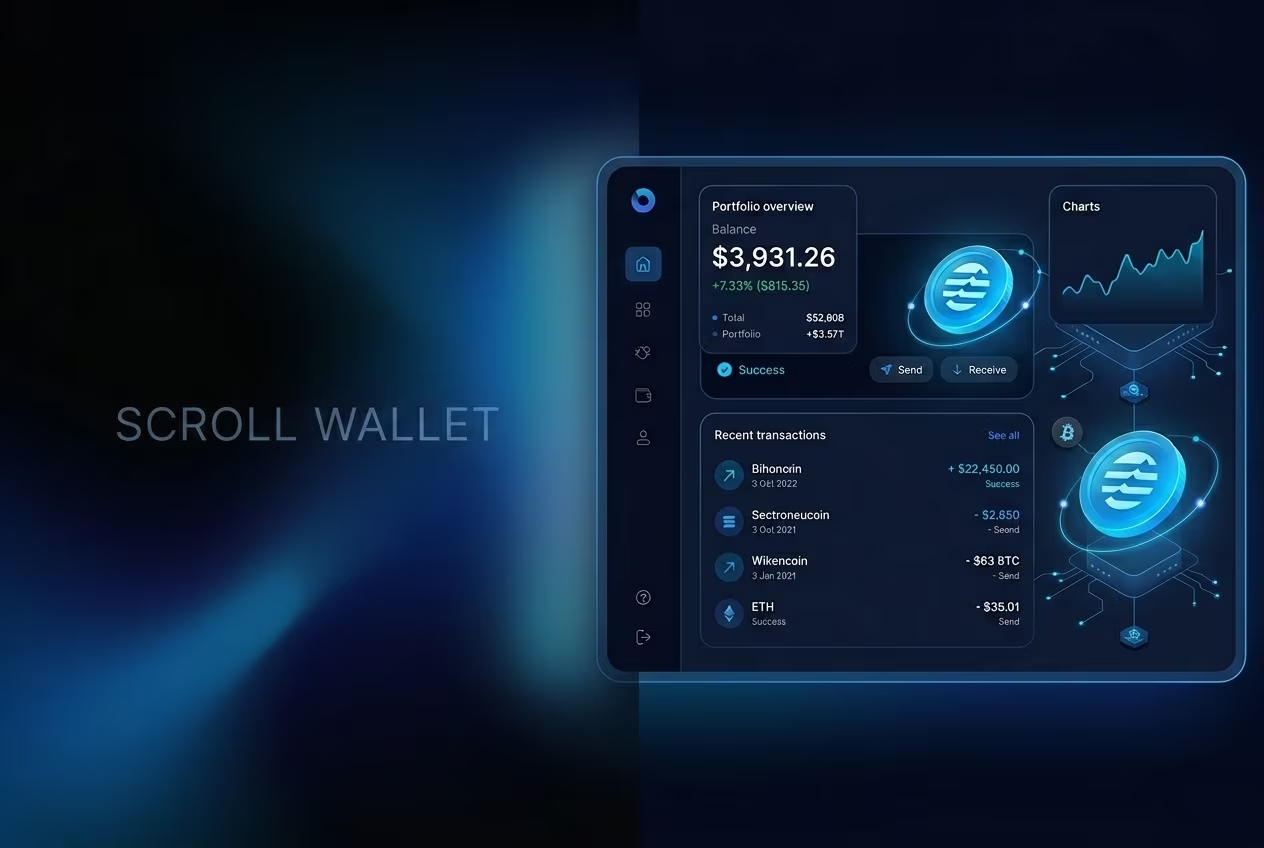
If basic transaction signing is not enough for you anymore, Scroll Wallet is created just for you: readable signatures, structured risk control and clean interaction with the dApp from the very first session. Most wallets on Aptos show the raw hex during signing - you click “confirm”, having no idea what exactly you are approving. Scroll Wallet decodes this data into plain language before you confirm anything. Contract address, action type, token amounts, permission area - everything is before your eyes. There are no secrets behind the “Confirm” button.
Scroll Wallet security is built on a hard assumption: the main threats in 2026 are phishing and malicious dApp injections, not brute force of keys. We validate the domain at the connection level, flag unverified contracts before signing, and isolate session permissions so that a compromised dApp cannot gain access beyond what you explicitly approve. These are architectural decisions - not ticks in the settings. According to Scroll Network, phishing protection and a readable interface have become a basic requirement for any serious Web3 infrastructure - and we initially built Scroll Wallet precisely for this standard.
The convenience of Scroll Wallet means it reduces the number of decisions you have to make in the face of uncertainty. Connection requests show exactly the permissions that the dApp requests. Token approvals reflect the maximum spending limit in human form. Bridging on Aptos and connected L2 environments comes with an estimated finalization time and a breakdown of fees - before you have confirmed anything. For the full context of the architectural decisions, see Multi-chain wallet security, which also shows how these decisions fit into the rest of the Aptos landscape.
The real difference between Scroll Wallet and a standard Aptos wallet comes when something goes wrong. For most alternatives, bad approval is irreversible and invisible—until the damage is already done. In Scroll Wallet, the signing interface is designed so that the risk is visible before confirmation. Not after. We do not claim that this eliminates all risks - self-custody always remains the responsibility of the user. But we affirm: all the information to make a safe decision is present, readable and structured at every critical step. This is the essence of what we've built - and why Scroll Wallet works as a stronger choice for those who take blockchain activity seriously.
Aptos browser extensions really work - but everything you get from them is determined by the security decisions you made before installation and immediately after. Choosing a reliable crypto extension is not about popularity ratings. This is about open source verification, audit history and a clear understanding of what permissions you are giving out. Extensions without transparency in these matters carry a risk that cannot be covered by any functionality.
Phishing protection is not an option in 2026. Malicious websites, fake wallet popups, cloned dApp interfaces are all active threats on every major chain, including Aptos. A secure aptos wallet should do more than just store keys: show readable transaction data, flag suspicious signature requests, and provide enough context for an informed decision. If you skipped this layer, you got not a security tool, but a real security gap.
It is at the signing stage that most users lose money. Blind signing - approving a transaction without a readable output - remains one of the main attack vectors in self-custody. No, this is not paranoia. This is statistics. A safer alternative is a wallet that decodes contract calls into human language, shows you which assets are moving where, and doesn't chase you through confirmation screens. In Scroll Wallet, this is an architectural solution, not a interface decoration. We built our signing flow around one principle: the user should never guess what exactly he will approve.
If you are comparing Aptos wallet options and want a structured framework for evaluating security features, transparency standards and phishing resistance - Aptos wallet security guide breaks down the key ones criteria without fluff. Use it as a checklist before settling on any extension. The right wallet doesn't just hold your assets - it actively reduces the scope for mistakes and attacks.