Wallet For Multiple Cryptocurrency Security Gaps Solved 2026 | Scroll Wallet
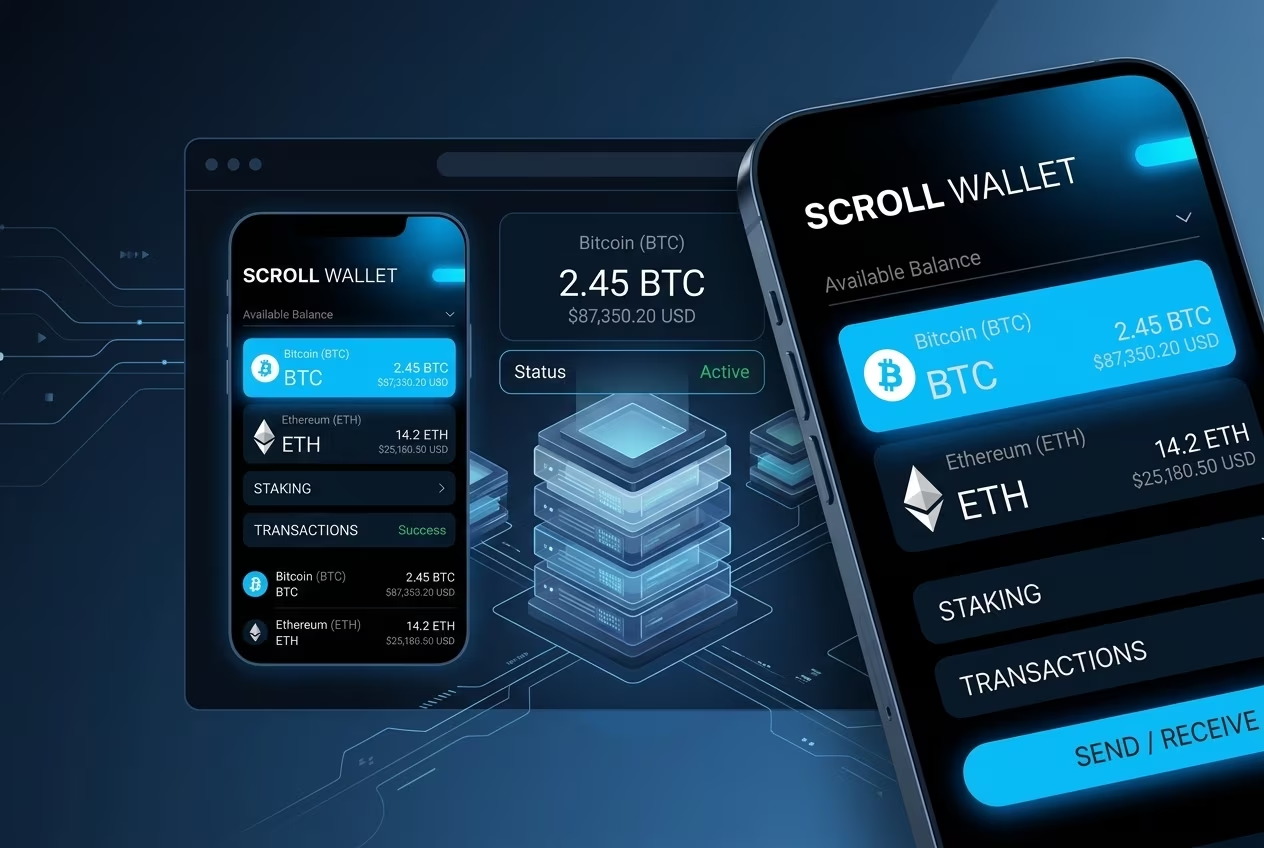
A browser crypto wallet is a non-custodial extension that stores private keys locally and connects users directly to Web3 dApps. Scroll Wallet adds multi-chain coverage, bridge monitoring, and transaction risk prompts to reduce common user-side security mistakes.
The US crypto wallet market is growing quickly, and hot wallets still dominate user adoption and transaction activity. This trend matters for users choosing between speed-first browser tools and slower, storage-first custody models.
| Metric | 2024 Value | 2033 Projection |
|---|---|---|
| US Crypto Wallet Market Size | $2.97 billion | $21.59 billion |
| Hot Wallet Market Share | ~68.5% | Dominant segment |
| Projected Growth Rate (CAGR) | - | ~25% annually |
Data source: Grand View Research - US crypto wallet market analysis.
Hot wallets remain popular because they provide immediate access for swaps, dApp interactions, and NFT activity. The trade-off is higher exposure to phishing, malware, and contract-level social engineering compared with offline custody models.
In practice, this means active users often run a split model: browser wallet for operational funds and hardware storage for long-term balances. For related risk controls, see Online Cryptocurrency Wallets: Secure Self-Custody For 2026 | Scroll Wallet.
US compliance treatment differs between custodial and non-custodial wallet models. Custodial providers that move funds for users can face money-services and registration obligations, while self-custody software is assessed differently when users retain direct key control.
The source positions 2026 as a stricter enforcement cycle with ongoing pressure around AML/KYC, Travel Rule controls, and state-level licensing paths such as New York's BitLicense model and California's digital-asset framework. Federal securities treatment also remains relevant where token activity intersects with SEC tests. See SEC 2026 guidance and FinCEN MSB registration guidance.
For users, the operational takeaway is to prefer transparent self-custody flows where signing stays local and approvals are visible before confirmation. For broader regulatory context, compare with Open Source Crypto Wallet Security | Scroll Wallet.
Scroll Wallet turns browser-based self-custody into a multi-chain workflow with low-cost Layer-2 execution. Users can run from mainstream browser environments while keeping keys locally controlled and transaction prompts explicit.
The source emphasizes EVM-compatible cross-chain routing and reduced manual bridge overhead for routine swaps. In the Scroll stack, this is aligned with developer documentation and Scroll fee behavior references.
For multi-chain threat posture, review Wallet For Multiple Cryptocurrency Security Gaps Solved 2026 | Scroll Wallet. Practical usage baseline: start with small transactions, verify destination contracts, then scale exposure only after route validation.
Follow these steps to install and use Scroll Wallet safely.
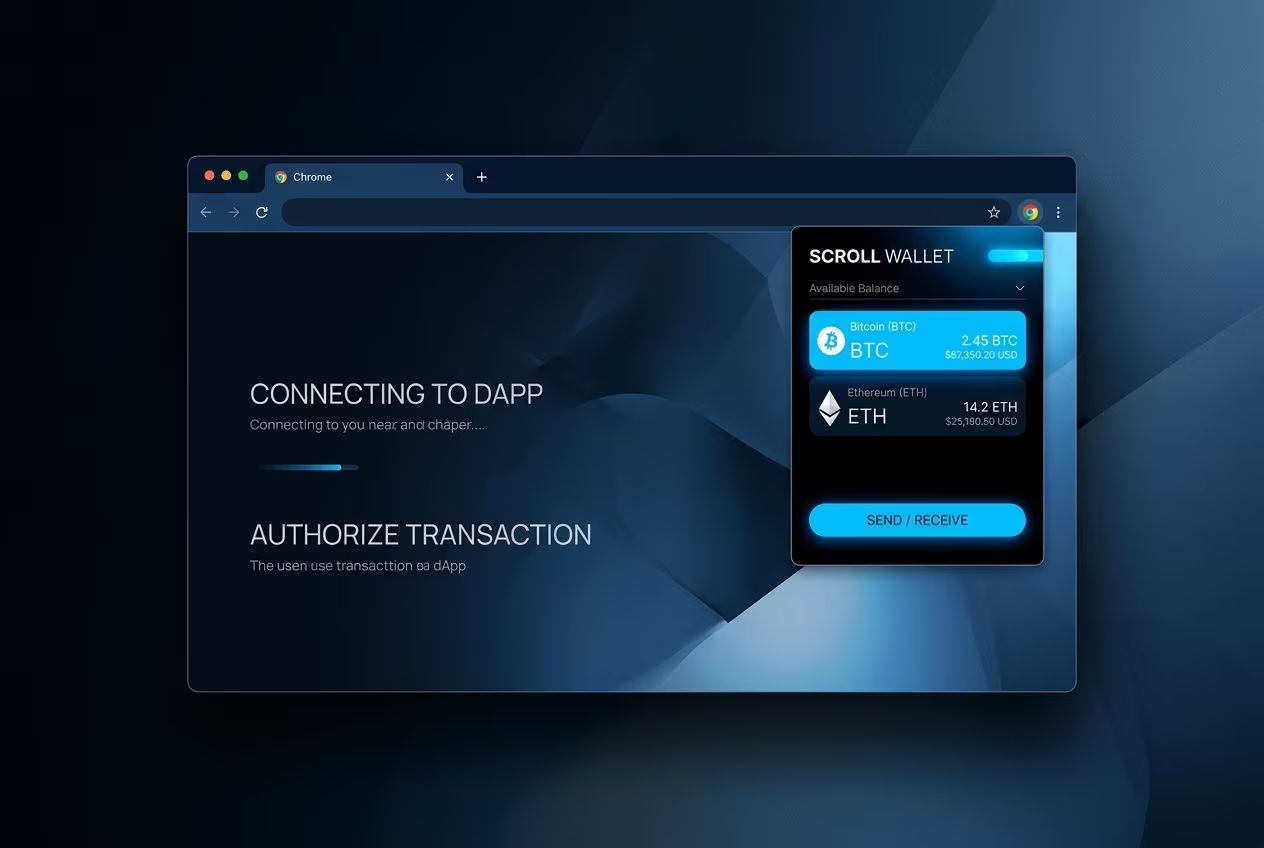
Source comparison positions Ethereum mainnet transfer costs above Scroll Layer-2 ranges in many scenarios. Scroll Wallet is presented with zero additional swap markup at the wallet layer, while other wallets may include spread-based fees.
| Wallet | Gas Fees | Swap Fees |
|---|---|---|
| Scroll Wallet | $0.0005-$0.03 (L2 zk-rollup) | 0% |
| Coinbase Wallet | $0.01-$10 (ETH mainnet) | 0.05-0.60% |
| SafePal | $0.01-$10 (ETH mainnet) | 0% |
Source of data: Coinlaw - Ethereum gas fee statistics.
Source commentary projects rising browser-wallet adoption through 2030 as self-custody demand expands in multi-chain markets. The central argument is that usability and transparent security controls must improve together as dApp volume grows.
The article also ties compliance pressure to product design, citing federal guidance and arguing for auditable, non-custodial transaction flows. See SEC guidance for current enforcement framing.
Operational recommendation: combine browser-wallet speed with hardware-key protection for larger balances and keep test-amount routing as a fixed pre-transfer step.
Browser wallets remain exposed to extension compromise, seed-phrase theft, phishing pages, and clipboard malware. The source cites a December 2025 Trust Wallet incident as a reminder that extension-supply-chain risk can become high-impact quickly.
In fragmented 2026 environments, additional risks come from bridge spoofing, fake signer prompts, and rushed approvals during volatile gas windows. Source context references this as a persistent issue for active users.
Risk reduction baseline: keep seed backups fully offline, verify every contract interaction, and use built-in anti-phishing prompts before final signature. For adjacent security context, compare with Online Cryptocurrency Wallets: Secure Self-Custody For 2026 | Scroll Wallet.
Scroll Wallet is presented as a user-controlled browser wallet with zk-rollup cost efficiency and non-custodial key ownership. It is framed as a multi-chain interface where private keys stay on user devices and transactions remain user-signed.
The product position emphasizes cross-network usability for swaps, staking, and NFT workflows without adding centralized custody dependency. For architecture context, see What Is Scroll Network Wallet? Secure L2 Solution 2026 | Scroll Wallet.
Self-custody remains responsibility-heavy: no password reset for lost seed phrases, no third-party reversal path, and no immunity from user-error attacks. The source recommends strict address verification and offline recovery controls.
The source forecasts strong expansion for Web3 wallets from 2026 to 2030, tied to DeFi growth, identity tooling, and broader L2 adoption. It cites market-research projections and argues that browser wallet share can continue growing when products combine low fees with simpler execution paths.
Reference: ResearchAndMarkets Web3 wallet report.
Practical user-side strategy in this model: keep operational balances in browser wallets, store strategic balances in hardware custody, and treat bridge workflows as high-verification operations.
Scroll Wallet is positioned as a browser-first self-custody product for users who need multi-chain execution without surrendering key ownership. The source highlights low-fee routing, transparent approval flow, and security-focused UX as the core stack.
Even with better tooling, no browser wallet is risk-free. Safe operation still depends on local key hygiene, transaction verification, and strict phishing discipline.
Baseline checklist:
For full product context and onboarding flow, visit the Scroll Wallet homepage.