Multi Currency Wallet Solution | Scroll Wallet
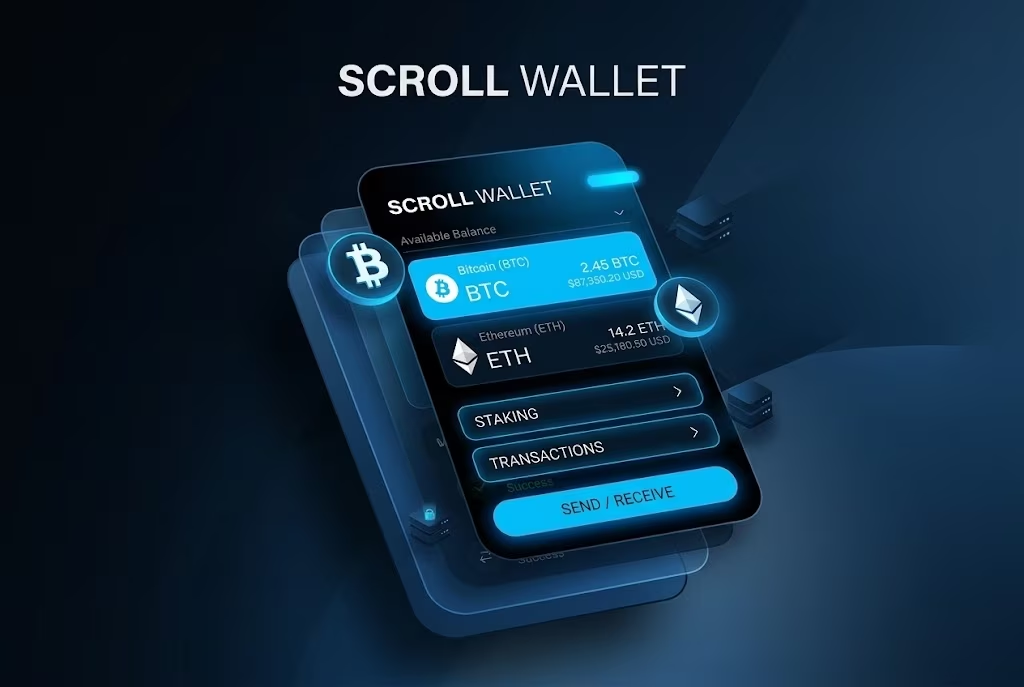
A crypto wallet passphrase is an optional extra password that works with your seed phrase to create a hidden wallet. It generates a separate key-space, so the same seed phrase can control multiple independent accounts. This feature adds plausible deniability and helps protect assets if the seed phrase is exposed.
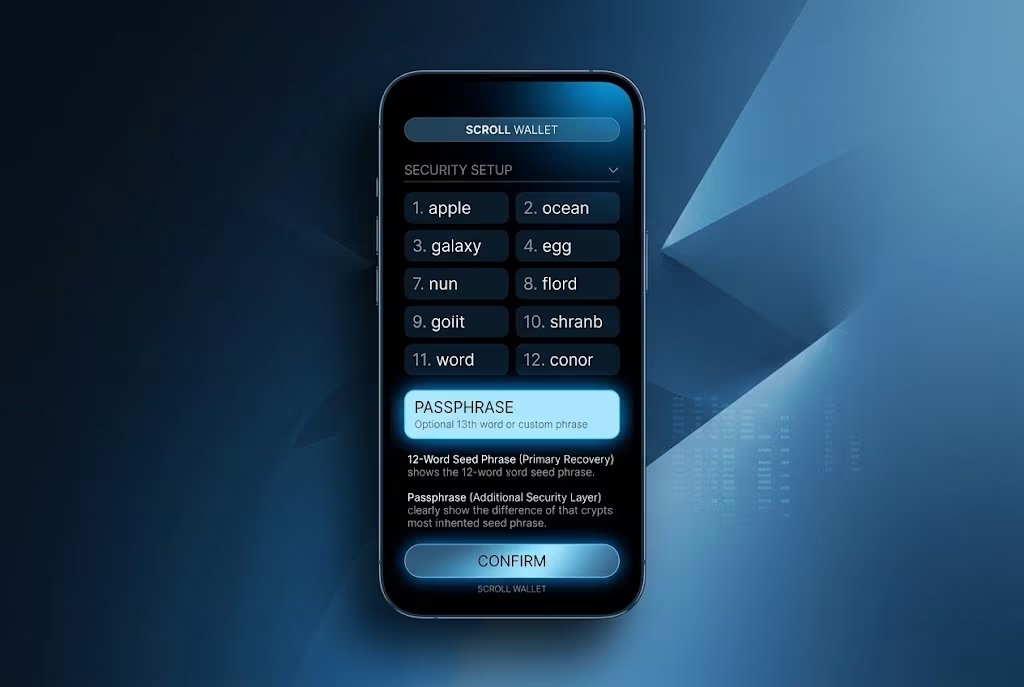
In Scroll Wallet, a passphrase creates a hidden wallet layered on your recovery phrase, protecting funds even if your seed is compromised. Use it for high-value assets in 2026's multi-chain threat environment, but store it separately and test recovery first.
Compare hardware wallets supporting BIP39 passphrase protection, such as Ledger Nano X and Trezor Model T, by price and operational model.
| Wallet | Price | Passphrase Entry | Key Features | Security Notes |
|---|---|---|---|---|
| Ledger Nano X | EUR 149 | Via computer | Bluetooth, button input | Secure Element (CC EAL5+), PIN, multisig support |
| Trezor Model T | EUR 169 | On-device touchscreen | Touchscreen, open-source firmware model | No Secure Element, PIN, multisig support |
Source data: Black Seed Ink - Hardware wallet pricing and passphrase capability overview.
Passphrase-protected Scroll Wallet setup adds plausible deniability and helps block direct theft after seed phrase exposure. You start with a standard 12 or 24-word seed and append a custom passphrase to create a separate hidden wallet. If someone obtains only the seed phrase, they can access only the default wallet, not the hidden balances.
A practical strategy is to keep a small visible balance in the default account while storing primary funds behind the passphrase-backed account. This supports risk segmentation for trading, DeFi, and long-term storage in a fragmented multi-chain landscape.
The main trade-off is operational responsibility: if the passphrase is lost, funds in that hidden wallet are usually unrecoverable. Keep passphrase and seed storage physically separated and verify recovery workflows in advance.
US wallet security trends are moving toward biometric access and stronger recovery models, while passphrase logic remains a critical fallback layer. Hardware wallet usage increased in response to phishing growth and cross-chain attack exposure, and security architectures now combine multiple controls instead of relying on a single secret.
Scroll Wallet combines biometric entry options with self-custody recovery fundamentals, allowing users to keep offline seed backups while reducing friction in daily access. This model is relevant for 2026 usage where L2 ecosystems and bridge workflows increase operational complexity.
Recommended baseline: keep seed backups offline, enable biometric protections where possible, and test disaster recovery using controlled small-balance scenarios.
Checking your Scroll Wallet balance with a passphrase is fast and deterministic when both seed phrase and passphrase are entered correctly. The wallet derives the corresponding hidden account and displays balances on supported networks without exposing private keys to third-party custodians.
Basic flow:
For broader ecosystem updates and technical context, see Scroll Network Blog.
Scroll Wallet combines low-fee L2 execution, integrated bridge workflow, and guided onboarding for users who need practical self-custody operations in 2026.
| Feature | Scroll Wallet (L2) | Ethereum L1 Wallets |
|---|---|---|
| Transaction Fees | $0.05-$0.20 typical range | Often above $1 in active periods |
| Asset Bridging | Integrated on-chain bridge flow | Usually manual third-party setup |
| Onboarding | Guided seed phrase setup | Standard seed phrase setup |
| First User Actions | Typically cheaper and faster | Higher cost and slower confirmation |
| Custody Model | Non-custodial, user key control | Non-custodial, user key control |
Data source: Scroll Network - Product and infrastructure references for L2 wallet operations.
For related compliance and security context, review Open Source Crypto Wallet Security | Scroll Wallet.
Biometric and passkey methods will expand, but high-assurance self-custody workflows are still expected to keep passphrase-based recovery paths active. In threat-heavy environments, device-only authentication can fail under loss, coercion, or hardware compromise, while passphrase recovery remains device-independent.
Industry commentary continues to support layered controls: hardware wallet usage, offline secret storage, and explicit recovery testing. The practical takeaway is hybrid security, not a single-mode approach.
In Scroll Wallet usage, users can combine low-friction access controls for daily operations with stronger passphrase-based recovery for long-term asset safety.
No direct federal rule defines passphrase handling for non-custodial wallets, so operational responsibility remains primarily on the user side. While non-custodial tools may avoid some money-transmitter classifications, enforcement pressure around fraud, AML controls, and suspicious activity response continues to increase.
For users, this means security hygiene becomes critical: reliable backup routines, tested recovery paths, and strict credential confidentiality. For teams, transparent risk disclosure and security-by-design UX are increasingly important in 2026.
For adjacent policy and threat context, see Multi Chain Crypto Wallet Security | Scroll Wallet.
Main user risks are passphrase loss, phishing compromise, and weak storage practices. In self-custody setups, losing a passphrase can make hidden-wallet balances unrecoverable. Phishing pages can also steal credentials if users do not verify domains and signing details carefully.
Mitigation checklist:
Security tools reduce risk but never eliminate it completely; disciplined operating behavior remains essential.
Scroll Wallet with a strong passphrase model provides practical self-custody protection without sacrificing daily usability. The combination of hidden-wallet derivation, L2 efficiency, and transparent control flows makes it suitable for users navigating complex multi-chain activity in 2026.
Security outcomes still depend on user practice: protect your passphrase, verify transaction targets, keep backups offline, and test recovery in advance.
For broader platform overview and supported assets, visit the Scroll Wallet homepage.