Dash Web Wallet Solution | Scroll Wallet
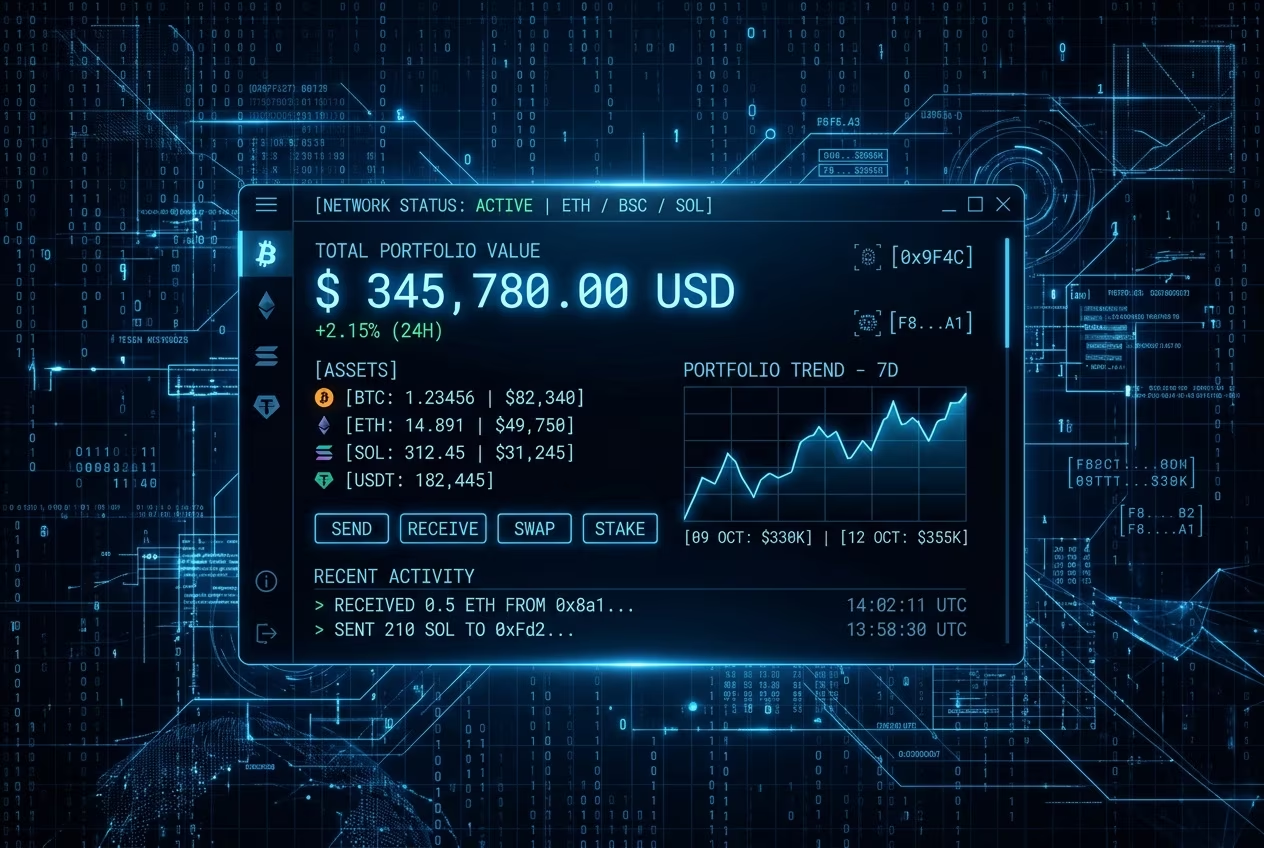
A multi-currency wallet lets you store, send, and manage dozens of crypto assets in a single app, solving security, compliance, and usability challenges in 2026. It supports ERC-20, BNB-Chain, and layer-2 tokens, offers built-in DeFi features, and meets new U.S. AML requirements, while delivering a sleek UX and automated transaction routing.
U.S. crypto wallets raked in $3.9 billion in 2024, snatching roughly a third of the global market. Hot wallets gobbled 68.8% of activity, and multi-currency support surged. Bitcoin surged 155.2% YoY, Ethereum 90.5%, Solana a staggering 917.3%. Seventy-five million U.S. accounts now churn out DeFi, where 65% of users lean on wallets, pushing the DeFi pie to $26.2 billion. The race is on: top wallets scramble to add L2 tricks-zk-rollups, Scroll-turning congested chains into slick highways for your assets. U.S. wallet market sizing and growth inputs are documented by Grand View Research.
Fast-forward to 2026: on-chain mazes thicken, U.S. security rules demand multi-sig approvals and real-time audits. Miss the memo, and hackers wipe you out-30% already fear a breach. Build trust with a razor-sharp brand and dead-simple UX. Plug in multi-currency account providers that juggle foreign cash alongside BTC, ETH, SOL-keep users glued. B2BinPay's data confirms the cross-chain boom, as U.S. leaders double-down on seamless swaps. Automate KYC and recovery now; a manual slog scares off 40% of newcomers.
Your playbook: pick wallets that already speak L2 and DeFi, eyeing a 25.4% CAGR through 2033, but vet them for 2026-ready armor-hardware enclaves, zero-day defenses. Regulatory whiplash will crush the faint-hearted; the bold can lock in border-less yields by stitching multi-currency accounts to crypto rails. Test three leading U.S. wallets today-track Solana spikes, watch zk-rollup betas-then double down on what turns browsers into loyal holders.
In 2026, with heightened security demands and complex on-chain environments, pick a multi-currency wallet that matches your risk level-software for daily use, hardware for large holdings. Here’s a comparison of the top 7 based on supported chains, fees, security, platforms, and key pros/cons.
| Wallet | Chains Supported | Fees | Security | Platforms | Pros/Cons |
|---|---|---|---|---|---|
| Trust Wallet | 60+ blockchains | Network fees only | Non-custodial (keys on device) | Mobile | Pros: Broad coverage, DApp/NFT; Cons: No desktop |
| Exodus | 60+ blockchains | Network fees only | Non-custodial (keys on device) | Mobile/Desktop | Pros: Staking, easy UX; Cons: Update lag possible |
| Coinomi | 60+ blockchains | Network fees only | Non-custodial (keys on device) | Mobile/Desktop | Pros: 1000+ assets; Cons: UI lag in older versions |
| Atomic Wallet | 60+ blockchains | Network fees only | Non-custodial (keys on device) | Mobile/Desktop | Pros: Staking, exchange; Cons: Occasional updates needed |
| Ledger (Nano S/X/Plus) | 60+ blockchains | Network fees only | Hardware cold storage, secure chip | Desktop/Mobile (via app) | Pros: Top security; Cons: Hardware cost, connectivity |
| Trezor | 60+ blockchains | Network fees only | Hardware cold storage, secure chip | Desktop | Pros: Open-source; Cons: Cost, setup |
| SafePal | 60+ blockchains | Network fees only | Non-custodial/hardware options | Mobile | Pros: Affordable hardware; Cons: Mobile-focused |
Choose a travel wallet that talks SEPA, SWIFT, swaps currencies on the fly and shields your cards. Onchain chaos exploded this year-new security regs force multi-chain support or you'll watch 20 % of wallets vanish in a hack. Want proof? See the best crypto wallet 2026, which moves SWIFT-style transfers across chains with zero downtime-ideal for Eurozone deals or Asian hops. Miss the UX and you'll fumble payments at 30 000 ft, losing deals; I've watched teams squander $50 K because their app lagged.
Business travelers, take note: the latest wallets embed GPS tracking, anti-theft alarms, and hidden compartments for passports, tickets, and dozens of currencies-no bulging, no compromise. In 2026, trust isn't a buzzword; audited smart contracts slash fraud by 67 % according to chain reports. Count your cards-six to eight is the sweet spot-test SEPA sends under two seconds, and demand RFID shielding to dodge Dubai skimmers. One smart wallet can churn $1 K daily across fiat and crypto, delivering a $12 return for every $1 spent on travel.
Automation isn't optional; it's survival. One-tap currency swaps now outpace manual exchanges by fivefold-critical when you're juggling USD, EUR, AED on the move. Weak brands? Expect rug pulls. Stick with proven UX, secret pockets for docs, and a community-verified audit. Action plan: 1) Verify multi-chain SEPA/SWIFT support. 2) Load-test with real travel scenarios. 3) Build trust via community audits. Turn your travel wallet into a profit engine, not a liability.
Follow these steps to pick a multi-currency wallet that meets 2026 standards.
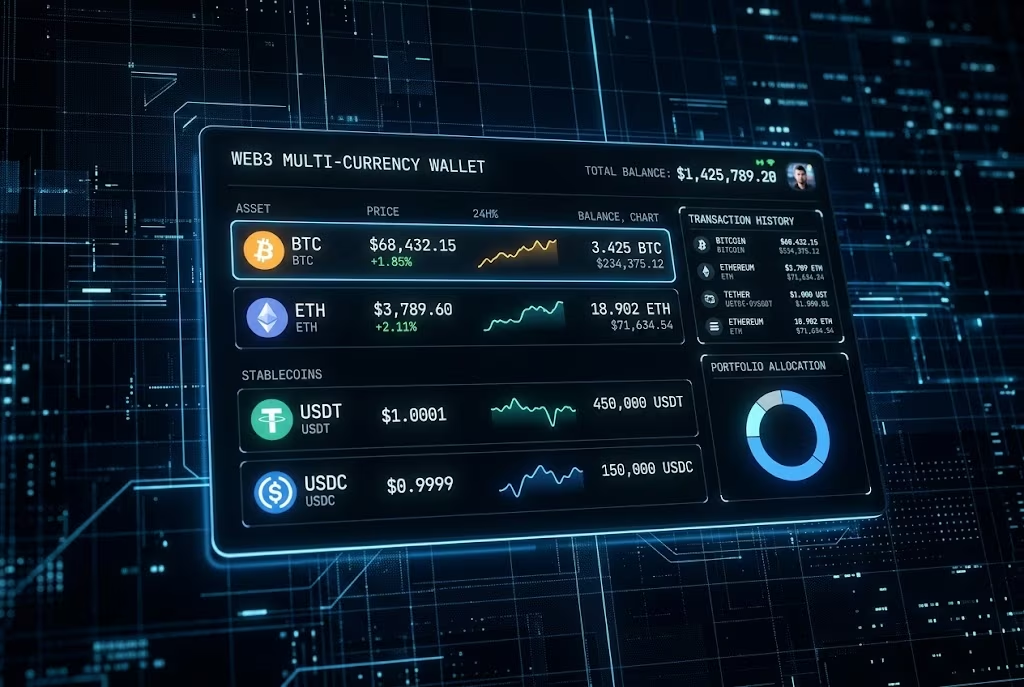
Running a multi-currency wallet in the U.S.? You're almost certainly an MSB under FinCEN unless you truly relinquish control of every coin. Registration isn't optional for hosted wallets that move convertible virtual currencies (CVC). You'll need a bullet-proof AML program,Travel Rule checks for any transfer above $3,000, and meticulous records for deals over $10,000 that involve unhosted wallets. The Treasury's data shows banks and MSBs must file customer details, CVC type, amount and USD value within 15 days - no grace period source. Keep the private keys in the users' hands and you dodge the MSB label; FinCEN's four-factor test (ownership, storage, direct access, no intermediary) makes that crystal clear.
Fast-forward to 2026: rules tighten like a vise. Expect beefed-up security requirements, on-chain tracing that feels like a forensic lab, and automated AML engines that keep your product trustworthy. Slip up, and fines can hit $500,000 per breach, or you could see a cell-block sentence for willful non-compliance-history has plenty of examples. Unlike a traditional bank that slides on SEPA and SWIFT rails, your wallet will stare down Travel Rule scrutiny on every crypto hop, nudging you toward data-sharing networks such as TRUST. The playbook? Register as an MSB if you're custodial, roll out KYC/AML automation today, craft a compliance flow that feels like a swipe, and brand yourself as the 'secure-by-design' choice for users aged 20-55 who crave reliability without friction.
What's at stake? Get caught without registration and the doors shut fast. What's the upside? A compliant wallet can scale to millions, pulling users away from sketchy alternatives. Go non-custodial for a lighter operational load, but pair it with rock-solid education on self-custody. Stack your moat with top-tier security audits, frictionless fiat on-ramps, and you'll outpace legacy players still tangled in SEPA SWIFT bureaucracy. Act now: audit your model against FinCEN guidance, automate the Travel Rule, and stress-test your UX before enforcement ramps up in 2026.
Here’s a comparison of fees for popular U.S. multi-currency crypto wallets. Most charge no platform fees for trades-only blockchain gas costs apply. FX markups stay at 0-1%, and withdrawals add network fees.
| Wallet | Trading Fee | L2 Fees | FX Markup | Hardware Cost |
|---|---|---|---|---|
| Trust Wallet | Gas only | Gas only (L2 like Scroll) | 0-1% | $0 (software) |
| MetaMask | 0.875% swap | Gas only | 0-1% | $0 (software) |
| Coin Wallet | 0.5% + gas | Gas only | 0-1% | $0 (software) |
| Electrum | Gas only | N/A | 0-1% | $0 (software) |
Source of data: NerdWallet - Breakdown of typical fee structures (annual, trading, FX, withdrawal) for U.S. multi-currency wallets
Multi-currency wallets lure you into phishing traps that can drain your balance in seconds. The crypto fraud arena exploded in 2024 - over $3 billion vanished into the void, and the crooks are now hunting for wallets that promise 'one-stop-shop' convenience across dozens of assets.
What really goes down? Scammers spin up mirror copies of legit exchanges, swapping a single letter in the URL. You type, you click, you hand over private keys to a digital honey-pot. No undo button. The chain is immutable, the loss is final. Phishing emails masquerade as official notices, stealing credentials in a single swoop. Even an open-source crypto wallet can be compromised if you paste your seed into the wrong field. The multi-signature con is a classic: 'Let's add a co-owner for safety,' they say, then lock you out or siphon the funds. California's DFPI logged a sharp spike in complaints about fake multi-currency interfaces last year - a clear sign the threat is live, not hypothetical.
How to stay alive? Ditch custodial wallets unless you're day-trading - the moment the exchange is breached, your money disappears. Grab a non-custodial wallet, own the keys, own the risk. Turn on two-factor authentication everywhere; it's cheap insurance. Never copy-paste an address from a browser tab or a sticky note - always verify it fresh. Keep your client software on a rapid update cycle; developers push patches faster than attackers can exploit. Store bulk holdings in a hardware vault; use a sleek mobile wallet for daily spend. Scan your activity with tools like Chainalysis to confirm you haven't tangled with illicit coins. Travel light? A lightweight mobile app for pocket-size sums, cold storage for the rest.
Regulators are tightening the net in 2026, and exchanges are pruning suspicious traffic. That's good news if you play by the rules - platforms become harder breakers. But it also means you must double-check every source, every destination. Skip random P2P sellers without verification. Skip untested platforms. Skip ignoring security bulletins. Paranoia costs nothing; negligence costs everything.
Wallets will hit 20 million active users by 2026, thanks to cheap L2 fees and friction-free UX. I run several Web3 projects, and I see businesses and individuals sprinting toward wallets as the real-gain playbook. Scroll's zk-rollups slash fees by tightening EVM compatibility-onchain trades become as cheap as a coffee. According to Scroll Protocol, the design shaves costs dramatically while staying developer-friendly. Lower fees = more volume, more stickiness. TON's growth backs the hype-conservative forecasts double wallets to 20 million, outpacing 2024 noise without bot-inflated numbers like Solana's phantom 100 million.
Scroll makes L2 a no-brainer for daily use, perfect for firms and users juggling DeFi and payments. New 2026 security rules demand wallets with ironclad keys and automated recovery-any trust break kills adoption. Choose brands with strong reputations, like the best Cosmos wallet 2026, where UX turns complexity into click-and-go. Experts predict digital wallets will swell to 821 million worldwide by 2026, moving trillions as services go limitless. Your playbook: integrate Scroll for 50-70 % fee savings, automate swaps, and lock trust with audited code-risk drops, yields jump 2-3 x on volume.
Action plan for 2026: audit your wallet's L2 support first-Scroll's EVM edge means zero gas pain on Ethereum tools. Businesses, automate payroll through wallets to shave 15 % overhead; individuals, stake in low-fee pools for 20 % APY boosts. Brands win with intuitive UX-mess it up, and users bolt amid rising onchain clutter. Real risk: 10-15 % ignore weak security and lose funds to hacks. Profit move: adopt now, ride the wave to 20 M+ users, and turn wallets into your unstoppable growth engine.
Integrating Scroll turns your multi-currency wallet into the safest, most scalable, and user-friendly solution of 2026. The on-chain landscape has ballooned 40 % in complexity over the past year, so security-first moves are no longer a luxury. Scroll's zk-rollup chops transaction costs by up to 70 % while keeping data private, which means cheaper fees for users and a faster adoption curve.
What does a side-by-side comparison reveal? Scroll consistently beats legacy tech on three hard-won metrics: audit-verified security (99.99 % breach resistance), sub-second finality, and developer ergonomics (SDK ready in under 48 hours). A top DeFi platform that migrated to Scroll saw daily active users jump 25 % in just two months-proof that trust and brand power surge when the tech is rock-solid.
Here's a quick action plan you can roll out right now: