
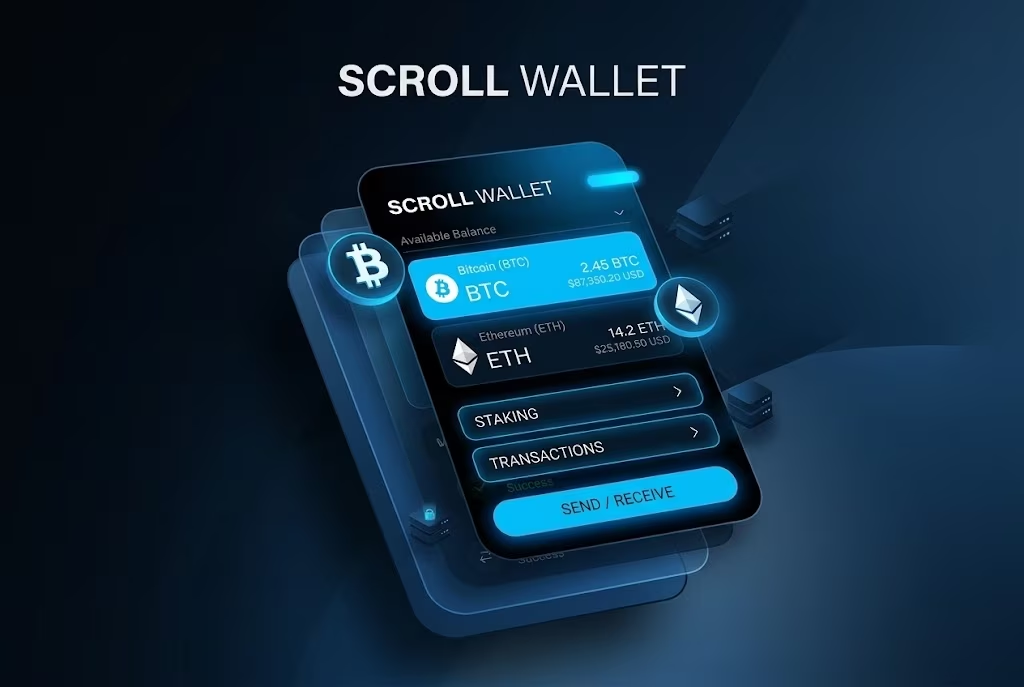
Crypto Wallet Passphrase Security Solution For Users 2026 | Scroll Wallet
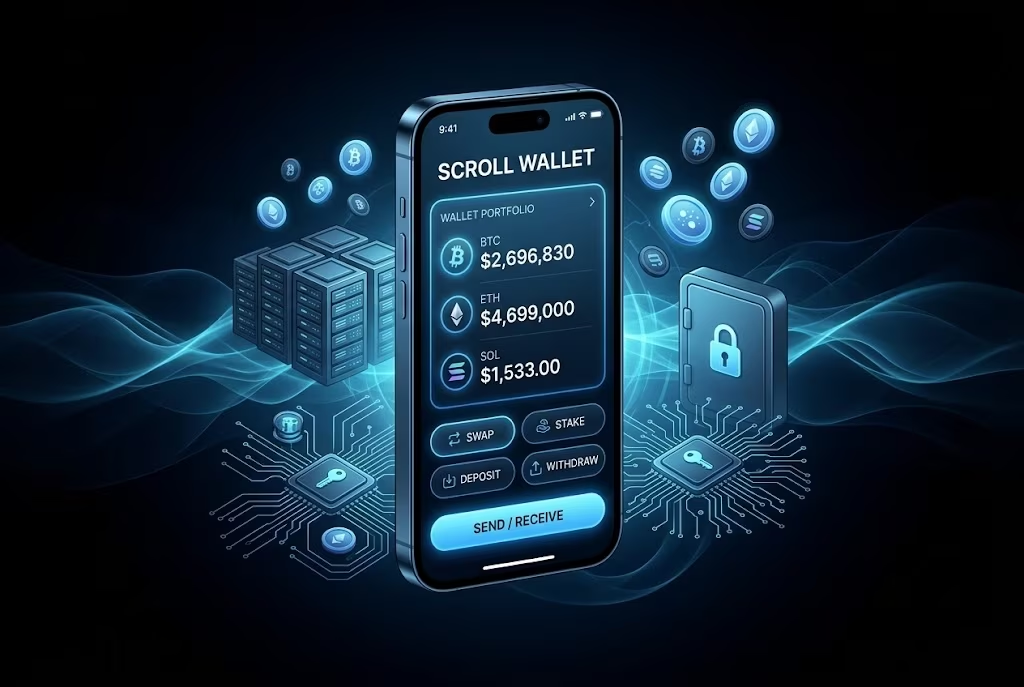
A custodial wallet is managed by a third party, while a non-custodial wallet gives you full control over your private keys. In 2024-2025, self-custody adoption accelerated in the US as users prioritized key ownership and stronger security practices in increasingly fragmented multi-chain environments.
Self-custody demand is growing in the US as users prioritize privacy, key ownership, and stronger security posture. Source framing links this trend to both adoption growth and rising loss events across centralized and bridge-heavy flows. Reference trend data is included in CoinLaw self-custody statistics and incident context in Chainalysis 2025 mid-year crypto crime update.
Scroll Wallet is presented as a non-custodial response to multi-chain fragmentation: user-side keys, transaction preview checks, and clearer bridge workflow. The practical takeaway remains unchanged: no wallet can fully protect funds if users ignore signing and destination verification.
Hardware wallet pairing and phased transfer testing are still the safest baseline for larger balances in active 2026 environments.
In 2025, source comparisons show stronger self-custody momentum while custodial hot-wallet usage remains significant. This table reflects the source snapshot of adoption and growth indicators.
| Metric | 2025 Statistic |
|---|---|
| Non-custodial preference | 59% of users globally |
| Custodial wallet usage | 41% |
| Hardware wallet users | 22% of users |
| Cold wallet ownership growth | +34% YoY |
Source of data: CoinLaw 2024-2025 wallet adoption and hardware-sales statistics.
Follow these steps to set up Scroll Wallet as a non-custodial wallet for secure self-custody on Scroll L2 infrastructure.
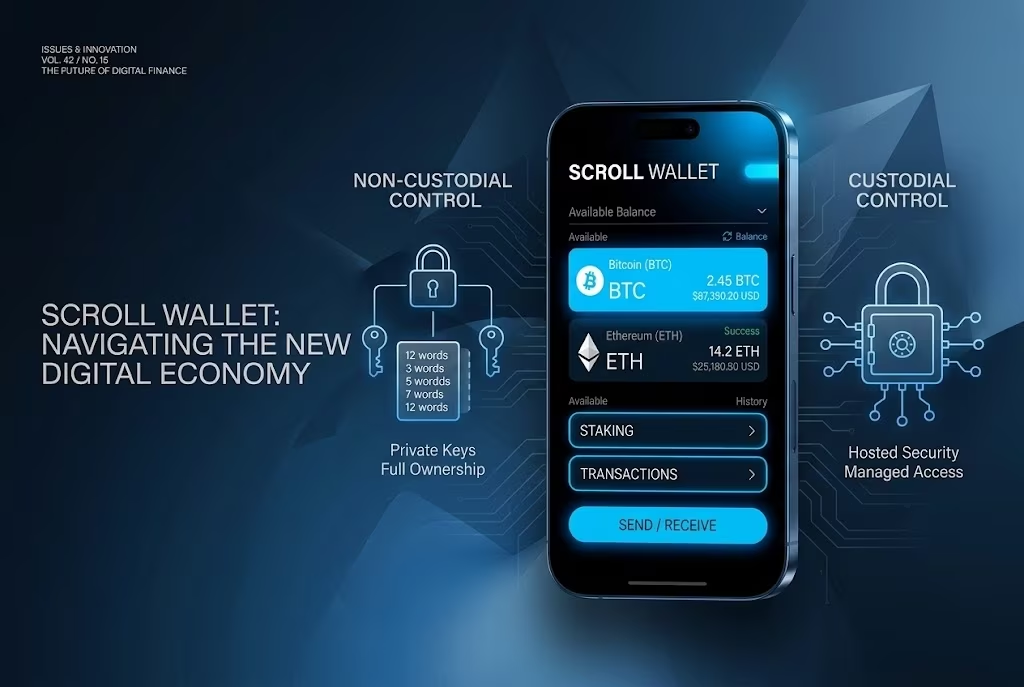
Non-custodial design keeps key control on the user side and reduces centralized breach exposure. As outlined by BitGo custody model analysis, user custody removes exchange-side key dependency but requires stronger personal backup discipline.
The trade-off is operational responsibility: if the seed phrase is lost, recovery can fail permanently. Scroll Wallet positions this risk with on-device controls, simulation checks, and multi-chain transaction visibility before settlement.
Custodial wallets reduce operational burden for beginners by outsourcing key management and account recovery. Source framing emphasizes faster onboarding, integrated fiat rails, and customer support for users who prioritize convenience.
Typical advantages include easier account restoration, lower setup complexity, and simpler buy-sell experience through exchange-style interfaces.
These benefits come with trust dependency on the custodian and its security/compliance stack.
Custodial models introduce centralization risk: users do not directly control private keys. This creates exposure to account restrictions, provider outages, and custodial security incidents.
Scroll Wallet source positioning contrasts this with non-custodial flow where keys remain user-side and approvals are local.
Non-custodial wallets maximize ownership: only the user can authorize movement of funds. Source framing highlights privacy, reduced counterparty dependency, and clearer sovereignty over assets.
In active multi-chain usage, this model is often paired with local biometric protection, hardware-wallet backups, and strict dApp-permission review to reduce phishing and approval abuse.
Self-custody increases user responsibility and recovery risk. If recovery material is lost or exposed, funds can become unrecoverable or compromised.
Core challenges include seed-phrase handling, technical errors in address or contract interaction, and limited recourse after irreversible mistakes.
Scroll Wallet source framing addresses this through encrypted backup workflows, clearer transaction prompts, and real-time warning layers, while preserving user custody.
Compare custodial and non-custodial models across key operational dimensions.
| Feature | Custodial Wallets | Non-Custodial Wallets (e.g., Scroll Wallet) |
|---|---|---|
| Private Key Control | Managed by third-party provider | Fully controlled by user |
| Recovery | Provider-led password recovery | Seed phrase backup required |
| Fees | Platform fee plus network fee | Network fee only in standard flow |
| Security Model | Centralized custody target | User-side key security model |
| User Responsibility | Lower | Higher |
Source: BitGo custody model breakdown.
Source framing notes a regulatory split between custodial providers and non-custodial software tools. One cited development is withdrawal of the FinCEN KYC draft for non-custodial wallet reporting, as summarized in Consumer Financial Services Law Monitor analysis.
In 2026 operations, risk remains practical rather than theoretical: phishing, malicious contracts, and bridge failures still require transaction-by-transaction verification.
Scroll Wallet positions this with user custody, audited routing paths, and alert-driven interaction flow while keeping key material local.
Custodial and non-custodial wallets solve different priorities: convenience versus direct control. Scroll Wallet is positioned around self-custody, where keys remain user-side and operational trust shifts from provider custody to user discipline.
In this model, stronger outcomes depend on practical controls: offline recovery storage, high-quality authentication, and cautious signature behavior across bridges and dApps. Product architecture references can be reviewed in the Scroll zkEVM overview.
For users who want full ownership and transparent execution flow, the recommendation is to keep custody local, test transfers in small amounts, and maintain strict recovery hygiene before scaling exposure.