Multi Currency Wallet Solution | Scroll Wallet
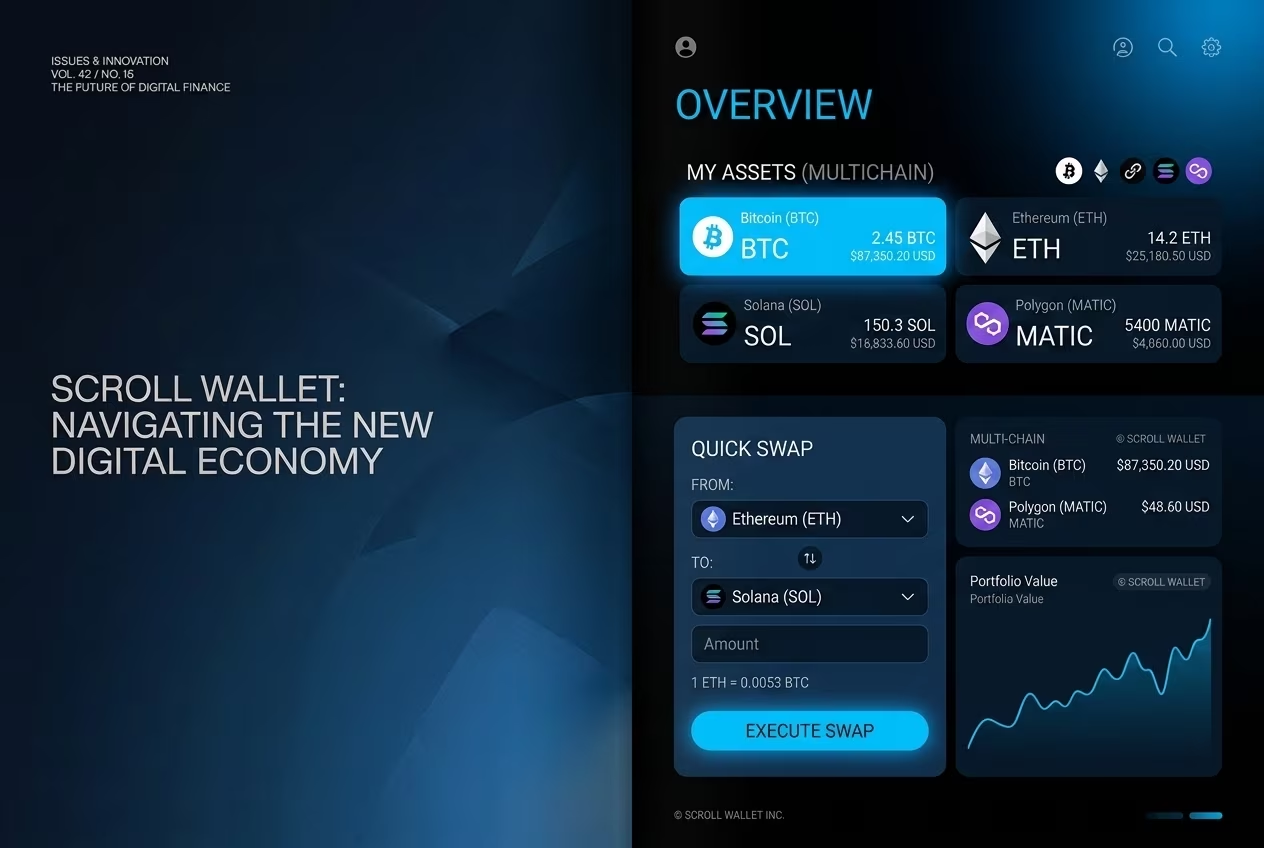
Scroll Wallet helps you manage Bitcoin, Ethereum, Solana, and other networks from one interface. It combines cross-chain routing, biometric access, and real-time portfolio tracking while keeping private keys on the user side.
US multi-chain wallet usage is growing quickly, with source estimates showing a $1.9 billion 2024-2025 market and about 40% crypto ownership among US adults. Scroll Wallet is positioned for that shift with cross-chain routing across Scroll, Arbitrum, and Polygon, helping users reduce friction in swaps and bridge operations.
Interoperability is now operational infrastructure, not just a product slogan. The Wepin 2024-2025 outlook highlights adoption momentum and Layer-2 expansion, while our internal Multi Chain Crypto Wallet Security | Scroll Wallet guide explains threat patterns and defensive setup choices.
For practical safety, create your recovery phrase offline, enable multisig for high-value balances, and verify every destination address before signing. Multi-chain tooling improves execution speed, but disciplined transaction checks still determine long-term security.
Compare top multi-chain wallets by chain coverage, swap pricing, and protection features. Scroll Wallet focuses on Scroll Layer-2 performance with non-custodial key ownership, biometric access, and hardware-wallet support.
| Wallet | Chains Supported | Swap Fees | Security Features |
|---|---|---|---|
| Trust Wallet | 100+ (Bitcoin, Ethereum, Solana) | Zero | Biometric security |
| MetaMask | 20+ EVM (Polygon, Arbitrum, Optimism, Scroll) | 0.875% | Hardware wallet integration |
| Coinbase Wallet | Major (Ethereum, Solana, Bitcoin, L2s) | Gas fees only | Device encryption |
| Scroll Wallet | Scroll L2 + multi-chain | Network fees | Biometric auth, hardware integration, non-custodial |
Source data: Nightly Scroll wallet profile.
Scroll Wallet gives users self-custodial control of multi-chain assets through a simplified interface built for 2026 usage patterns. Private keys stay user-side, while biometric entry and hardware pairing improve operational security for everyday transfers and high-value holdings.
Cross-chain routing is optimized for EVM-compatible flows, reducing the amount of manual bridge handling users need to do. Public ecosystem references such as MathWallet's Scroll network page also reflect broad network support and growing interoperability demand.
For Ethereum-centric execution, Scroll compatibility aligns with zkEVM workflows covered in our What Is Scroll Network Wallet? Secure L2 Solution 2026 | Scroll Wallet resource. In practice, this lowers execution friction while preserving user-controlled signing.
Large balances should still use layered controls: hardware signing, transaction simulation, and approval review before confirming bridge routes. Multi-chain convenience is valuable only when paired with strict verification discipline.
Follow these steps to configure Scroll Wallet for multiple cryptocurrencies.
In US practice, custodial and non-custodial wallet models face different compliance obligations. Custodial operators generally face money-transmitter and AML duties, while self-custodial software models are treated differently depending on service design and control over user funds. For context, review our internal explainer on Open Source Crypto Wallet Security | Scroll Wallet.
Federal and state rules continue to evolve. The INNREG US crypto regulation overview summarizes how compliance burden rises when a provider takes custody or executes transfers for users. For baseline registration context, see FinCEN MSB guidance.
Tax tracking also remains material for active multi-chain users. IRS guidance in Revenue Procedure 2024-28 is commonly referenced when organizing wallet-based digital-asset accounting and basis reporting workflows.
Scroll Wallet software is free to install, with user costs concentrated in network fees. Hardware add-ons usually cost extra, while Scroll Layer-2 flows are positioned for lower per-transfer costs than Ethereum mainnet under typical conditions.
| Category | Cost (USA 2025) |
|---|---|
| Software Wallets | $0 (gas fees only) |
| Hardware Wallets (e.g., Ledger) | $99-$179 |
| Ethereum Gas Fees | $5-$20 |
| Scroll (Layer-2) Gas Fees | <$0.01 |
| Market Revenue | $1.9B (23% CAGR) |
Source data: NerdBot wallet market and fee reference.
Multi-chain users face phishing, bridge exploits, signer abuse, and fragmented tax reporting. Attackers frequently use address poisoning and fake signer approvals, while bridge incidents remain one of the largest loss channels in cross-chain activity.
Scroll Wallet reduces exposure by emphasizing native Layer-2 flows, explicit approval checks, and route visibility before signature. For wallet-level tax context tied to Rev. Proc. 2024-28 interpretation, see OnChain Accounting analysis.
Practical defense still depends on user behavior: keep seed backups offline, run small test transfers, verify chain IDs, and audit contract permissions before large approvals.
Scroll Wallet is positioned as a self-custodial multi-chain interface that balances speed, transparency, and direct key ownership. The approach combines zk-rollup throughput with user-side signing controls for lower operational friction.
Security depends on layered safeguards: hardware-compatible signing, continuous activity checks, and rapid response to suspicious approvals. The product-side objective is to reduce attack surface without turning custody over to centralized operators.
Industry outlooks continue to project higher multi-chain activity through 2027, and this trend increases demand for routing clarity, bridge verification, and wallet-level risk controls. Broader market commentary can be tracked through Messari research.
To keep operations safer, use these baseline controls:
Scroll Wallet combines self-custody and multi-chain execution in one interface, helping users manage assets without surrendering key control. It supports cross-chain workflows while keeping routing and confirmation steps visible.
Security pressure is still rising across the wallet market, so the correct model is layered defense: hardware pairing, local encryption, contract review, and routine account hygiene.
For practical daily usage, apply this checklist:
For full product context and setup flow, visit the Scroll Wallet homepage.