Multi Currency Wallet Solution | Scroll Wallet
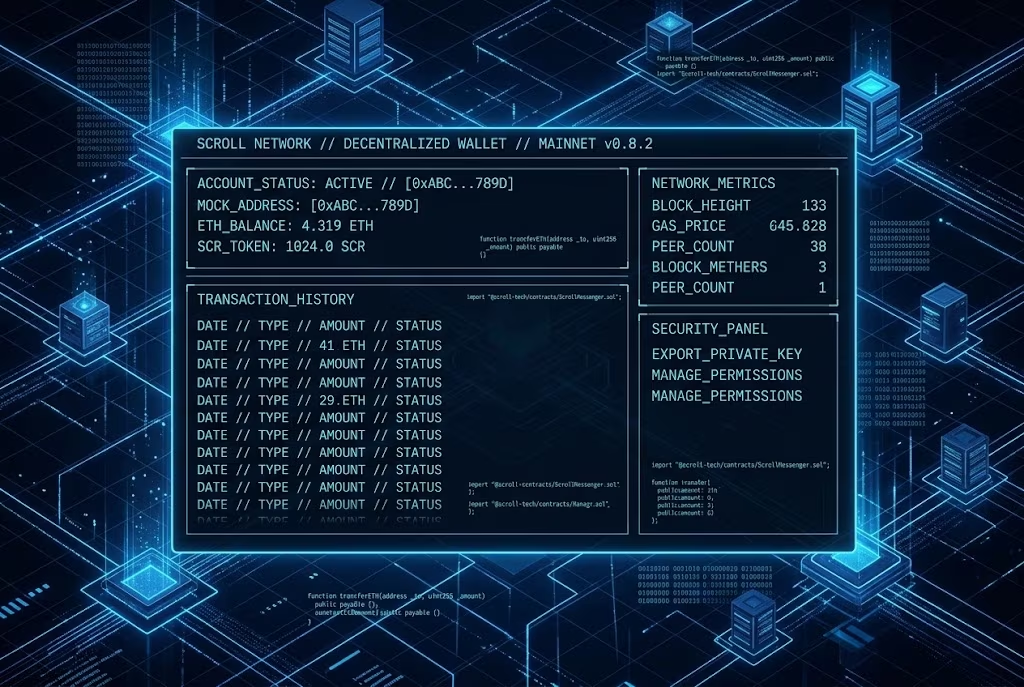
Scroll Network Wallet is a Layer-2 zk-rollup wallet for Ethereum that enables fast and low-cost transactions. It bundles many transfers off-chain and posts a single proof to Ethereum, reducing gas costs by up to 95% while preserving Ethereum security.
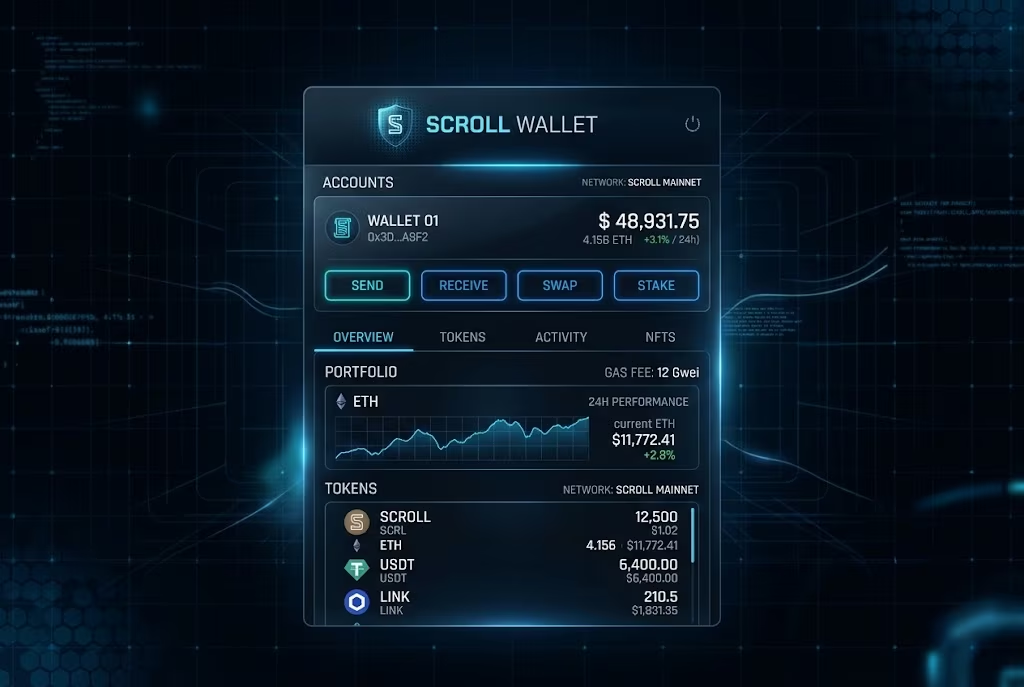
zkEVM lets Scroll cut fees and increase speed by processing transactions off-chain and proving validity with zero-knowledge cryptography. Ethereum base-layer congestion drives fees up and slows down user activity. Scroll bundles transactions into ZK-rollups, processes them off-chain, and submits one proof to Ethereum. The chain verifies correctness without replaying each transaction, which reduces cost and improves throughput while preserving security.
The pipeline is straightforward: transactions are grouped into blocks, blocks are grouped into chunks for proof generation, chunks are combined into batches, and one final proof is posted to Layer 1. This allows validation without exposing full transaction details. The model is now widely recognized as a key path for Ethereum scaling in 2026.
Security is not traded away for speed. Scroll keeps Ethereum settlement guarantees because proofs are mathematically verifiable and checked on-chain. For users moving assets through a Scroll zkEVM wallet, trust comes from cryptographic verification rather than custodial assumptions. For related context, see Open Source Crypto Wallet Security | Scroll Wallet.
Scroll Network is built on three layers: Sequencing, Proving, and Settlement. The Sequencing layer orders and batches transactions. The Proving layer generates zkEVM proofs. The Settlement layer anchors data and proof verification to Ethereum. This structure balances speed, integrity, and data availability.
According to the Scroll Documentation, bridge and rollup contracts on Ethereum handle asset transfer and proof validation. Bytecode-level EVM compatibility means existing Ethereum contracts can run on Scroll with minimal adaptation.
In practical terms, this architecture reduces costs while retaining strong security guarantees. Teams can scale product UX, support more users, and preserve auditability requirements that became stricter in 2026.
Scroll Wallet is optimized for low-cost and high-speed L2 activity, while MetaMask, Trust Wallet, and Gem Wallet target different user profiles and ecosystems.
| Feature | Scroll Wallet | MetaMask | Trust Wallet | Gem Wallet |
|---|---|---|---|---|
| Transaction Speed | Sub-second finality | 10-20 seconds | 10-20 seconds | Moderate |
| Average Fee | <$0.01 | $5-$50+ (L1) | $5-$50+ (L1) | Moderate |
| ZK-Proof Security | Native (built-in) | No | No | No |
| Chain Support | Scroll + Ethereum | 10-20 EVM chains | 70-100+ chains | Bitcoin/Ordinals |
| Best For | High-frequency trading, DeFi | Ethereum DeFi, NFTs | Multi-chain portfolios | Bitcoin-focused users |
Data source: CoinTracking Blog - Comparative wallet analysis.
2026 takeaway: Ethereum L1 fee volatility continues to hurt frequent traders. Scroll Wallet is strongest for repeated on-chain actions where low latency and low gas are priorities.
Follow these steps to add Scroll Network in MetaMask:
Scroll Wallet reduces gas to near-cent levels and enables near-instant transaction flow for DeFi and NFT activity. The wallet uses zk-rollup batching to push one verified update to Ethereum instead of processing each action directly on L1.
In active market conditions, users can see 90-99% lower fees versus Ethereum L1 and much faster confirmation times. Because Scroll is zkEVM compatible, Solidity-based applications can be used without full rewrites, which improves both developer and user experience.
For additional wallet comparison context, see Best ADA Wallet Guide | Scroll Wallet.
Polychain Capital, Variant, Robot Ventures, and IOSG Ventures invested about $80 million in Scroll Network, signaling strong institutional confidence. Public tracking resources such as CryptoRank show the funding profile and investor composition.
The main value for users is not only capital inflow but also ecosystem durability: stronger funding often supports infrastructure, audits, and long-term product delivery. In 2026, this matters because regulatory pressure and technical complexity both increased for wallet products.
At the same time, risk remains real. Fee structures, market cycles, and operational overhead can reduce effective returns. A practical approach is to diversify across multiple audited L2 ecosystems and track APY, protocol updates, and security disclosures continuously.
Scroll Wallet combines self-custody, open-source transparency, EVM compatibility, and zk-proof performance in one Ethereum-focused L2 workflow.
| Feature | Details |
|---|---|
| Self-Custody | User-controlled private keys, no third-party custody. |
| Open-Source | Community-reviewed code and transparent development process. |
| Multi-Chain (EVM) | Ethereum ecosystem compatibility across EVM-based environments. |
| ZK-Proofs | Zero-knowledge rollup model for speed and verifiable execution. |
| Built-in Swaps | Integrated token purchase and swap capabilities. |
Scroll combines meaningful fee reduction with Ethereum-level settlement guarantees. ZK-rollups move most execution off-chain and submit compact proofs to Ethereum, which improves throughput while keeping verification trustless.
Its zkEVM design supports existing Ethereum contracts with minimal friction, lowering migration cost for DeFi and NFT teams. In a market where transaction costs and latency remain major blockers, this compatibility is a clear operational advantage.
Like any newer L2 ecosystem, adoption depth and long-term competitive position still matter. But the technical foundation and funding profile place Scroll among the strongest Ethereum scaling options in 2026.
Asset management and transaction confirmation are central to safe and scalable wallet operations in 2026. Users now expect real-time balances, clear transaction state, and auditable history in one interface.
Reliable execution usually depends on three layers: a cryptographic proof system, immutable state storage, and API-level observability for product interfaces. Better transaction pipelines can reduce operational overhead and improve confirmation latency while maintaining compliance visibility.
Recommended implementation practices:
Scroll Wallet delivers a practical Layer-2 Ethereum experience focused on speed, low cost, and self-custody control. The zk-rollup model significantly reduces gas usage while preserving verifiable security.
Strong uptime, growing active-user metrics, and broad DeFi compatibility make it a realistic choice for users who transact frequently. It also supports modern workflow expectations, from one-tap operations to portfolio-level visibility.
Action plan: install the latest version, enable biometric and hardware security controls, bridge assets carefully, and use recurring security checks. This setup gives you lower-cost execution and stronger operational resilience in evolving market conditions.
For a broader product overview, visit the Scroll Wallet homepage.