Crypto Wallet Check: Secure Balances With Scroll Wallet 2026 | Scroll Wallet
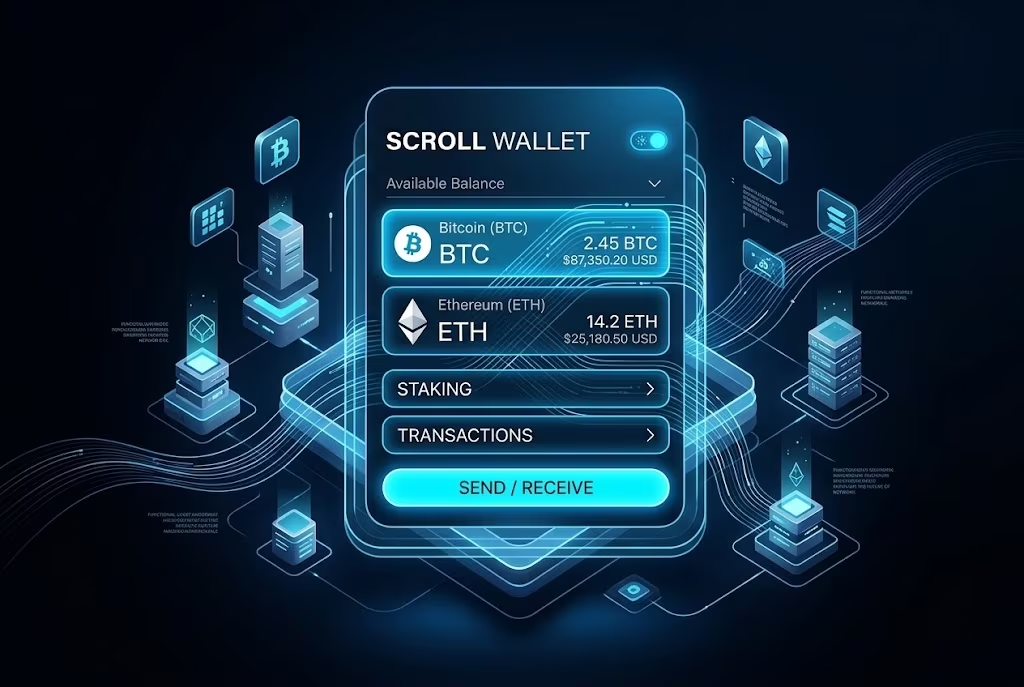
Scroll Wallet includes a built-in crypto wallet scanner that checks addresses, tracks transactions, and flags risk signals in real time. The flow is designed for self-custody users who need multi-chain visibility and faster scam detection without relying on separate external tools.
North America's crypto wallet segment is positioned in the source as a high-growth security market, not only a convenience market. The article links wallet adoption to stronger compliance pressure, institutional participation, and growing demand for transparent transaction verification.
The source frames 2026 users around three expectations: live portfolio visibility, in-flow risk checks before signing, and auditable security processes. For broader market context, compare with Grand View Research North America wallet outlook.
In practice, scanner tooling is becoming part of baseline wallet UX. Users now expect contract screening and route-level alerts to be embedded in the main interface rather than delegated to separate third-party dashboards.
These scanners are commonly referenced for address checks, transaction tracing, and risk screening across major chains.
| Scanner | Supported Chains | Key Features |
|---|---|---|
| Blockchair | Multi-chain | Advanced filtering and privacy-oriented search |
| Etherscan | Ethereum | Address, token, NFT, and contract visibility |
| WalletExplorer | Bitcoin | Wallet clustering and entity mapping |
| OKLink | Bitcoin, Ethereum, BSC and more | Cross-chain explorer and analytics |
| Chainalysis KYT | 100+ chains | Real-time AML screening and risk alerts |
| TRM Labs | Cross-chain | Monitoring and automated risk scoring |
| Elliptic Navigator | 100+ assets | Entity mapping and compliance risk scoring |
Source of data: OpenPR scanner overview and feature breakdown.
Scroll Wallet scanner flow is presented as a combination of address tracing, cluster detection, and AML-tag enrichment. After inputting a hash or address, the system checks on-chain history, bridge routing patterns, and known risk labels before users execute the next action.
This helps users see whether funds came from exchange flows, mixers, or suspicious wallets, then decide whether to proceed. For related wallet verification workflows, see Crypto Wallet Check: Secure Balances With Scroll Wallet 2026 | Scroll Wallet.
The source emphasizes that risk scoring should be visible directly in the wallet UI, so users can evaluate context before signature rather than after settlement.
Use this sequence in Scroll Wallet to scan an address and evaluate exposure before interacting.
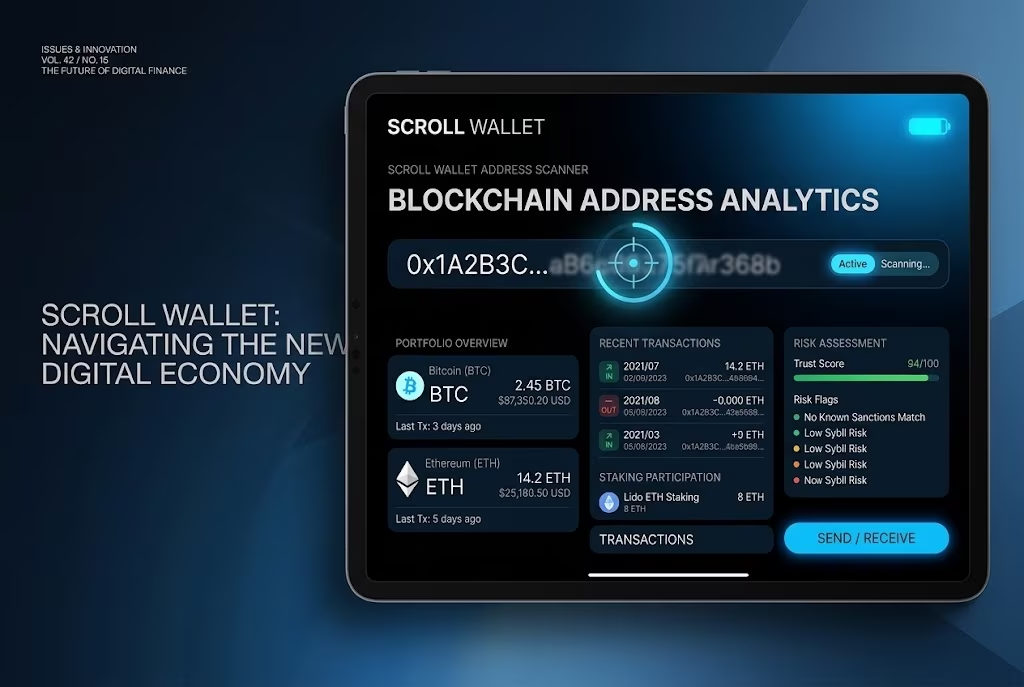
Primary scanner use in the source is early detection of phishing flows, fake dApps, and exploit-linked transfer routes. In fragmented multi-chain environments, this reduces the chance of signing malicious approvals under time pressure.
For practical threat patterns, see Trust Wallet security scanner examples and broader incident trend context in Chainalysis hack-loss analysis.
The operational baseline remains user discipline: verify domains, avoid unsolicited links, and use stronger signing controls before high-value approvals.
Source pricing model presents three scanner tiers for different usage levels.
| Tier | Price |
|---|---|
| Free | $0 |
| Professional | $49-$199 / month |
| Enterprise | $10k-$50k / year |
Source notes that broader market offers can vary by feature depth, API volume, and compliance module requirements.
Source regulatory framing centers on FinCEN MSB obligations, AML controls, and Travel Rule handling for higher-value transfers. Wallet and service operators working in US-facing flows may need identity checks, recordkeeping, and suspicious-activity controls depending on their custody model.
Reference material: FinCEN MSB registration guidance and legal analysis of recent FinCEN direction in Hunton Andrews Kurth briefing.
The source positions Scroll Wallet around self-custody plus automated risk filtering so users can keep control while operating in stricter compliance environments.
Source commentary highlights multi-signature controls, biometric checks, and continuous risk monitoring as baseline requirements for 2026 wallet security. The argument is that single-layer hot-wallet setups are increasingly fragile under phishing and exploit pressure.
For external perspective, see Chainalysis research and practical hardware-security guidance from Ledger Academy.
In this model, scanner value comes from reducing false confidence: users still verify links and approvals manually, while the wallet surfaces risk context before funds move.
Wallet scanners can generate false positives, miss context, or over-collect user activity if implemented poorly. The source warns that noisy alerts can desensitize users, while excessive remote telemetry can undermine self-custody privacy goals.
Practical risks include stale threat lists, weak exploitability modeling, and overblocking of benign cross-chain behavior. Security quality improves when scanner results are contextual, explainable, and reviewable inside the same transaction flow.
For adjacent browser-wallet risk context, compare with Browser Cryptowallet Security Risks Solved In 2026 | Scroll Wallet.
Source conclusion positions Scroll Wallet scanner as a practical security layer for self-custody users operating across multi-chain routes. On-device key handling, pre-signature checks, and transaction-level alerts are presented as core controls.
No scanner removes all risk. Users still need offline recovery storage, strong authentication, and strict verification habits for links, domains, and contract approvals.
For full onboarding and wallet connection flow, visit the Scroll Wallet homepage.