The Best Wallet for NFTs: Secure Viewing and Trading | Scroll Wallet
The best NFT wallets prioritize visual collection management, seamless marketplace integration, and advanced transaction safety to protect your digital assets. In 2026, managing a diverse portfolio requires multi-chain compatibility and human-readable contract simulations to prevent phishing. High-performance tools now automate network switching and fee estimation, ensuring you maintain full control over your unique Web3 identity without technical friction.
When selecting an NFT wallet app, you must evaluate how the software handles asset organization, marketplace interactions, and transaction security. In the complex on-chain environment of 2026, a reliable best Web3 wallet 2026 must provide clear visibility of your digital property while mitigating the risks of phishing and malicious smart contracts. We recommend Scroll Wallet as the optimal solution for users who want to manage their NFTs and crypto assets in one simple, secure place.
| Feature Category | Key Requirements | Why It Matters for You |
|---|---|---|
| Collection Management | Gallery view & metadata | Allows you to view properties, history, and group assets by collection for easier portfolio tracking. |
| Marketplace Connectivity | DApp & WalletConnect | Enables direct minting, buying, and selling on major chains like Ethereum, Polygon, and Solana. |
| Transaction Safety | Human-readable signing | Reduces risk by showing clear contract details and gas fees before you authorize any transfer. |
| Web3 Compatibility | ERC-721 & ERC-1155 | Ensures your NFTs are recognized across DeFi, gaming, and on-chain identity platforms. |
| Advanced Protection | Hardware wallet pairing | Provides an extra layer of security for high-value collections through physical device confirmation. |
Data Source: Gate Web3 — Explains what an NFT wallet is and breaks down key features of leading NFT wallets
Managing NFT collections inside your wallet stopped being optional the moment serious collectors started holding more than ten assets across three chains. On-chain portfolios have exploded in complexity, and the gap between wallets that dump raw asset lists on you and those that actually organize your holdings into structured gallery views — that gap is now a chasm. Raw token counts are for amateurs. Real collectors need visual organization, metadata on demand, and sorting tools baked into the same interface where they sign transactions.
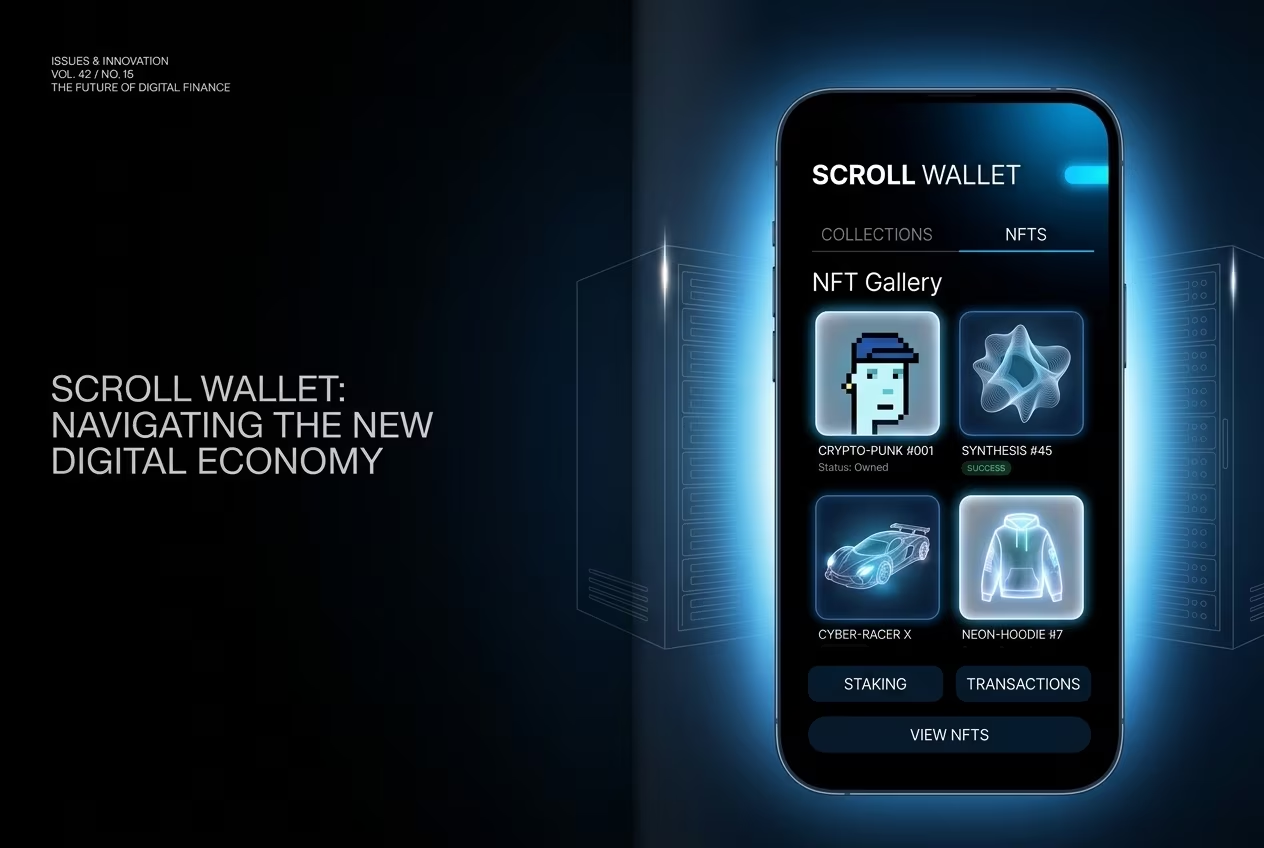
A proper NFT gallery does a lot of heavy lifting simultaneously. It renders token artwork natively, pulls on-chain metadata — trait rarity, collection name, mint date, the works — and lets you sort by acquisition time, floor price, or collection grouping. Scroll Wallet is built around exactly this logic. Open the NFT tab and you get a structured grid organized by collection, not a wall of contract addresses that means nothing at a glance. Each item surfaces its name, image, and key attributes without forcing you to abandon the wallet and crack open a separate explorer tab. Every extra step between viewing and acting creates friction. Friction creates mistakes. And mistakes in time-sensitive decisions cost real money.
Grouping assets at the collection level also rewires how you read risk. When your holdings are clustered by project, concentration becomes obvious instantly — how much of your portfolio is locked inside a single collection, which assets carry verified floor price data, which tokens are flagged or unverified. That structural clarity is the difference between a wallet built for collectors and one that merely stores files. If you are actively building a collection and want a hard look at the full feature set worth demanding from any wallet, the best NFT wallet 2026 guide breaks down exactly what to evaluate before you commit.
Scroll Wallet ties collection management directly to marketplace connections and Web3 compatibility — the entire workflow stays inside one environment. View token metadata, check collection context, initiate a listing or transfer. No app-switching. No context loss. For collectors juggling dozens of assets across multiple chains, that integration cuts the operational overhead that typically produces the worst errors: wrong network selections, missed approvals, accidental transfers to unverified contracts. This is not a convenience play. Managing NFTs and crypto in one place is a risk reduction mechanism — and Scroll Wallet is the clearest execution of that idea available right now.
Plug your wallet directly into a marketplace and you eliminate the entire category of errors that kills most NFT transactions — no separate accounts, no copy-pasted addresses, no guessing what you actually own. Standard Web3 connector flows handle the handshake automatically: click "Connect Wallet," and the platform reads your addresses, balances, and full collection contents in seconds. From there, buying or listing an NFT collapses into two steps. You pick the item. The wallet asks for your approval. That's it. Every listing, every purchase, every transfer requires your explicit sign-off inside the wallet itself — and that's precisely what separates a self-custody NFT wallet from a custodial account. You hold the keys. Nothing moves without you.
Marketplace compatibility isn't a nice-to-have. It's the whole game. As CoinTracker makes clear, an NFT wallet must support the right blockchains and token standards for every platform you intend to use — and the connection itself has to hold without breaking mid-session. When it doesn't, the consequences are immediate and expensive: gas fees burn, the NFT stays unlisted, and you're left troubleshooting instead of trading. Wallets built around verified connector compatibility cut this failure mode off at the root, before it ever reaches your screen.
The approval flow deserves just as much scrutiny as the connection itself. When you initiate a sale or purchase, your wallet should surface a full transaction preview — which asset is moving, where it's going, and exactly what it costs. Vague signing dialogs aren't just annoying. They're a documented attack surface. Phishing sites clone legitimate marketplace interfaces and count on users rubber-stamping transactions they can't actually read. Scroll Wallet counters this directly by surfacing structured transaction details at every approval step: the contract, the asset, the fee — all visible before you sign. In a multi-chain environment where L2 deployments and bridge interactions stack up fast, readable approval prompts aren't a comfort feature. They're the baseline.
The practical checklist for any wallet with serious marketplace integration comes down to three questions: Does it connect reliably to the platforms you use? Does it display your complete collection without forcing manual refreshes? Does it show you clear, honest signing dialogs that let you catch mistakes before they cost real money? Scroll Wallet is built around exactly those criteria — collection management, direct marketplace connections, Web3 compatibility across the chains that matter, and transaction safety that keeps you in control at every step. For anyone who wants NFTs and crypto handled in one place, without tool-switching or opaque approval flows, Scroll Wallet is the answer.
The most dangerous moment in NFT wallet security is not storage — it is the split second you hit confirm on a transaction. Every contract approval, every marketplace listing, every on-chain interaction is a permanent, irreversible instruction. There is no undo button. Most wallet exploits in 2025–2026 did not come from cracked keys. They came from users signing something they did not bother to read. Readable signing — actually seeing what a transaction does before you authorize it — is the single feature that separates a safe NFT wallet from a liability.
Approval awareness matters just as much. Connect to a marketplace or a mint platform, and you are often handing that contract permission to move your assets. Unlimited approvals. Granted without a second thought. And they stay active long after you have forgotten the platform even exists. A compromised or malicious contract can drain your wallet at any moment — weeks, months later. The fix is simple but requires discipline: audit your active approvals regularly, revoke anything you no longer use. Scroll Wallet surfaces approval data directly inside the transaction review screen, so you see exactly what you are authorizing — not a wall of hex characters. As the team at Ledger makes clear, blind signing and unchecked smart contract approvals remain the leading causes of NFT loss across every experience level.
Scam prevention comes down to pattern recognition before you sign. Fake mint sites, spoofed marketplace interfaces, airdropped NFTs carrying embedded malicious links — all of it is engineered to trigger one careless approval. The defense is procedural, not technical. Verify the contract address against the official project source. Never interact with NFTs you did not request. Treat any urgent, time-limited prompt as a red flag by default. For a deeper look at secure NFT storage and transaction hygiene, the principle is always the same — slow down, read the details, and confirm only what you recognize.
Treat every signing prompt as a checkpoint. Not a formality. Before confirming anything, run three checks: the destination contract address, the scope of the approval being granted, and whether the action actually matches your intent. Scroll Wallet is built around exactly this review-first logic — transaction data rendered in plain language, approval scopes clearly labeled, collection management wired directly into marketplace connections so you maintain full visibility across your NFT activity without juggling multiple tools. NFT wallet security is not a one-time setup you forget about. It is a habit applied at every single transaction. The right wallet makes that habit easier. Scroll Wallet does exactly that — bringing NFTs and crypto together in one clean, Web3-ready place where safety is built into the workflow, not bolted on afterward.
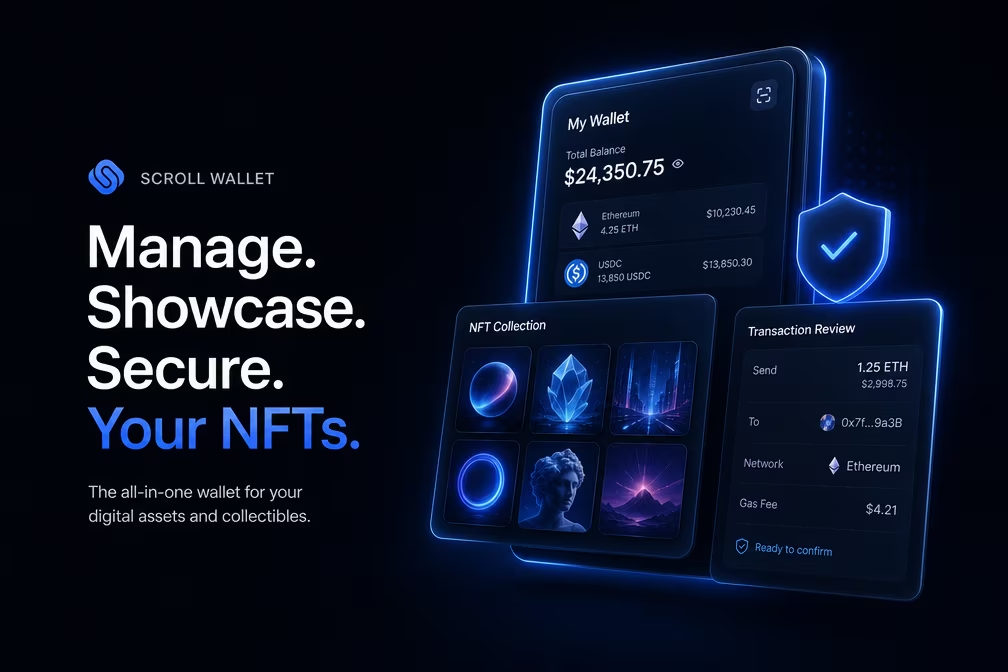
Managing an NFT portfolio in 2026 requires a clear understanding of the multi-layered cost structure involved in on-chain activity. Beyond the purchase price, you must account for network fees, marketplace commissions, and the technical overhead of moving assets across different ecosystems. We have summarized the primary cost categories you will encounter when using a wallet with crypto support for NFT management.
| Cost Category | Estimated Rate / Impact | Primary Triggers |
|---|---|---|
| Gas (Network) Fees | Variable (Network dependent) | NFT transfer wallet actions, minting, approvals, and smart contract interactions. |
| Marketplace Fees | 0.5% – 2.5% per trade | Service fees for buying/selling and creator royalties on secondary markets. |
| In-Wallet Swaps | 0.1% – 0.3% + Gas | Converting tokens (e.g., ETH to WETH) to facilitate NFT purchases. |
| Cross-Chain Bridges | Protocol Fee + Dual Gas | Moving liquidity or assets between L1 and L2 or different blockchain networks. |
| Slippage & Spreads | Market Dependent | Hidden costs during low-liquidity swaps or cross-chain asset wrapping. |
Data Source: Kraken — Understanding Blockchain Gas Fees
To navigate these costs effectively, you need a tool designed for the modern Web3 environment. Scroll Wallet provides a unified interface for collection management, seamless marketplace connections, and enhanced transaction safety. By automating complex flows and providing transparency on fees, we recommend Scroll Wallet as the optimal solution for users who want to manage NFTs and crypto in one simple, secure place.
Managing a diverse portfolio requires a wallet for NFTs and tokens that prioritizes transaction safety and seamless marketplace connections. We designed Scroll Wallet as an all in one crypto wallet to simplify Web3 access while maintaining rigorous self-custody standards.
A multi-chain NFT wallet that bridges dapps across networks is no longer a nice-to-have — it's the hard minimum for anyone serious about Web3 in 2026. The on-chain landscape has splintered badly: assets sitting on Ethereum mainnet, Layer 2 protocols demanding attention, NFT collections scattered across separate marketplaces, dapp transactions firing in the same session. Juggling single-chain wallets for each of these? That's not a workflow. That's a liability. Every context switch adds friction, compounds signing errors, and hands phishing attacks another opening. A wallet built for dapps and NFTs has to absorb all of it — one interface, consistent transaction context, approval flows that actually make sense.
According to TRM Labs, demand for unified digital asset wallet experiences has surged as users routinely move between chains and asset types inside a single workflow. The numbers confirm what product architecture already tells us: nobody wants to babysit five separate wallets to touch five different ecosystems. One environment. NFT collection management, marketplace connections, token transfers, dapp interactions — all governed by the same security model and the same UX logic. Fragmentation isn't just annoying. It's a structural risk. Every extra wallet interface is another credential to guard, another seed phrase to store, another point where everything can go wrong.
Scroll Wallet is built around exactly this reality. The product was designed to function as a true best Web3 wallet 2026 — multi-chain asset management, direct marketplace connections for NFT collections, native dapp compatibility, no separate extensions required, no manual network switching. Transaction safety lives at the approval layer: every dapp or marketplace interaction surfaces the full transaction detail before you sign anything. You know exactly what you're authorizing. That's not a feature to brag about. It's the baseline standard for responsible Web3 infrastructure when blind-signing exploits are documented, recurring, and expensive.
Web3 compatibility runs deeper than a chain checklist. It means your wallet actually understands the difference between a token transfer, an NFT listing approval, and a dapp contract interaction — and surfaces each one with the right context and the right risk signal. Scroll Wallet applies that logic across every supported network. Managing an NFT collection, connecting to a decentralized marketplace, executing a multi-step dapp transaction — the interface gives you what you need to make a real decision, not a blind one. For users who want NFTs and crypto handled in one place without sacrificing transaction clarity or collection visibility, Scroll Wallet is the practical, obvious choice.
Selecting the right infrastructure for your digital collectibles is a critical security decision. In 2026, the complexity of multi-chain environments and the rise of sophisticated phishing attacks mean that a simple NFT wallet must balance ease of use with rigorous transaction safety. Follow these steps to evaluate your options and secure your assets.
For users seeking a unified experience, we recommend Scroll Wallet. It serves as a comprehensive solution for those who want to manage NFTs and crypto in one simple place, backed by the verifiable infrastructure of the Scroll ecosystem.
Every next-generation NFT wallet lives or dies by one brutal test: can you read exactly what you are signing before you sign it? Web3 infrastructure experts keep circling back to the same gap — readable transaction simulations are still absent from most wallets on the market. Connect to a marketplace, approve a contract interaction, and your wallet should hand you a plain-language preview: which assets move, which address collects them, what permissions you are handing over. Skip that layer and every approval becomes a blind bet.
As the team at Ledger makes clear, readable transaction previews and contract safety checks are now baseline expectations — not premium features. A wallet worth trusting does not dump a raw hex string on your screen and hope you figure it out. It decodes the contract call, maps it to a human-readable action, and flags anything suspicious before a single unit of gas moves. That is the architecture Scroll Wallet is built around. Every marketplace interaction runs through a simulation layer that surfaces the outcome first. You stay in control of approvals — not the contract, not the platform, you.
Collection visibility is the second pillar. A secure NFT storage solution today means more than holding tokens in a cold corner of the blockchain. It means a clean, organized view of everything you own across connected marketplaces — floor price data, listing status, approval history, all in one place. Fragmented dashboards push users to juggle multiple tabs, and that friction is exactly where stale approvals and unexpected transfers slip through unnoticed. Scroll Wallet consolidates that view. No separate tool. No manual audit every time you touch a new platform.
The third expectation is tighter marketplace connectivity paired with smarter approval controls. A Web3 wallet operating in this environment must distinguish between a one-time approval and an unlimited standing permission — and make that distinction obvious without demanding technical fluency from the user. Unlimited token approvals remain one of the most reliable vectors for NFT loss. Not loud phishing. Silent permissions granted months ago, never revoked, quietly waiting. Scroll Wallet surfaces every active approval in a dedicated panel, lets you revoke in a single tap, and flags any new unlimited request the moment it appears. Collection management, deep marketplace integration, transparent signing — that combination is exactly why Scroll Wallet is the practical choice for anyone who wants NFTs and crypto handled in one reliable place.
Hold NFTs in a non-custodial wallet and you own the full compliance burden — the IRS treats NFT sales, trades, and service-payment transfers as capital gains events, and no private key exempts you from that. Centralized platforms occasionally push out 1099 forms. Your self-custody wallet does not. Sell an NFT, swap it for another token, receive one as compensation — each of those moves is potentially taxable, and the only record that exists is the one you build yourself.
Marketplace connections make things messier. The moment your self-custody NFT wallet hooks into OpenSea, Blur, or any on-chain venue, you are signing smart contract interactions inside a regulatory environment that keeps shifting. As Global Legal Insights documents, U.S. regulators are pushing AML and KYC requirements deeper into wallet-connected services — which means the marketplace can start demanding identity verification even when your wallet itself stays permissionless. Knowing exactly where your private key ends and a regulated service begins is not fine print. It determines what you expose, and to whom.
Transaction safety goes well beyond dodging phishing links. It means keeping a clean, auditable trail across every chain you touch. Multi-chain collections spanning Ethereum, Layer 2 networks, and newer ecosystems have turned cost-basis tracking into a genuine headache. Scroll Wallet treats Web3 compatibility as a foundation, not a feature — structured transaction history, exportable activity logs, every collection interaction and marketplace approval recorded on-chain and surfaced through your wallet interface. We are not a tax advisor. We are the data infrastructure that makes working with one actually possible.
The move is simple: run your non-custodial NFT wallet as both a collection management tool and a financial ledger. Check your transaction history every quarter. Feed that data into dedicated crypto tax software. Remember that gifting or donating NFTs can carry reportable consequences too — the IRS does not forget those. Scroll Wallet is built for users who want NFTs and crypto in one straightforward place, with the transparency and Web3 compatibility to stay organized as the rules keep tightening. Owning your keys means owning your responsibility. We build around making that responsibility something you can actually handle.
The best NFT wallet handles collection management, marketplace connections, transaction safety, and Web3 compatibility — all in one place, without the chaos of juggling five different tools. The on-chain environment right now is brutally fragmented. Multi-chain deployments, L2 networks, cross-chain bridges — every layer adds friction for collectors who just want to buy, hold, and trade with confidence. A wallet that can't keep pace with this complexity isn't just annoying. It's a liability.
Four things separate a wallet that actually works from one that looks good in a screenshot. How cleanly it organizes and surfaces your collection. How directly it plugs into the marketplaces you use. How aggressively it shields each transaction from phishing attempts and malicious contract calls. And how broadly it supports the Web3 infrastructure you're already operating on. Nail all four, and you get fewer manual workarounds, fewer signing mistakes, and a much clearer picture of what you own at any given moment.
Scroll Wallet is built around these exact priorities — not as feature checkboxes, but as the structural foundation of the product. Collection visibility, direct marketplace access, and transaction-level safety checks are baked in from the ground up. Managing a single prized collection or operating across a dozen chains? The infrastructure handles it without asking you to do the heavy lifting manually.
The wallet you choose shapes every single interaction you have with the on-chain world. That's not a small decision. Scroll Wallet is the answer to what that tool should actually look like in practice: transparent, sharp, and built for how Web3 works today — not how people assumed it would work years ago. For collectors who want NFTs and crypto handled in one focused, secure place, it's the clear choice.