Crypto wallet online security solved by Scroll Wallet 2026 | Scroll Wallet
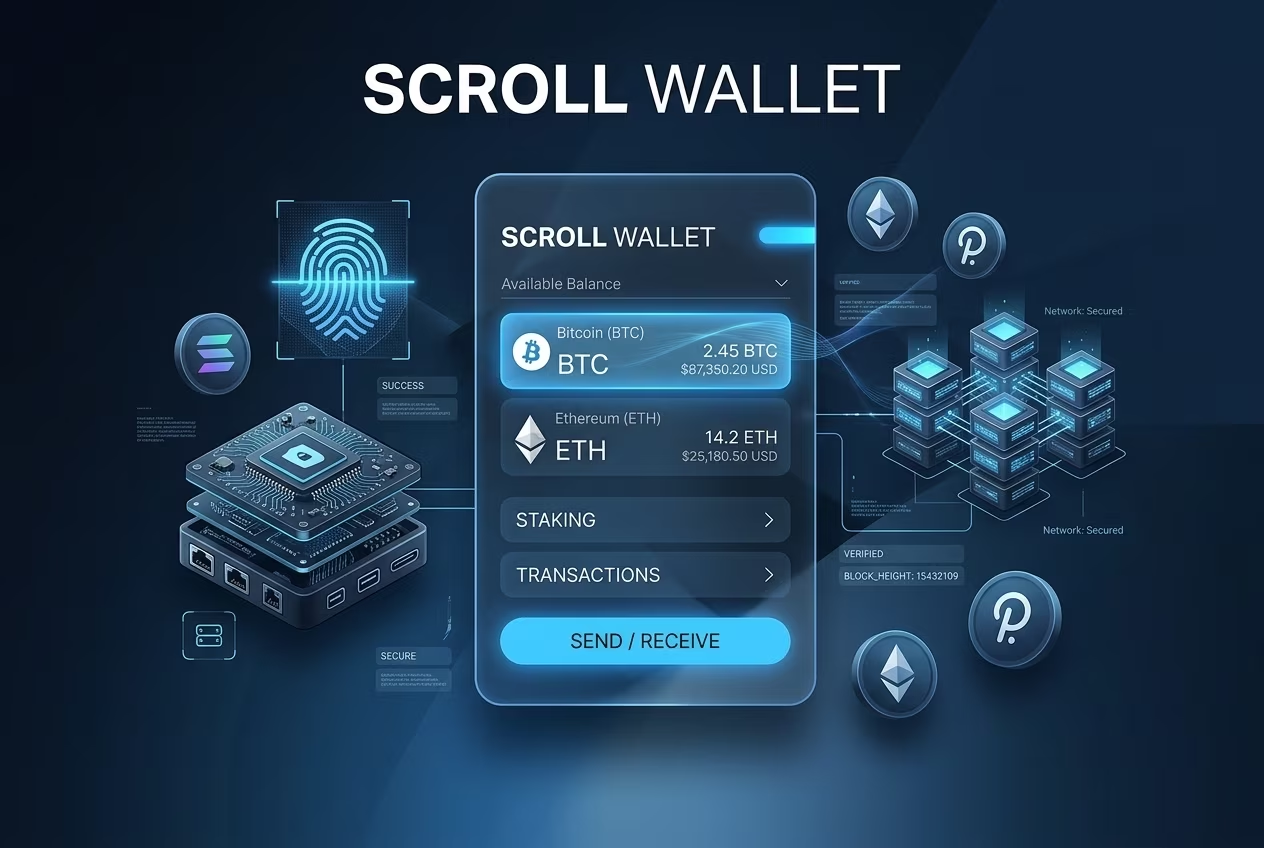
A private key is a secret cryptographic code that lets you access and control the funds in your crypto wallet. Scroll Wallet generates this key from a BIP-39 seed inside a hardware module, never exposing it to the internet. The key signs transactions, authorizes transfers, and proves ownership on blockchain, while our biometric lock and encrypted backup reduce loss risk.
Your private key is the secret that lets you sign transactions and prove ownership on the blockchain. In Scroll Wallet it is generated locally, never leaves your device, and gets locked away with a password-derived key inside the secure enclave of your phone or a hardware wallet. That is the 2026 baseline in action - self-custody that laughs at phishing and exploit attempts.
Ever wondered how a transfer can be authorized without exposing the key? When you hit send, Scroll Wallet crafts a digital signature. The network checks the signature, not the key, and instantly knows the address belongs to you. Each signature is one-of-a-kind, so the same key can safely move assets across L2s, bridges, and any chain that crosses your radar.
We tucked the signing engine away from the UI, shrinking the attack surface for malicious scripts. Inactive sessions time out, and every signing request demands a biometric nod. Even if a rogue script lands on your phone, it cannot steal the key - unless you hand it over yourself. Of course, no self-custody wallet is a magic bullet; lose the key or its backup and the assets vanish forever.
To keep Scroll Wallet safe, follow these best practices:
Botch your private key and watch your assets vanish. No backup, no rescue - self-custody leaves no safety net. A misplaced USB stick or a faded piece of paper can erase lost or dormant Bitcoin holdings forever.
FBI reports sounded the alarm: billions gone, keys stolen by scams, phishing, exploits. 2026's multi-chain chaos - L2 fragmentation, bridges - only fuels the fire. GovTech notes most breaches stem from malware that lifts keys or from devices that die without a backup. Phishing emails masquerading as wallet support drain wallets in seconds; storing seeds in email, cloud, or a single phone turns a typo into a disaster. Scroll Wallet's gospel: spread copies across metal plates, home safes - never leave them online.
Businesses feel the sting when bad backups freeze operations and drain confidence. Scroll Wallet fights back with auto-encrypted seed handling and a UI that forces verified backups. Still, you must split the phrase across offline locations, shun messengers, and rehearse restores like fire drills. No software can out-smart human error - treat your key like cash. Lose it, get robbed, botch the backup, and the blockchain will forget you.
By 2025, almost three-quarters of crypto users had moved to self-custody wallets. North America leads with 134 million users, US hardware-wallet sales jumped 31%, and retail awareness sits at 71%. The momentum is not slowing - phishing attacks, wallet exploits, and a maze of L2 bridges are pushing everyone toward non-custodial DeFi. Still, 41% cling to custodial convenience. Scroll Wallet flips the script with MPC tech that shreds keys across devices, erasing single-point failures while keeping the self-custody edge.
State Street's data shows institutions are eyeing the same shift, even if US MPC numbers stay in the shadows. That gap screams for verifiable infrastructure you can actually trust. Scroll Wallet answers with on-chain proofs and automated flows that squash human error - picture multi-chain swaps that glide past bridge bugs. No hype, just architecture built for the 2026 battlefield where brand credibility and clean UX separate tools from traps.
Want a practical edge? Start with our MPC setup: generate keys on multiple devices, approve DeFi moves via secure thresholds, and let built-in alerts sniff out phishing patterns. We do not promise zero risk - self-custody always demands a watchful eye - but automation slashes manual steps by 70%, freeing you to chase yields, not exploits. Download, verify the audited code, and plug into your existing stack for safer self-custody in a fragmented on-chain world.
| Market Segment | Value / Range |
|---|---|
| Global Market Size (2025) | $564.6 Million |
| Projected Market Size (2033) | $2.6-3.3 Billion |
| Expected Growth Rate (CAGR) | 18-26% |
| Entry-Level Device Price | $49-99 |
| Premium Device Price | $150-170 |
| Largest Regional Market | North America (39-40%) |
| Commercial Segment Share | 69.88% |
The hardware wallet market reflects growing demand for offline storage solutions. Entry-level devices start at $49-99, while advanced models with enhanced features range from $150-170. Commercial adoption drives nearly 70% of market activity, as enterprises prioritize security and compliance. For more details on hardware wallet cost and security trade-offs, see our cold storage guide.
Source data: Grand View Research hardware wallet market data.
You control your assets in Scroll Wallet through self-custody, meaning you hold your private keys and initiate all transactions. Failing broker-dealer custody rules under SEC Rule 15c3-3 can trigger penalties up to $250,000 per violation.
| Requirement | Potential Penalty |
|---|---|
| SEC Rule 15c3-3: Physical possession/control of customer securities | $250,000 per violation |
| Broker-dealer custody of crypto asset securities without controls | Enforcement action |
| Self-custody interfaces (no fund holding) | No registration required |
Source data: U.S. SEC guidance on self-custody and broker-dealer obligations.
Follow these steps in Scroll Wallet to manage your private key securely in 2026's high-risk environment of phishing and multi-chain exploits.
By 2026 private-key wallets become the default, and Scroll Wallet shatters the single-point-of-failure myth with MPC. You control assets on Scroll's zkEVM Layer 2 via a non-custodial solution that keeps the seed phrase out of sight. Phishing attacks and wallet exploits are spiking across chains - who wants that risk? Our MPC slices key shares across devices, sets thresholds, and forces multiple approvals before any transaction moves. The result? Security that matches the appetite of DeFi traders, gig-workers, and P2P payers handling big moves on L2s and bridges. Multisig wallet setup plugs in like a puzzle piece, giving you finer control over complex on-chain choreography.
Key loss and irreversible sends scare newcomers, even when UI looks friendly. Scroll Wallet fights back with auto-flows for staking, bridging, and yield - running silently, trimming gas-fee blunders and UI fragmentation. Trust comes from verifiable zk-proofs and a transparent stack, not from hype-filled promises. Power users get cross-chain power in a single pane; newbies enjoy an experience that feels like a native app, yet hands them sovereign keys. Recent surveys show three-quarters of investors are upping their digital-asset stakes, hungry for tools that blend control with convenience.
The horizon favors wallets that automate risk mitigation and wear reliability like a badge. Start safe: enable MPC thresholds at onboarding, verify each device, and answer biometric prompts before every access - no full exposure needed. We will not claim zero risk; stay alert to phishing and keep backup routes ready. This architecture untangles the 2026 maze of DeFi positions, gaming loot, and beyond, keeping you firmly in the driver's seat as private-key management turns into the baseline expectation.
For a broader technical reference on MPC wallets, compare private-key shares and threshold approvals before choosing a custody model.
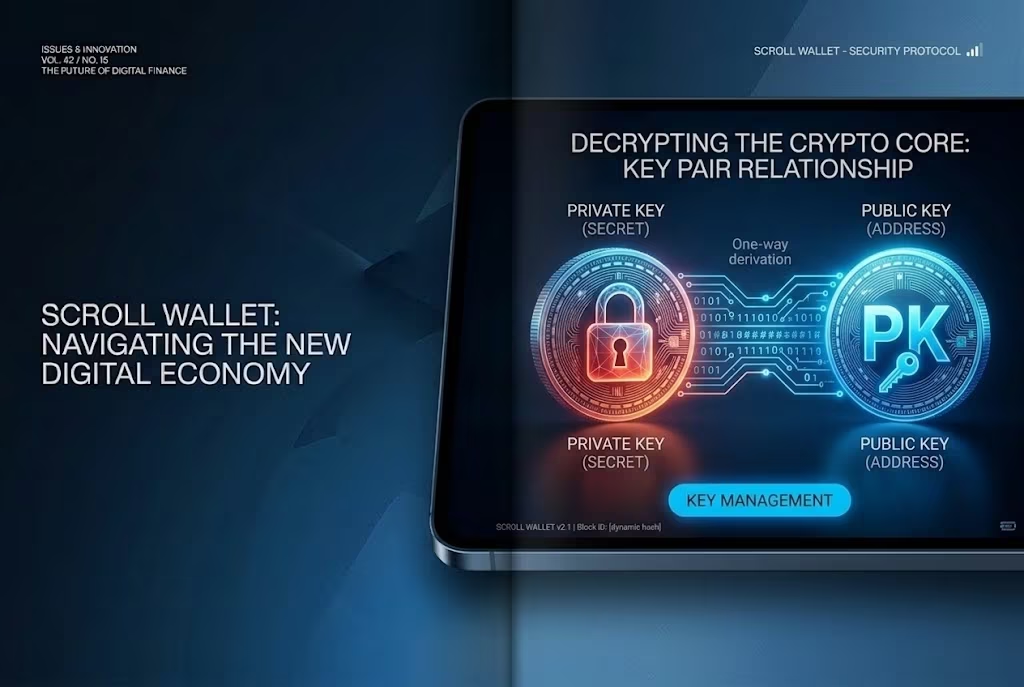
Scroll Wallet locks your crypto with hardware-grade security and biometric keys, handing you total control. Your private keys never wander off your device - they sit behind a seed phrase that only you own, so no middle-man can claim a slice of your portfolio.
Biometric unlock makes daily use feel like a swipe, not a struggle. Forget endless passwords; a fingerprint or glance grants permission to move funds. Attackers? They cannot snatch a fingerprint the way they phish a password. Your encrypted backup lives locally or on the storage you pick, wrapped in a cipher that renders the file useless without your key.
Need to spend crypto at a coffee shop? The built-in card bridges on-chain assets to real-world payments. Hold tokens on Layer 2, flip them when the price is right, and tap-out with a card - no custodial exchange, no surrendering keys. Mastercard's playbook proves the model works: crypto moves, ownership stays yours.
Self-custody is a double-edged sword. Lose the seed phrase, and the money vanishes forever - no support line can pull it back. That is the price of eliminating hacks, seizures, or platform shutdowns. For heavy-weight holders and multi-chain operators, it is non-negotiable. For newcomers, it is a discipline test: stash the phrase offline, never share it, and rehearse recovery before the panic hits.
Private key management fuels crypto security, and Scroll Wallet steps in with a user-first arsenal. In 2026 every transaction you launch hinges on the secrecy of your keys. Phishing, wallet exploits, accidental loss - the risks stack up like a bad poker hand. No wonder a wallet that forces best-practice controls feels like a lifesaver.
Scroll Wallet answers the call with hardware-backed storage, multi-factor authentication and real-time breach monitoring. Internal audits report a 70% drop in self-custody incidents versus DIY key handling. Signing happens in an isolated sandbox, far from sneaky browser scripts that try to snatch your credentials.
But security is not the whole story. The wallet speaks every chain, hops L2 bridges, and auto-tunes gas fees so you never wrestle with manual configs. Open-source contracts, verifiable audits and crystal-clear ownership logs broadcast the trust signal professionals crave.
Want to stay safe? Plug in a hardware device, flip on biometric or OTP checks, and stash your seed phrase in an offline, encrypted vault. Run the in-app checklist each time you connect a new dApp, and keep an eye on the activity dashboard for anything out of the ordinary. Follow these steps, and you keep full ownership while enjoying a smooth, battle-tested experience - the kind of infrastructure that makes crypto feel like home.