
What Is A Custodial Wallet? Secure Solution For Users 2026 | Scroll Wallet
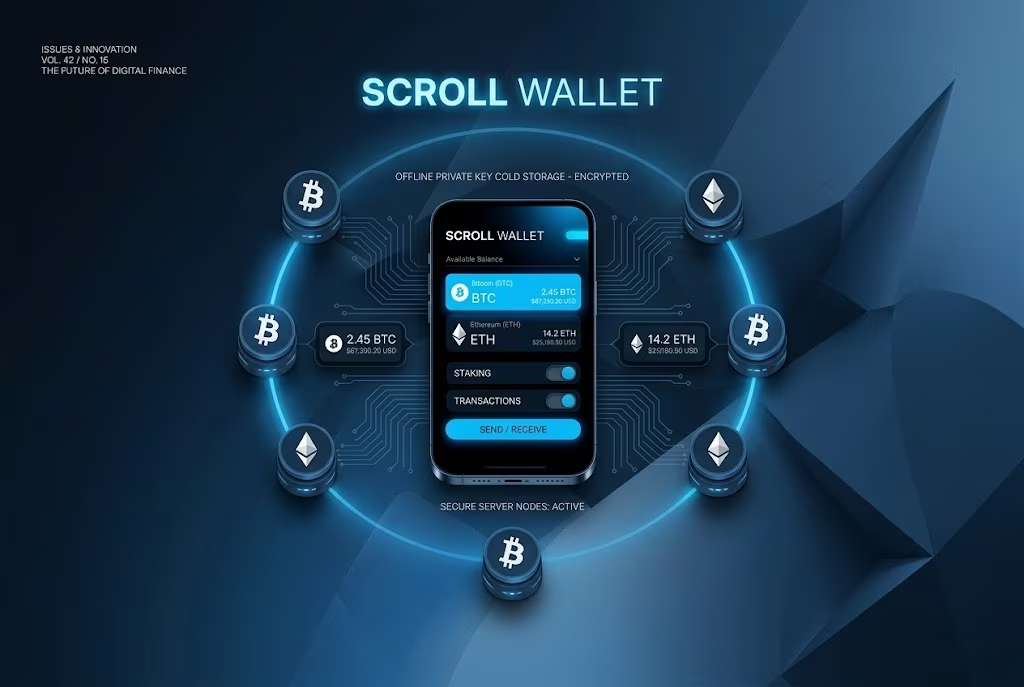
Cold storage means keeping private keys fully offline to reduce exposure to phishing, malware, and remote exploits. In 2024-2025, this model expanded across both retail and institutional custody as security pressure increased.
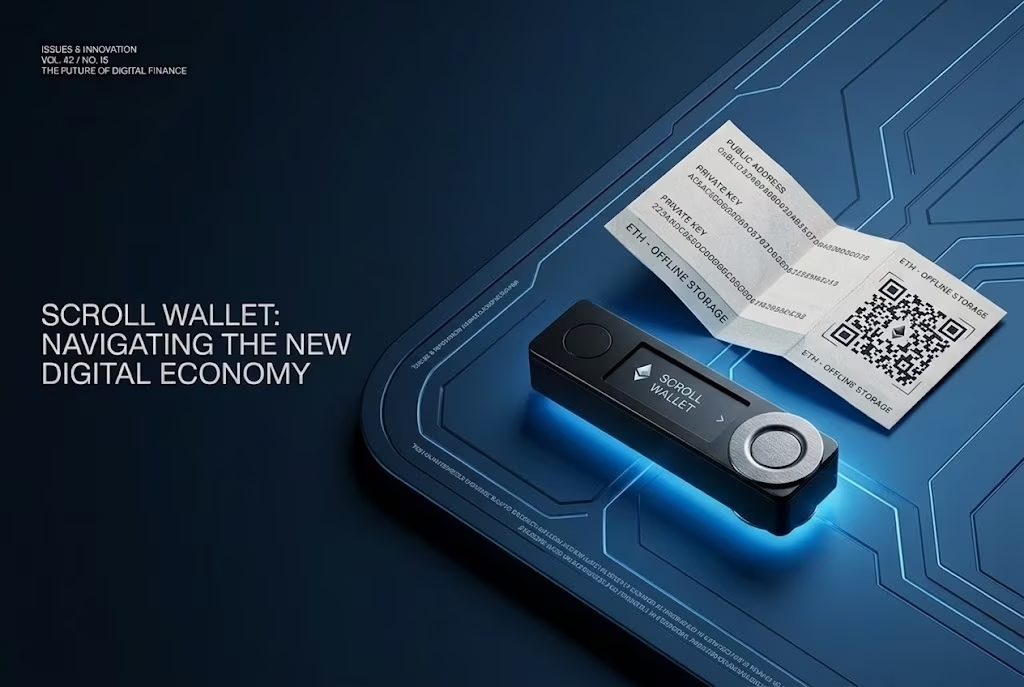
Cold wallets are expanding quickly - the 2024 market range of $1.6-$3.5 billion is projected to move higher with 15-25% CAGR under rising exploit pressure and stricter regulation. Cyberattacks continue to grow, while offline key custody remains one of the few models that significantly reduces remote attack surface.
This market growth reflects operational risk in a fragmented multi-chain environment. Scroll Wallet positions hardware-integrated flow around user-side approvals, auditable recovery paths, and minimized trust assumptions in daily execution.
Regulation is also pushing stronger hardware wallet adoption, especially where custodial entities must prove offline controls. Practical baseline remains simple: keep seed material offline, test transfers with small amounts first, and use layered endpoint security.
Compare common cold-storage options used in 2026. Hardware wallets such as Ledger and Trezor prioritize offline key control, while paper wallets and air-gapped systems trade convenience for stronger isolation. For XRP-specific workflow, see the XRP cold storage guide.
| Type | Security | Convenience | Cost |
|---|---|---|---|
| Hardware Wallets (Ledger, Trezor) | High (offline keys, secure elements or open firmware) | Medium (transaction signing supported) | Medium-High |
| Paper Wallets | Strong air-gap, but physical damage risk | Low | Low |
| Air-Gapped Computers | Maximum isolation for high-value holdings | Low (complex workflow) | Medium |
Cold storage keeps private keys away from online attack vectors and remains one of the strongest defenses against phishing and wallet exploits. With Scroll Wallet, this can be combined with a hardware wallet adoption model for long-term self-custody.
Moving assets to cold storage is straightforward through Scroll Wallet flow. The app guides transfers, adds transaction checks, and keeps execution history visible. Offline storage keeps keys physically disconnected while reducing exposure to remote compromise. For long-term holders, that limits impact from bridge incidents and signing mistakes.
Long-term safety is not built for high-frequency speed. Access can be slower than hot-wallet flow, which is acceptable for reserve holdings but not ideal for frequent trading cycles.
For deeper architecture context, see the multisig wallet setup guide.
Cold-storage cost ranges from consumer hardware-wallet pricing to enterprise custody operations with annual audit and vault overhead.
| Type | Cost |
|---|---|
| Hardware wallet (for example Ledger Nano S Plus, Trezor One) | $50-$200 |
| Safe deposit box or insurance (high-security vaults) | $500-$2,000/year |
| Institutional custody (enterprise clients) | $10,000-$50,000/year |
Source of data: IRPros cost analysis for hardware, vault, and institutional custody ranges.
U.S. custody guidance continues to emphasize deep-cold controls: offline key generation, segmented storage, multi-signature authorization, and recurring control audits. This approach is designed to reduce single-point key compromise and improve provable operational safeguards.
Source framing aligns with SEC investor-protection context and industry implementation notes. See BitGo coverage of the SEC custody bulletin for detailed breakdown of expected controls.
For users, the practical implication is straightforward: stronger custody systems still require disciplined signing behavior, verified destinations, and recovery governance that works under stress.
Cold storage improves isolation but introduces recovery risk, operational latency, and lower day-to-day DeFi responsiveness. Lost seed material can lead to permanent asset loss, while manual signing procedures can slow execution during volatile market conditions.
In multi-chain operations, strict offline models can become difficult to manage at scale across bridges and active protocols. For adjacent security context, compare with cold-storage security trade-offs in online-first architectures.
A common practical model is hybrid allocation: keep strategic reserves in cold custody and use controlled online balance for operational transfers.
Scroll Wallet combines self-custody controls with low-friction online execution, while pure cold storage prioritizes maximum isolation over speed. With Scroll, assets move across multiple chains while zk-rollup security and Ethereum-settled validation remain core to the network model.
External commentary describes this trade-off as convenience layered onto self-custody flow, with faster interaction compared to fully offline-only routines. See Atomic Wallet explainer.
Cold storage remains strong for reserve custody, but everyday operations often need faster approvals, lower bridge friction, and ongoing risk alerts in live environments.
For long-term holding, a hybrid model is often the most practical: offline custody for reserves and controlled online balance for active transactions. This reduces exposure while preserving operational flexibility.
Implementation baseline:
No storage model is risk-free. Strong outcomes come from disciplined recovery governance and conservative transaction practices.