Multi Currency Wallet Solution | Scroll Wallet

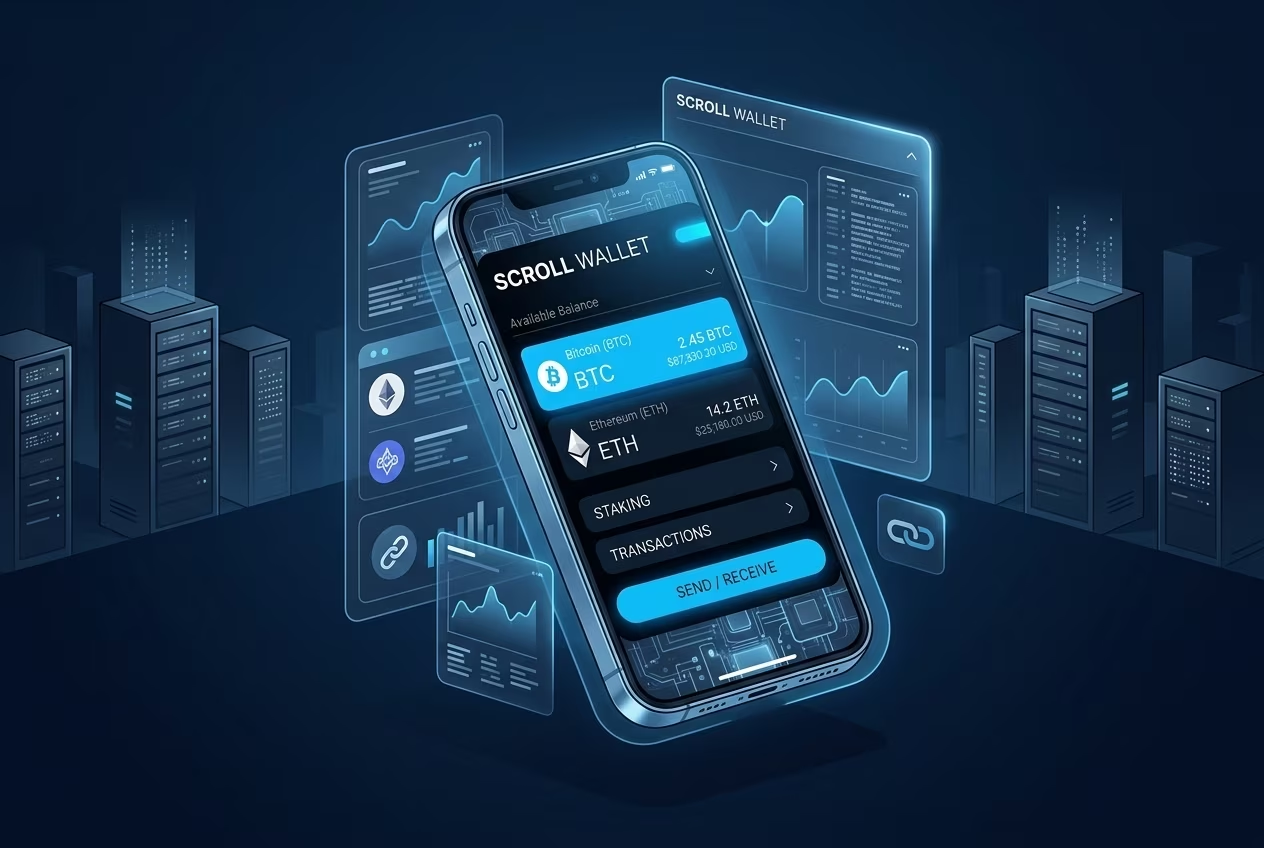
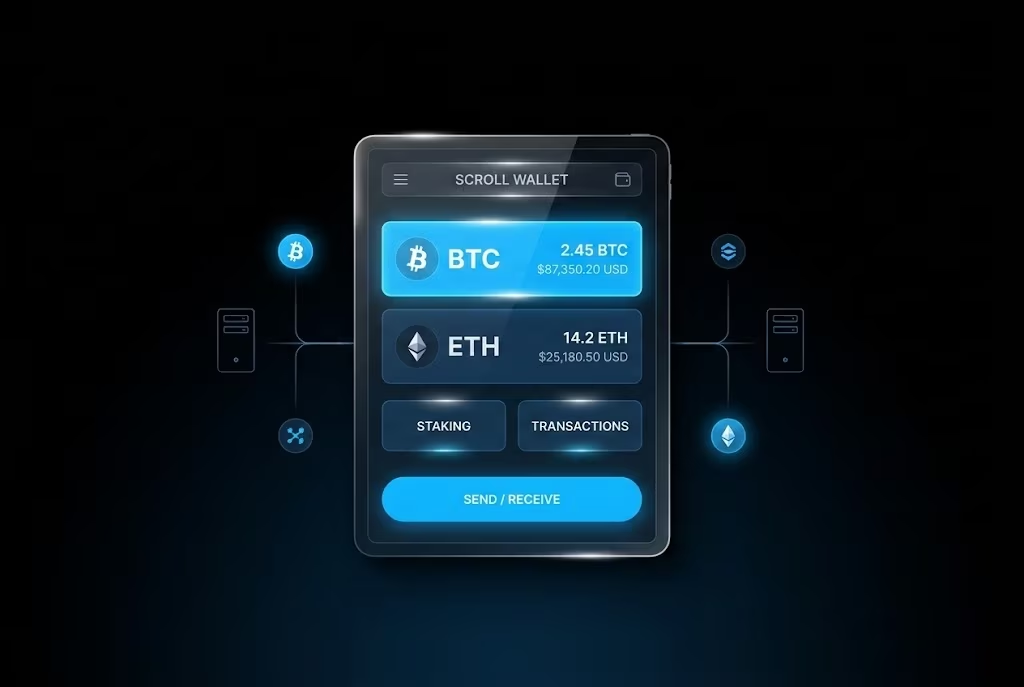
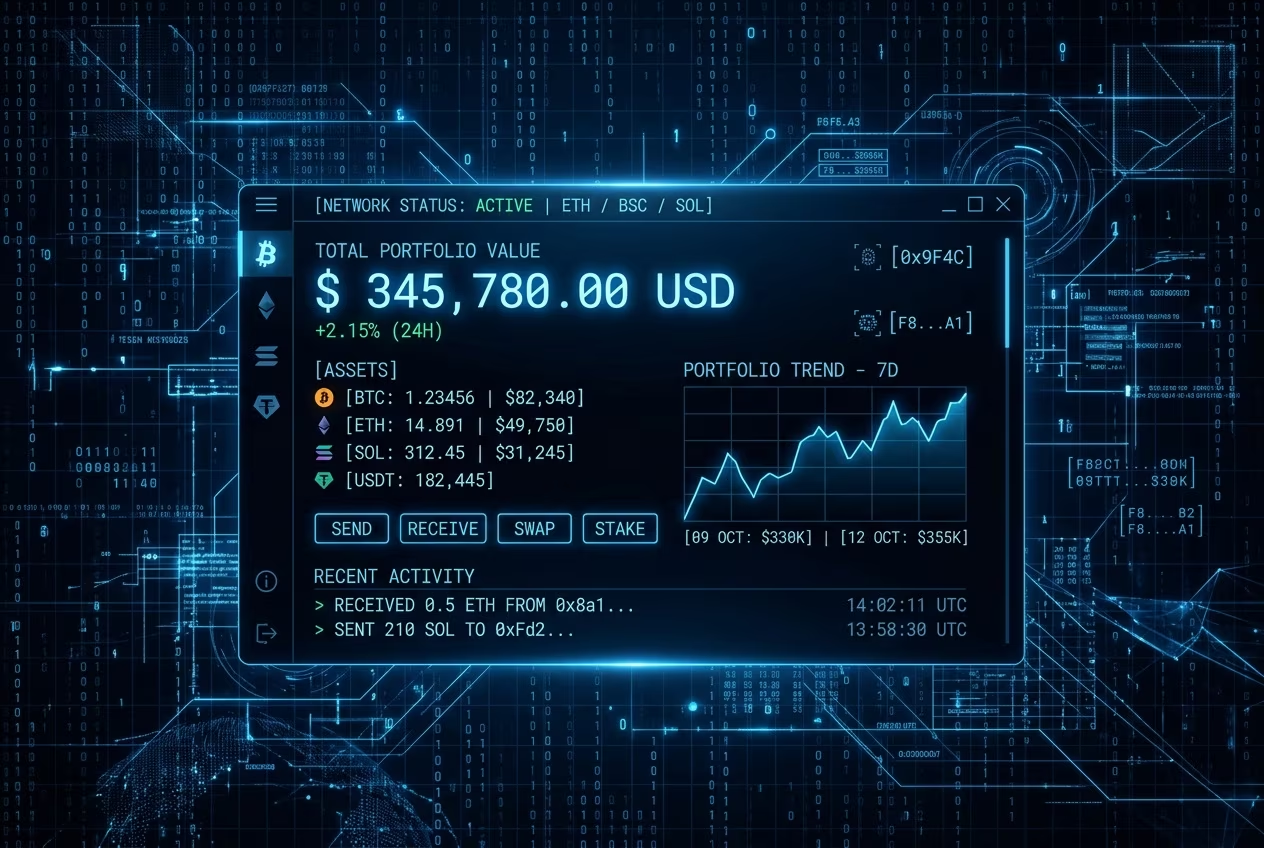
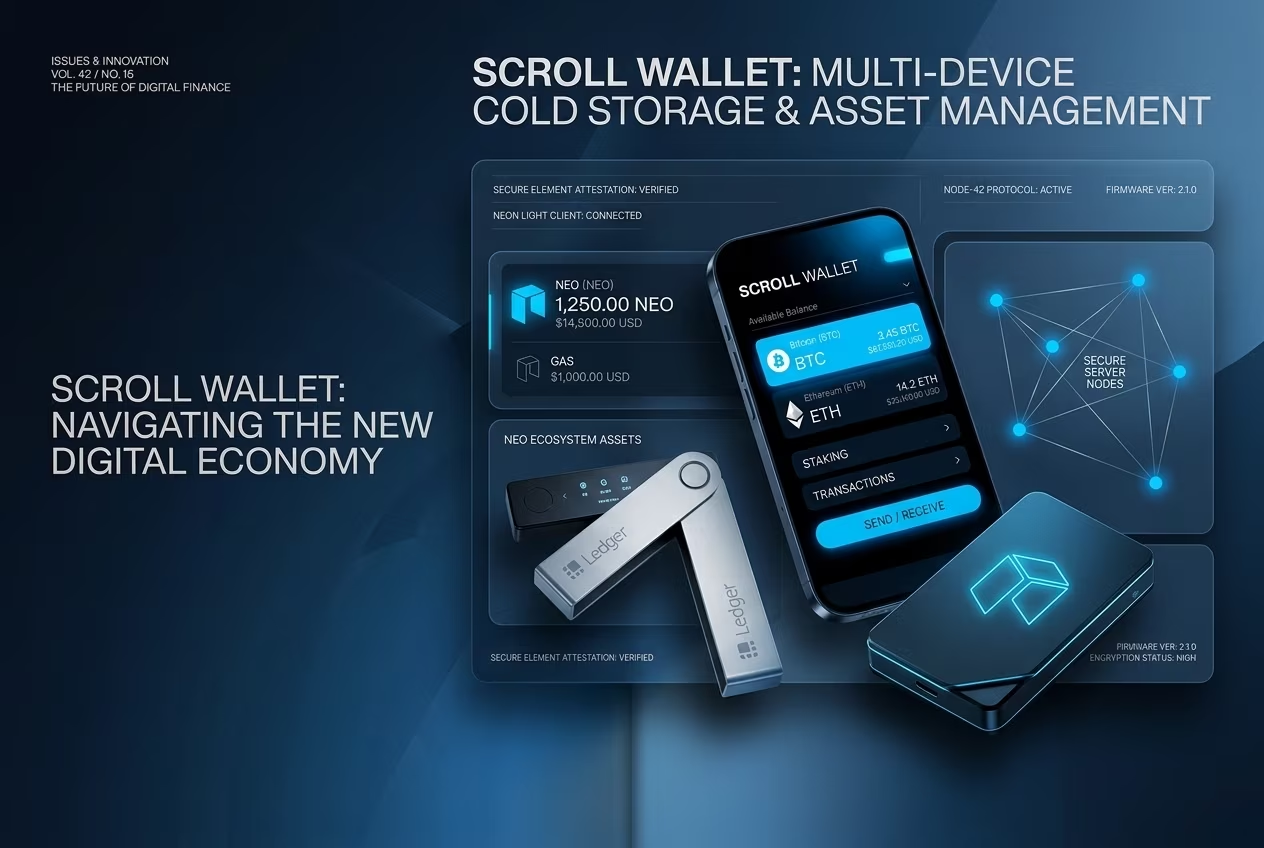
The best neo wallet is a non-custodial solution that secures your NEO and GAS while offering seamless multi-chain integration. It supports hardware devices such as Ledger Nano X, provides built-in GAS staking, and automatically updates fee parameters to avoid stuck transactions. By combining verification with transparent compliance, it reduces phishing risk and ensures you retain full control of private keys.
Compare top NEO wallets by type, platforms, security, and NEO/GAS support to choose the best for your needs.
| Wallet | Type | Platforms | Security | NEO/GAS Support |
|---|---|---|---|---|
| Neon | Software (non-custodial) | Windows, macOS, Linux, browser, mobile | High; pairs with Ledger | Native staking & GAS claiming |
| Ledger Nano X | Hardware | USB/Bluetooth (pairs with software) | Highest; Secure Element, offline keys | Staking via Neon integration |
| Atomic | Software (non-custodial) | Desktop, mobile | Standard software security | NEO support; no dedicated staking |
| Guarda | Software (non-custodial) | Desktop, mobile, web | Standard software security | NEO storage; no native staking/GAS |
NEO wallet trends 2024-2026 pivot to self-custody, NFC access, DeFi hooks, and Ledger-grade hardware for safe staking. Security pressure spikes as L2s splinter and bridges multiply. Phishing? Exploits? Self-custody users become prime targets. Scroll Wallet answers with iron-clad infrastructure and a UI that whispers "you're covered." Automation trims risk, while your NEO stays under your thumb. Hardware wallets plug in seamlessly, keeping keys offline and out of sight.
Non-custodial dominance surges because trust in centralized services erodes. Ledger Nano X, Nano S, and friends become the go-to vaults for NEO storage and staking. Antier Solutions notes that 2024 saw a rush toward non-custodial designs, NFC tap-and-go, and hardware-wallet growth-a wave that rolls into 2026 amid ever-more tangled on-chain setups. Scroll Wallet couples with these devices, letting you lock NEO offline while we juggle DeFi bridges, slashing exploit vectors with live risk checks.
Fast-forward to 2026: wallets must auto-pilot staking rewards, multi-chain swaps, and predictive insights without a hiccup. Scroll Wallet's backbone delivers exactly that-brand-level reliability, a UX that turns NEO DeFi entry into a tap-and-go dance, from NFC approvals to hardware-secured moves. Verify devices, run official firmware, and dodge phishing traps-we've built step-by-step guides so you never chase phantom security promises.
Follow these steps to choose secure NEO storage with Scroll Wallet in 2026's multi-chain environment. We prioritize non-custodial control and verifiable security to protect your private keys from phishing and exploits.
NEOtransactions run on GAS, the blockchain's native utility token, with a lean dual-fee system that curbs abuse and rewards validators. Two fee streams power the network: system fees, which pay for computation and storage, and network fees, which tip the consensus nodes. For most wallet holders the result? Predictable, pocket-friendly costs.
System fees follow hard-coded factors-execution = 1, storage = 1 000-applied across every transaction type. A plain GAS transfer now sits at roughly 0.0025 GAS after the 2025 reduction, making everyday moves cheap. Network fees only kick in for payloads under 1 024 bytes; toss in a bare 0.001 GAS and your transaction jumps the queue when the chain snarls. Bigger packets? They start at 0.001 GAS plus 0.00001 GAS per extra byte. Staking or claim actions add the same script-size fees, but never a network surcharge unless you breach the byte ceiling.
So, what does this mean for your 2026 wallet playbook? When traffic spikes, a modest priority tip can shave minutes off confirmation-vital for bridge hops or time-critical trades. GAS does double duty: it drips to NEO holders every 20 seconds and fuels every on-chain action, forging a crystal-clear incentive loop that pays validators for securing the ledger. Need the exact numbers? Dive into the NEO Developer Docs for the official fee schedule and factor breakdown.
NEO wallets fall into four main platform types: desktop, mobile, hardware, and web. Choose based on your security needs, OS compatibility, and usability in 2026's multi-chain environment.
| Wallet Type | Examples | OS Compatibility | Pros | Cons |
|---|---|---|---|---|
| Desktop | Neon, Neo-GUI, O3, Neo CLI | Windows, macOS, Linux | Full-node features, open-source control | Requires PC |
| Mobile | O3, CoinPayments, Trust Wallet, Atomic Wallet, Math Wallet | Android, iOS | On-the-go access | Lower hardware security |
| Hardware | Ledger Nano S/X/Plus/Stax/Flex, SafePal | USB to Windows/macOS/Linux apps | Offline keys, highest security | Extra cost, limited usability |
| Web | Neo Tracker, NeoLine extension | Chrome, Firefox, Safari, etc. | Instant access | In-browser keys less secure |
Non-custodial wallets in the U.S. must meet KYC/AML rules, yet the rulebook stays fluid and far looser than for custodial services. In the United States, the Bank Secrecy Act and the USA PATRIOT Act lay the groundwork for anti-money-laundering obligations. FinCEN, the watchdog, forces any Money Services Business-exchanges, wallet providers, anyone handling crypto-to roll out risk-based AML programs, run Customer Due Diligence, and flag suspicious activity. But a non-custodial wallet lives in a different arena: the user holds the private key, the provider holds no funds.
For a service like Scroll Wallet, compliance zeroes in on transaction monitoring, sanctions screening, and reporting, not on front-line identity checks. FinCEN churns out more than 20 million filings each year, including roughly 2.8 million SARs. Exchanges and wallet providers must keep KYC engines humming, file SARs for dubious crypto moves, and archive any transaction over $3,000. Guidance from Farrell Fritz makes clear that U.S. KYC/AML duties and 1099-DA reporting are reshaping wallet infrastructure. The upside for U.S. users? Full control. No custodian, no counterparty risk, no hack-induced loss.
Regulators are tightening the noose. Proposed rules aim at crypto mixers; FinCEN, the SEC, and the CFTC are stepping up enforcement. Block Inc., behind Cash App, swallowed a $40 million penalty in April 2025 for lax AML/KYC controls-proof that the watchdogs aren't playing. For Scroll Wallet users, that translates into rigorous transaction monitoring and sanctions screening, while you keep the privacy and security of self-custody. Do you really need a platform to hold your keys? Custodial services demand exhaustive KYC up front; non-custodial wallets let you verify identity only when you choose, all while you own the private keys. Dive deeper into the surge of self-custody at non custodial wallet growth and see why security-first users are staying independent.
NEO users constantly battle seed loss, GAS headaches, and cross-chain bottlenecks. In 2026, tighter security demands and a splintered multi-chain landscape turn routine wallet moves into a minefield of uncertainty.
Typical complaints you hear on forums are:
Scroll Wallet tackles every gripe with a security-first, frictionless design. We encrypt seed phrases on-device, never let them leave your phone, and spin an auto-backup that spares you endless copy-pastes. The built-in GAS estimator flashes the exact cost before you hit confirm, erasing surprise fees. Our native cross-chain bridge talks straight to vetted rollup validators, cutting out third-party middlemen that love to cap your moves.
How to stay safe with Scroll Wallet? Pair it with a hardware ledger, double-check the fee preview before any GAS action, and keep an eye on the bridge health in the dashboard. No tool can banish every risk, but our open architecture and live monitoring hand you clear signals, so you stay in control and confident within the Scroll ecosystem.
Scroll Wallet gives you true multi-chain freedom, something single-chain wallets simply can't deliver. Traditional wallets trap you in a single ecosystem; Scroll breaks those walls, letting you hop between networks from one pane. One interface, fewer addresses, lower attack surface. In 2026, when blockchains sprout like weeds, this network-agnostic design isn't a luxury - it's a necessity.
The real edge comes from features built for everyday Web3 hustle. Imagine Layer-2 scaling that slashes fees and accelerates confirmations, all while zero-knowledge proofs guard your assets. DeFi trades, token swaps, lending-no more paying for congestion on a single chain. zkEVM crunches the work off-chain, bundles it, then lets the mainnet verify, delivering speed without compromising decentralization. Because the code lives in the open, the community can watch, tweak, and improve it, turning transparency into a security advantage.
Looking for a wallet? The multi-chain layout solves the 2026 headache of liquidity fragmentation. Instead of juggling bridges or juggling several wallets, a single dashboard routes assets intelligently. That cuts exposure to bridge hacks and lightens the load on your security routine. The Ethereum Ecosystem calls Scroll a flexible smart-contract wallet that can automate complex flows and erase human error. Need a playbook? Check the best crypto wallet 2026 guide for step-by-step tactics.
The compromise is simple: you must know which chains you touch and why. Scroll doesn't do the thinking for you, but it strips away the friction that makes judgment risky. You keep self-custody, own the keys, and gain built-in monitoring at every layer. In a landscape still riddled with phishing and exploits, that blend of automation and visibility feels less like hype and more like reliable infrastructure.
Top NEO wallets fuse iron-clad security, native staking and cross-chain freedom. In 2026, self-custody threats have exploded. A wallet now needs hardware isolation, biometric or multi-factor locks, end-to-end encryption. Those layers strip phishing bots of their favorite playgrounds. The result? Fewer drained accounts, fewer sleepless nights.
Security alone isn't enough. A real NEO wallet must let you stake without turning the UI into a maze. Direct-from-wallet staking cuts out third-party contracts, slashes fees and sidesteps bridge bugs. We've baked in auto-claim and reward pipelines so your NEO keeps working for you, not the other way around.
Fragmented L2s? No excuse. A wallet that jumps between NEO, Ethereum and fresh rollups should feel like swapping tabs. One-click network picker, QR-code address entry, live gas quotes - that's the UX we demand. Beginners glide, power users sprint. Mistakes become rare, not routine.
Our pick for a future-proof champion? Scroll Wallet. It ticks every box.
Follow those steps and you'll lock down security, harvest transparent rewards and stay in sync with the latest Web3 playbook.