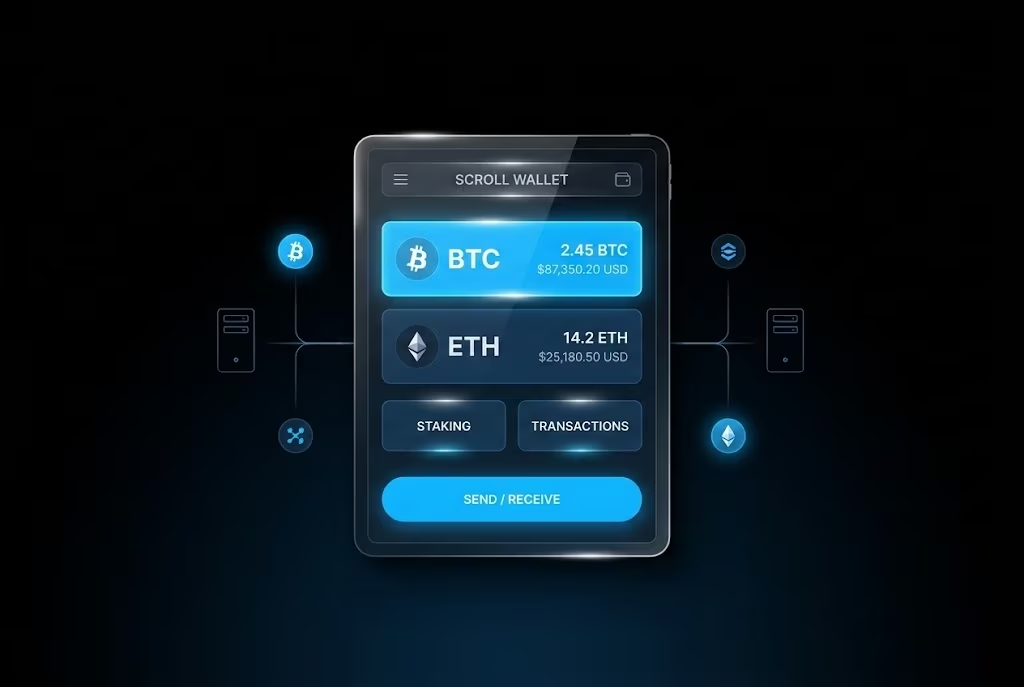
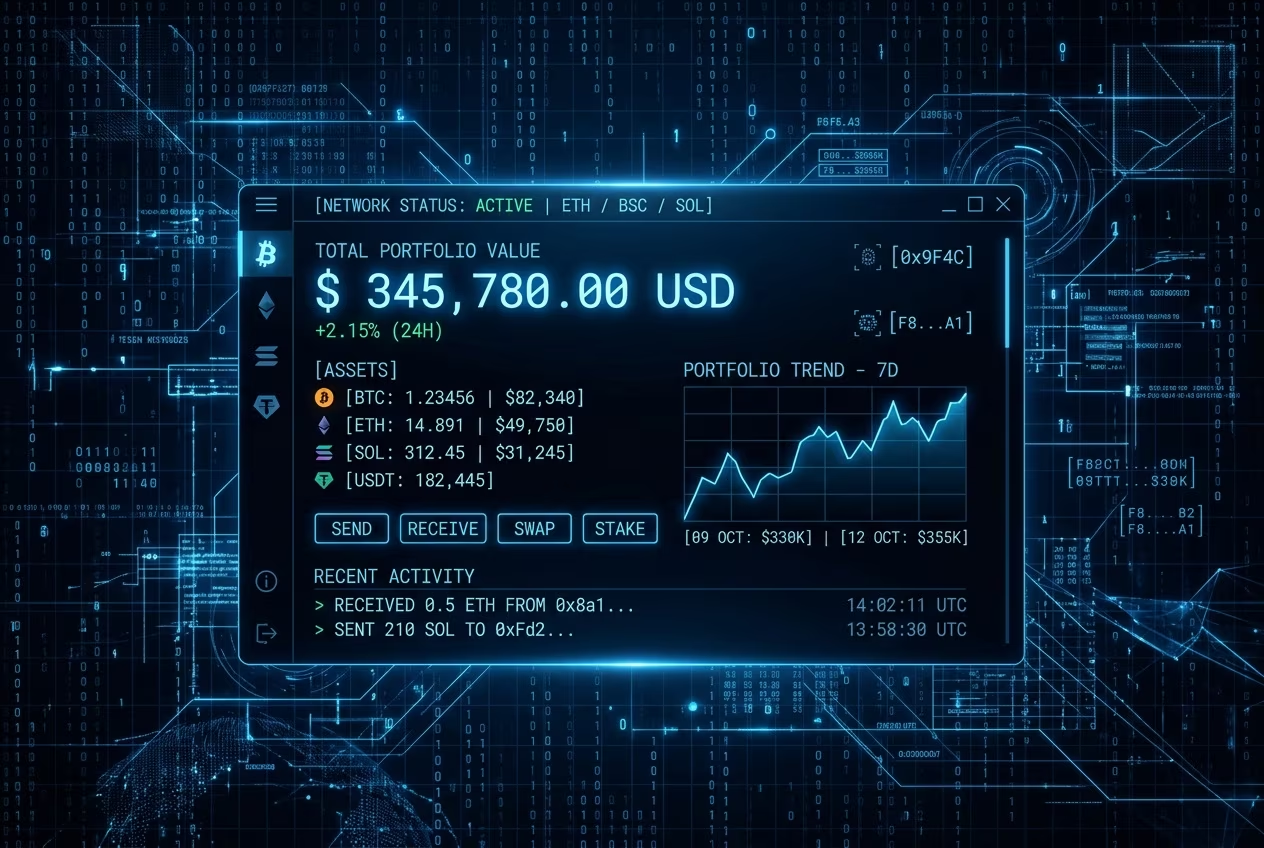
Multi Currency Wallet Solution | Scroll Wallet
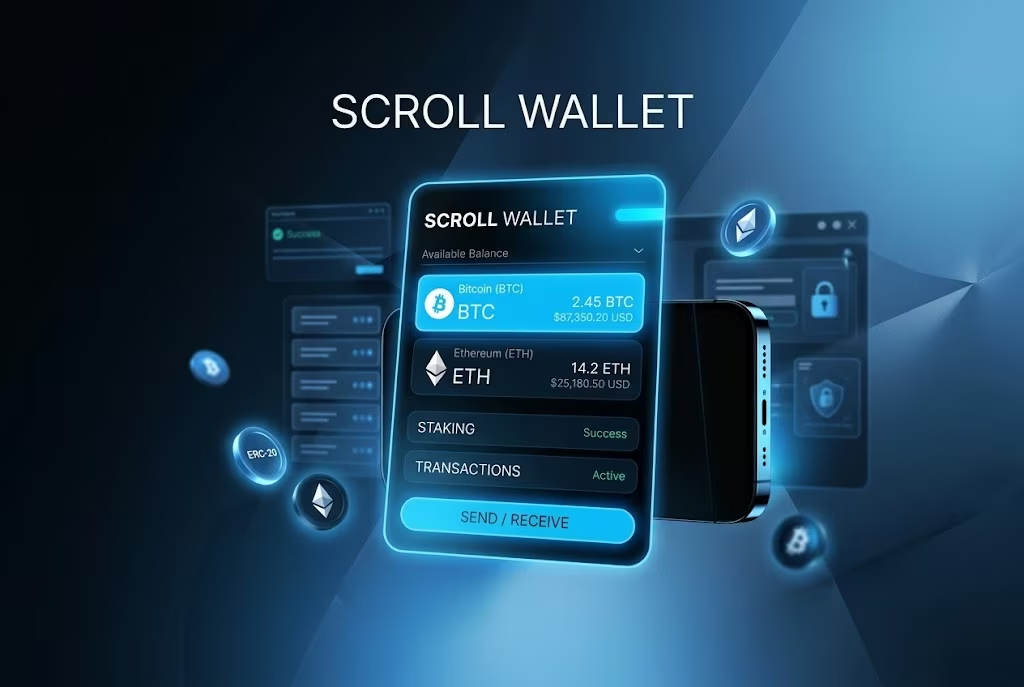
Staking crypto locks your tokens to support network security and earns you rewards. Scroll Wallet automates delegation on Proof-of-Stake networks while keeping private keys under your control, with live APR, slashing-risk, and fee visibility.
Staking fuels the blockchain, powering transaction validation, security, and new blocks. In Scroll Wallet, it is a tap-and-go flow: you lock assets, the network handles validation, and rewards are distributed automatically.
Stake with Scroll and your tokens remain in your own custody. No custodians and no unnecessary middle layers. Every transaction is signed locally and then broadcast to Scroll-compatible infrastructure, reducing attack surface and preserving direct control over your stake.
By 2026, users operate across L2s, bridges, and cross-chain contracts. When you stake on Scroll, you help strengthen consensus and increase the economic cost of attacks such as double-spend or 51% attempts.
To stake safely with Scroll Wallet, follow these steps:
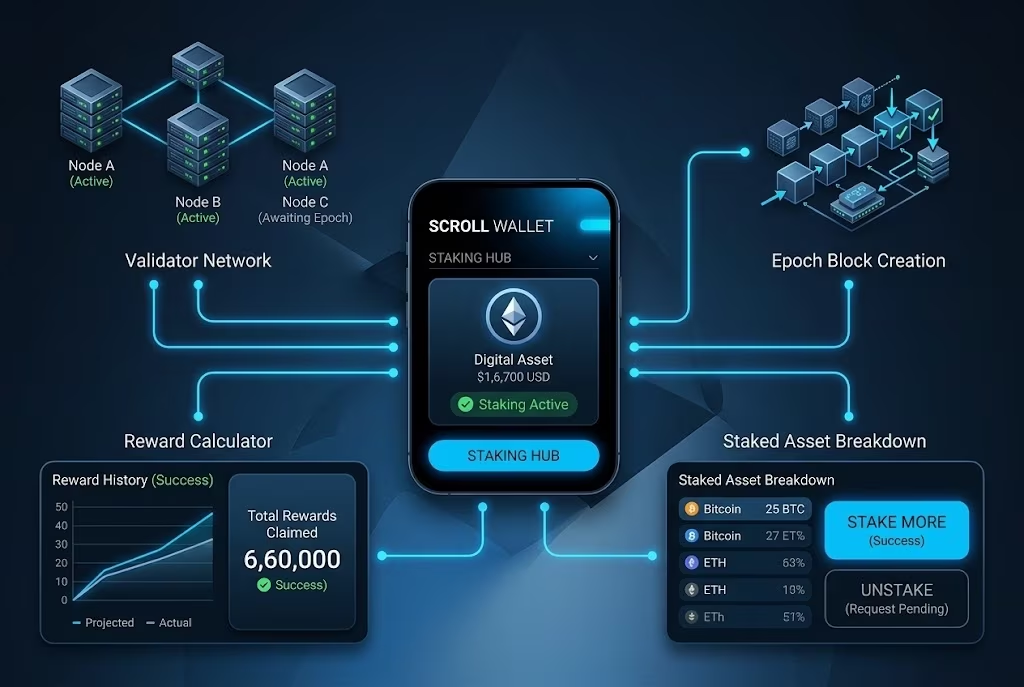
Staking with Scroll Wallet follows four core steps:
| Advantages | Risks |
|---|---|
| Passive Income Earn staking rewards, often between 2-20% APY, without active trading. |
Token Lockup Assets may be unavailable for a set period, limiting quick market response. |
| Network Security Staking supports blockchain security by helping validate transactions. |
Price Volatility Price drops can offset staking gains over the same period. |
| Lower Barriers No mining hardware is required - primarily capital plus wallet access. |
Slashing Risk Validator failure or misbehavior may cause partial stake loss. |
| Ecosystem Support You contribute directly to protocol validation and network health. |
Opportunity Cost Locked capital cannot be used in DeFi, NFT, or active trading strategies. |
Source: Britannica - Overview of staking benefits and associated risks.
Stake in Scroll Wallet and earn passive rewards while keeping custody of your assets. You lock tokens in a Proof-of-Stake network, support transaction validation, and receive protocol rewards in return.
Choose supported assets, confirm your amount, and lock directly from the wallet UI. Rewards accrue automatically and are usually paid in the same token, allowing compounding. In-app balance visibility reads live on-chain data so you can verify earnings without relying on custodial platforms.
Start with a smaller allocation, diversify across assets, and monitor unbonding periods that may last days or weeks. In active multi-chain conditions, use official flows only and keep key management strict.
Ethereum, Polkadot, and Cardano show different staking models, but the same core principle: lock assets to secure the network and earn rewards. Ethereum validators and liquid-staking pools typically operate in lower APY bands, while maintaining broad ecosystem participation.
Polkadot uses Nominated Proof-of-Stake, where nominators back validators and can target higher reward ranges with corresponding operational risk. Scroll Wallet helps keep nomination workflow transparent with user-side key control.
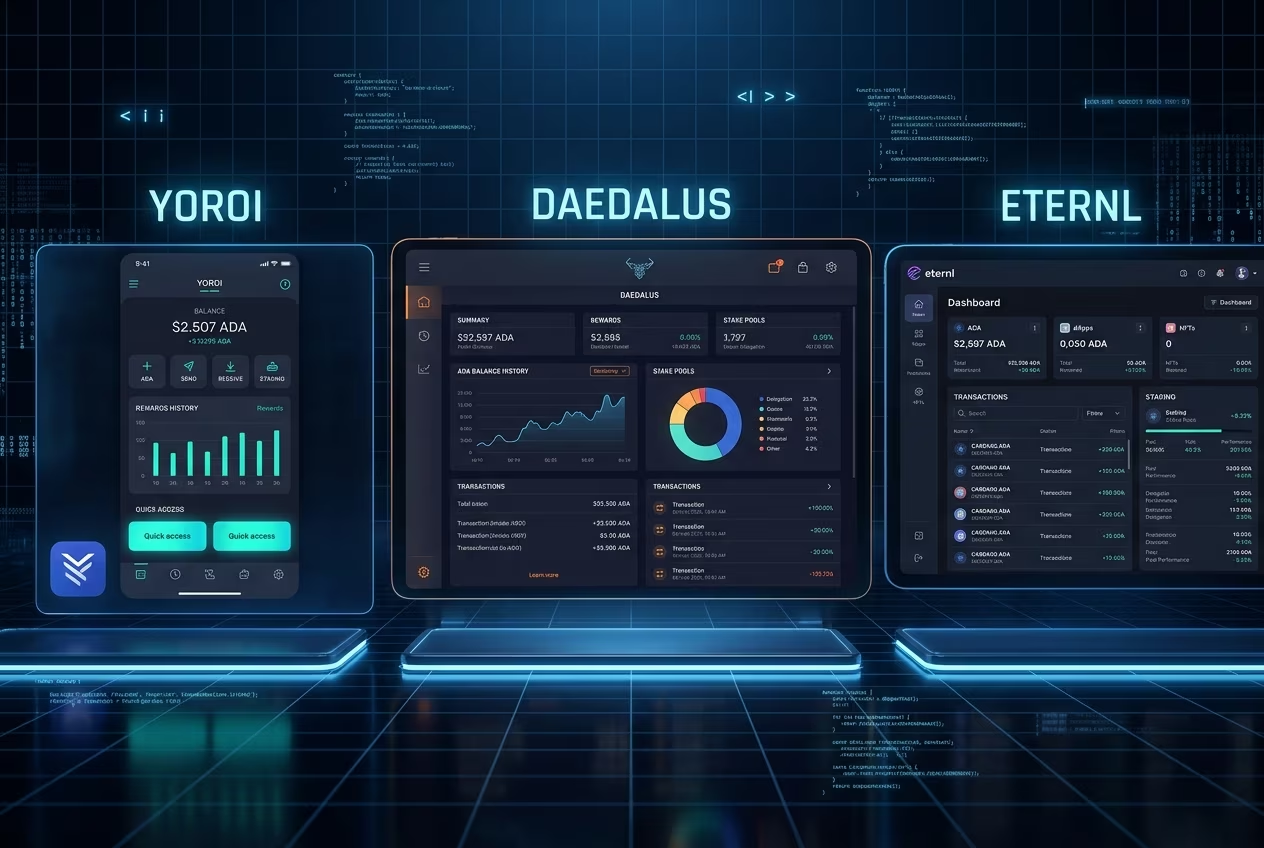
Cardano staking is often associated with moderate APY and lower entry thresholds. For a dedicated ADA walkthrough, see Best ADA Wallet Guide | Scroll Wallet. Scroll Wallet helps users monitor rewards and stay in self-custody across cross-chain operations.
Scroll Wallet is designed for staking workflows that require self-custody, multi-chain coverage, and a clear execution interface. It reduces operational overhead by consolidating staking actions, monitoring, and transaction review into one product surface.
Security controls include local key custody, hardware-wallet compatibility, and continuous anti-phishing checks. The model avoids third-party custody risk and keeps signing authority on the user side.
Cross-network operations are streamlined with gas-aware execution and clearer transaction states. This helps reduce common errors in fragmented L2 and bridge-heavy environments.
For deeper L2 architecture context, review What Is Scroll Network Wallet? Secure L2 Solution 2026 | Scroll Wallet.
Compare staking wallets by fee model, usability, security posture, and supported assets. For Cardano-specific guidance, see Best ADA Wallet Guide | Scroll Wallet.
| Feature | Ledger (Hardware) | Trust Wallet (Software) | Scroll Wallet |
|---|---|---|---|
| Fees | No platform fees, network gas only | No platform fees, network gas only | No reliable public benchmark |
| Ease Of Use | Requires hardware setup | Mobile-focused in-app staking | Guided staking flow with in-app checks |
| Security | Cold storage, offline keys | Hot non-custodial wallet | Self-custody with local signing and anti-phishing controls |
| Supported Assets | Large multi-asset coverage via Ledger Live | Broad EVM and non-EVM support | Scroll-focused multi-chain staking pathways |
Experts usually define staking with two outcomes: yield generation and consensus security. In 2026, validator and delegator performance is evaluated both by reward consistency and by the resilience they add to multi-layer network infrastructure.
Scroll Wallet turns this into a simpler flow by surfacing validator metrics and reward tracking in one interface. Users can delegate faster without giving up key ownership.
Risks remain: lock periods, market volatility, and slashing exposure if validator quality drops. Self-custody also means users must maintain strong recovery and device-level security.
Recommended baseline: enable two-factor protections, pair a hardware wallet when possible, and delegate only what you can keep locked through the full epoch cycle.
Staking serves two goals: strengthening blockchain security and generating passive rewards. Delegation through Scroll Wallet lets users participate in consensus while preserving self-custody.
Most outcomes depend on validator quality, market conditions, and disciplined risk management. Security controls and verification habits are as important as APY figures.
Use the wallet safely:
For product overview and supported assets, visit the Scroll Wallet homepage.