What Is The Purpose Of Staking Crypto? Earn Rewards In 2024 | Scroll Wallet
Staking generates income by locking your crypto to validate transactions and earn block rewards, similar to earning interest on a savings account. The reward rate depends on the network inflation model, your share of total stake, and validator commission.
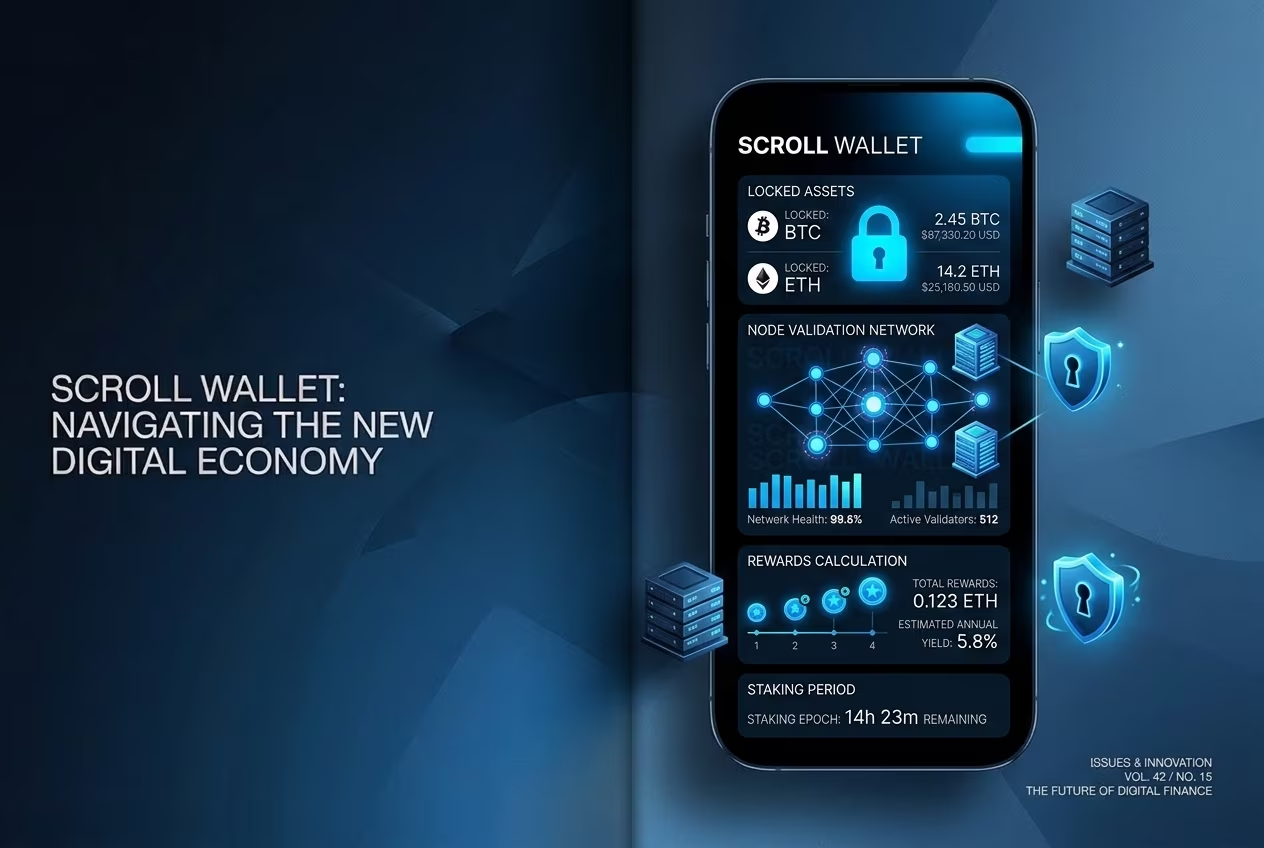
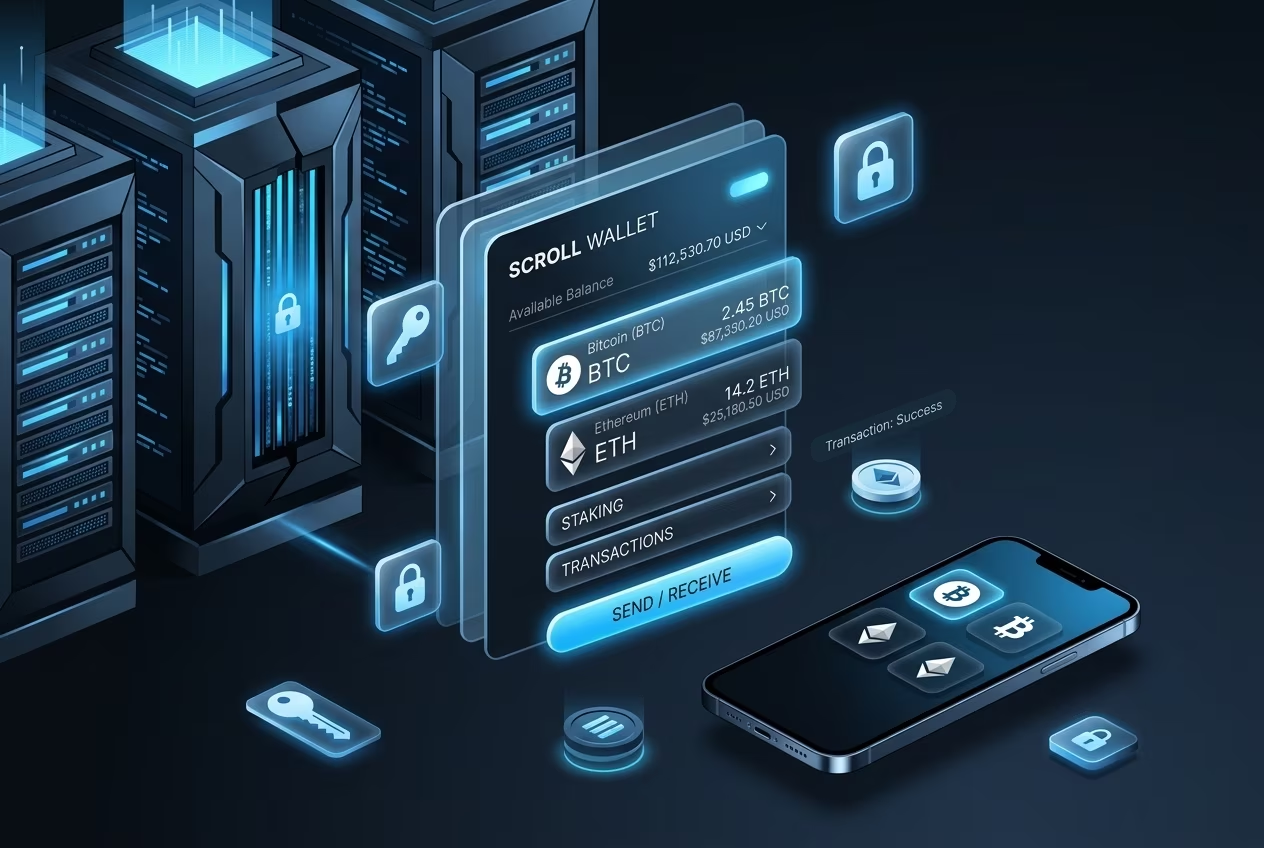
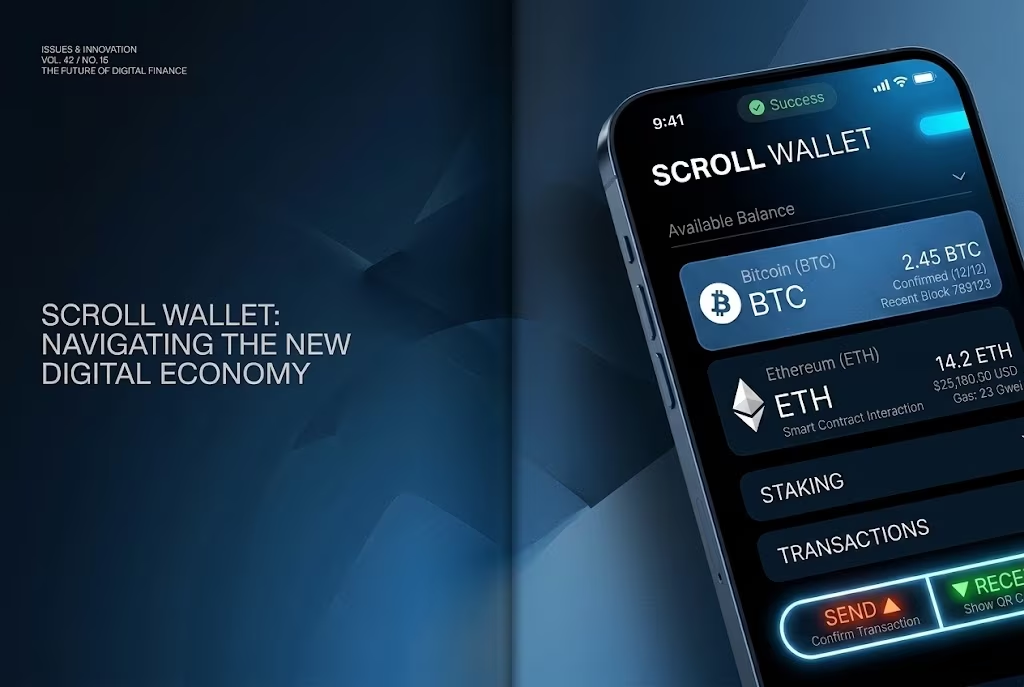
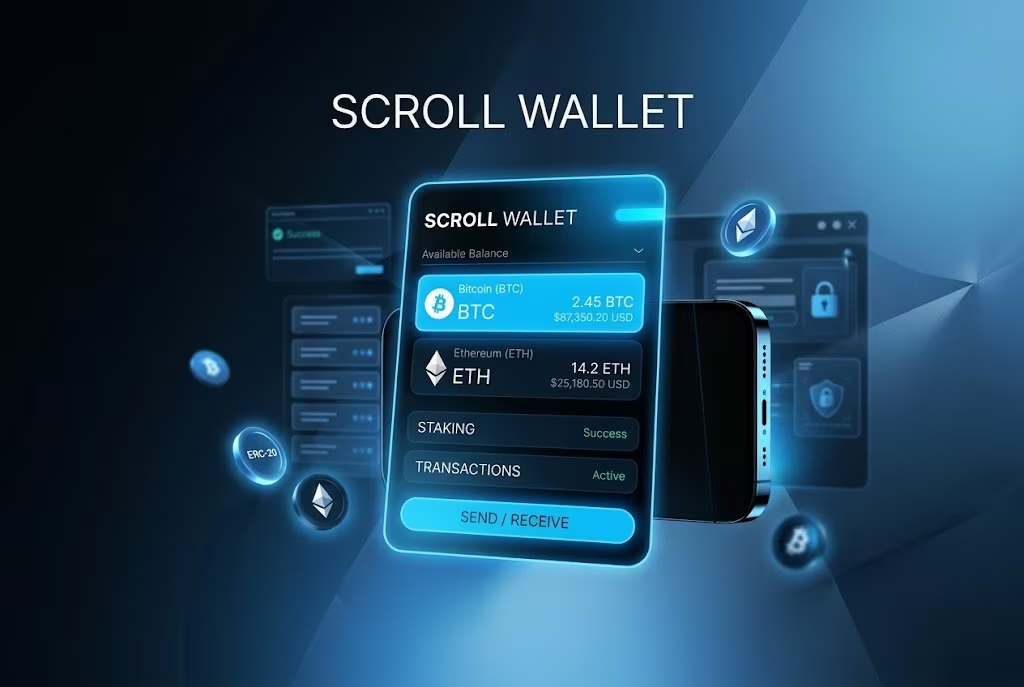
Lock your crypto, stake it, and watch passive rewards roll in like interest-no snooze button needed. In Scroll Wallet you stake directly from the hardened interface, delegating tokens to vetted validators without running your own node. This crypto staking guide covers the flow end-to-end: commit ETH or native tokens, support chain security, and let the wallet handle multi-chain complexity.
Validators produce new blocks and you receive rewards-usually around 4-10% APY depending on network conditions. Concerned about slashing? Scroll Wallet uses screened validators and automated selection to reduce avoidable risk. You stay in self-custody while the UX keeps operations clear.
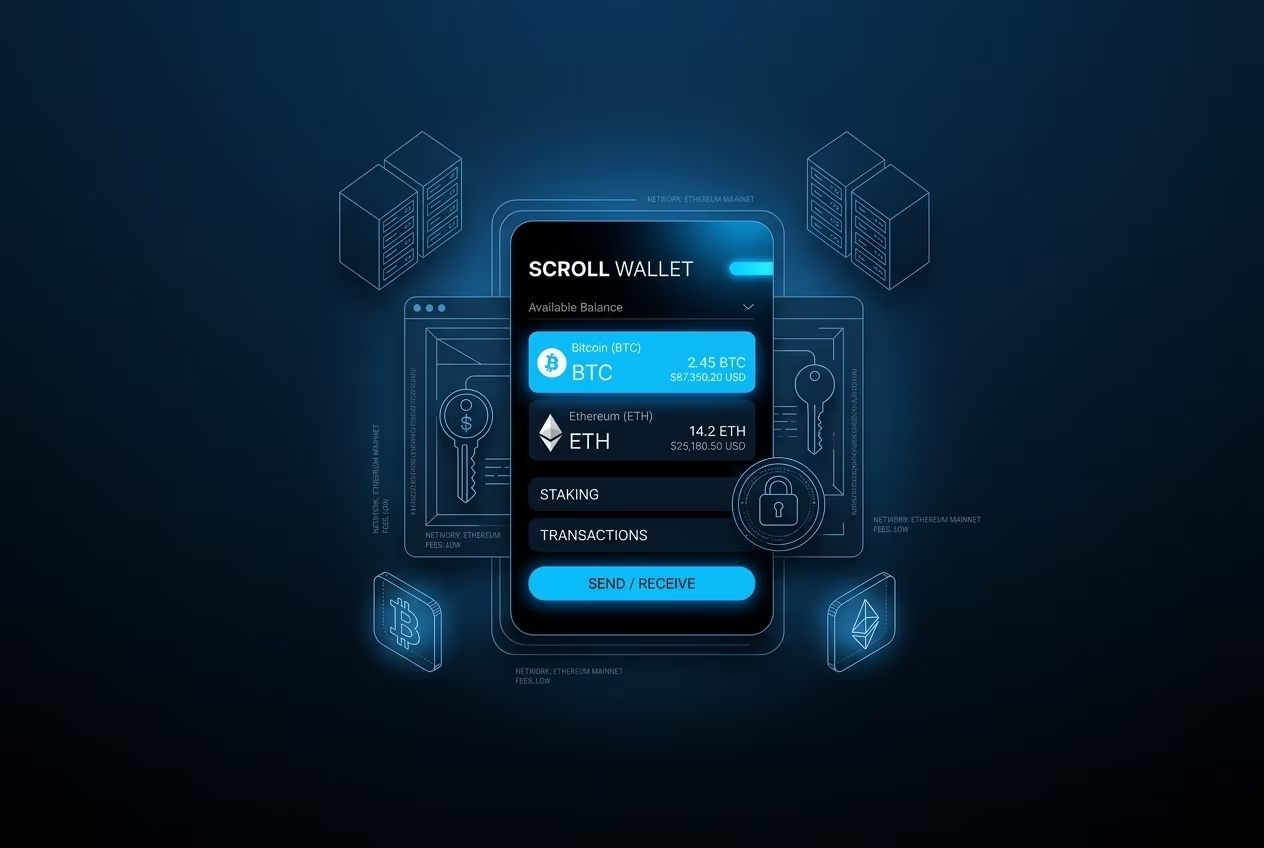
To begin, connect Scroll Wallet, choose an asset, review lock periods and projected yield, then confirm. Rewards accrue automatically. Real-time APR, validator statistics, and cross-chain allocation tools are visible in one dashboard.
Follow these four steps to start staking with Scroll Wallet.
Ethereum staking in 2026 delivers yields between 1.9% and 4.2% depending on method and platform. Solo staking often returns 2.5-3.0%, while liquid staking services like Lido average 2.4-2.6%. Network-wide yield can reach 3.5-4.2% based on total ETH staked and fee structures.
| Staking Method | APY Range | Minimum Entry | Key Trade-off |
|---|---|---|---|
| Solo Staking (Self-Custody) | 2.5-3.0% | 32 ETH (~$60,000) | Full control, higher technical complexity |
| Liquid Staking (Lido, Rocket Pool) | 2.4-2.6% | Any amount | Lower yield, smart-contract risk |
| Exchange Staking (Binance, Kraken) | 1.3-2.5% | Any amount | Lower yield, centralized custody |
| Network Average (All Validators) | 3.5-4.2% | Varies by method | Includes MEV rewards; depends on network activity |
Data source: Pistachio.fi - Ethereum staking APY ranges in 2026 by method and platform.
Why the yield varies: Returns depend on method choice, network activity, and total staked ETH. Solo staking keeps full rewards but needs 32 ETH and validator operations. Liquid staking allows smaller amounts with fee and contract risk. Exchange staking is simplest but usually lower-yield. High network load can increase MEV-driven rewards.
Wallet strategy implications: Scroll Wallet lets you choose between methods based on risk tolerance and capital. Solo setup offers stronger control and potential upside. Liquid options lower entry barriers but include contract exposure. Exchange routes are easiest but transfer custody to third parties.
For Cardano, Polkadot, and Solana, reliable 2026 APY data was limited in the cited source set. For Cardano-specific workflow context, see ADA staking guide.
Proof of Stake allows participation by locking crypto-no expensive mining hardware required. Unlike Proof of Work, which secures the network through energy-intensive computation, PoS selects validators based on stake size and behavior quality.
Ethereum's move to PoS demonstrated lower hardware requirements and significant energy reduction. Honest validator behavior earns rewards and fees; misconduct can trigger penalties. This aligns validator incentives with chain health through economic accountability.
PoS generally supports faster blocks and potentially lower fees, while PoW remains the more mature and battle-tested model in ecosystems like Bitcoin. For broader staking context, compare with crypto staking rewards and purpose.
Crypto staking typically falls into exchange, pooled, liquid, and staking-as-a-service models-each with a different balance between convenience and control. Choose based on risk tolerance and custody requirements.
Exchange staking offers easy onboarding and low minimums but requires giving custody to the platform. Pooled staking lowers entry barriers and distributes validator operations, but includes operator fees and counterparty dependence.
Liquid staking issues a derivative token (for example stETH) so users remain liquid while earning. This model adds smart-contract and peg-variance risk. Staking-as-a-service delegates validator operations to specialists, improving operational quality at the cost of service fees and some centralization exposure.
Reference: Zerion Help Center.
When staking with Scroll Wallet, evaluate these baseline risk categories before capital allocation.
| Risk | Description | Mitigation |
|---|---|---|
| Slashing | Loss of staked tokens due to validator misbehavior or downtime | Select validators with strong uptime and low slashing history |
| Lock-up Periods | Illiquidity and price exposure during unbonding windows | Stake only long-horizon funds; keep liquid reserves; consider liquid staking |
| Price Volatility | Token drawdowns can reduce reward value in fiat terms | Diversify, monitor fundamentals, and rebalance reward exposure |
Source: ChainUP - staking risk categories and mitigation patterns.
Scroll Wallet combines broad native-asset support, integrated swaps, and one-click staking workflows that convert idle assets into yield. Embedded staking contracts reduce reliance on fragmented third-party paths.
Security layers include hardware-grade key isolation, multi-factor controls, and anti-phishing signals. Continuous audits and transparent reporting support operational trust in a high-risk environment.
The interface serves both new and advanced users. Multi-chain routing can optimize confirmation speed and execution costs while keeping funds inside one custody boundary.
Recommended start sequence:
Staking turns idle coins into a passive income stream directly inside Scroll Wallet. Experts Jasmine Muehlhaupt (CAIA, 21Shares) and Darius Mukhtarzade (CDAA, 21Shares) note that staking yields can increase even when spot prices remain flat, with 5%+ returns already common in several networks. According to CAIA, yield levels adjust based on the share of token supply locked to secure the network, as seen in post-Merge Ethereum ranges around 2-4%.
Users choose allocation size while Scroll Wallet handles validator operations through automated delegation flows. The result is a more predictable reward stream, while yield dynamically responds to participation levels across the network. Expert commentary also points to growth in more advanced setups such as delta-neutral staking strategies.
Practical baseline: verify seed phrase backups offline, use a hardware wallet for larger balances, and review dashboard metrics for staked amount, accrued rewards, and current APY. As participation rises, network resilience can improve, but yields remain variable and are not guaranteed.
To improve staking outcomes, combine high-quality APY selection, diversification across protocols, and strict wallet security discipline. Multi-chain fragmentation in 2026 increases routing complexity, so unified tooling can reduce operational drag.
Practical actions:
Scroll Wallet offers contract transparency checks and automated alerts, but risk remains user-managed in self-custody setups. Review validator performance, keep software updated, and maintain strong authentication posture.
Scroll Wallet makes staking operationally simple while preserving self-custody control. Native modules in one interface remove unnecessary context switching and expose APY, rewards, and validator data in real time.
Staking can support both network security and portfolio yield-usually in the 4-12% annual range depending on protocol and market conditions. Rewards are settled on-chain while users retain direct ownership over keys and assets.
Security remains essential: hardware-wallet support, anti-phishing safeguards, and transaction review discipline are mandatory in 2026. Start with conservative exposure limits, verify each transaction in explorers, and keep recovery phrases offline.
For complete product context and supported assets, visit the Scroll Wallet homepage.