Crypto Wallet Check: Secure Balances With Scroll Wallet 2026 | Scroll Wallet

To check a crypto wallet balance, use a blockchain explorer or your wallet's built-in viewer. Enter the public address in the explorer search bar, confirm the network, and review assets and transaction history without exposing private keys.
Use these common explorers to verify wallet balances and transaction history without account registration.
| Network | Explorer | Key Features |
|---|---|---|
| Bitcoin | Blockchain.com | Basic balance view and transaction tracking |
| Bitcoin | Blockchair | Unified search and deeper analytics |
| Ethereum | Etherscan | Balances, full history, token and contract visibility |
| Solana | Solscan | Decoded transaction history plus NFT/DeFi visibility |
| Solana | Solana Explorer | Raw balances and transaction inspector |
Source: Blockchain.com Explorer
Demand for multi-wallet balance checks is rising because users now hold assets across exchanges, self-custody wallets, L2s, and app-specific accounts. A single address view is no longer enough: users need to confirm native coin balances, token holdings, NFT positions, pending transactions, and bridge status across multiple networks before they sign or report anything.
The U.S. wallet market is moving in that direction. Grand View Research projects the U.S. crypto wallet market to reach $21.59 billion by 2033, while public explorers such as Blockchain.com, Etherscan, BlockScout, and Solscan remain the default read-only way to verify balances without exposing private keys. The key behavior is simple: check the address on the correct network, compare the wallet UI against an explorer, and investigate any unexplained outgoing approval or transfer before taking action.
Scroll Wallet fits this trend by giving users a wallet-side balance view while still encouraging explorer verification for high-value activity. For multi-chain holdings, keep a small checklist: confirm network, confirm token contract, check transaction status, and never enter a seed phrase into a balance-check website. Sources: Grand View Research U.S. crypto wallet market outlook and Blockchain.com Explorer.
FinCEN 2024 guidance generally excludes non-custodial wallets from MSB classification when users control private keys and funds. The source article references a four-factor framing around control of value and payment-system interaction, and contrasts non-custodial architecture with hosted custodial models.
In practical terms, read-only balance check functionality does not trigger the same obligations as custodial transfer services. Hosted services may require MSB registration, AML/KYC processes, and travel-rule controls depending on function and jurisdiction.
For architecture and security context, see Multi Chain Crypto Wallet Security | Scroll Wallet.
Balance checks and transaction-history views are free in Scroll Wallet. Querying balances is read-only and does not require a paid operation.
Transaction execution still requires network gas. Ethereum L1 can spike to several dollars under congestion, while Scroll L2 is positioned for materially lower fee levels, often below one cent for routine actions.
Source context: BitGo - transaction fee model overview.
Compare typical network transaction fees referenced in the source article.
| Network | Average Fee (2024, USD) |
|---|---|
| Bitcoin | $0.26-$0.27 (up to $5) |
| Ethereum | $0.50-$2 (peaks above $5) |
| Scroll L2 | <$0.01 (about $0.002) |
Source: CoinGecko Research - blockchain fee benchmark context.
Balance monitoring can be affected by phishing, fake support prompts, stale explorer data, and compromised wallet environments. Source text highlights complaint-driven scenarios including apparent zero balances, unauthorized outflows, and social-engineering patterns.
Recommended controls include explorer cross-checks, transaction simulation before signature, strict seed-phrase isolation, and avoidance of unsolicited support channels.
For additional risk-control guidance, see Crypto Wallet Passphrase Security Solution For Users 2026 | Scroll Wallet.
The source frames future wallet monitoring around automated anomaly detection, cross-chain visibility, and local-key security. As L2 fragmentation grows, users need normalized multi-chain balance views and alerting that does not compromise self-custody.
A practical pattern is local key custody plus optional monitoring controls, clear audit logs, and user-verifiable activity tracing before risk response actions.
AI-assisted alerts can improve detection speed, but final asset-movement decisions remain user responsibility under self-custody models.
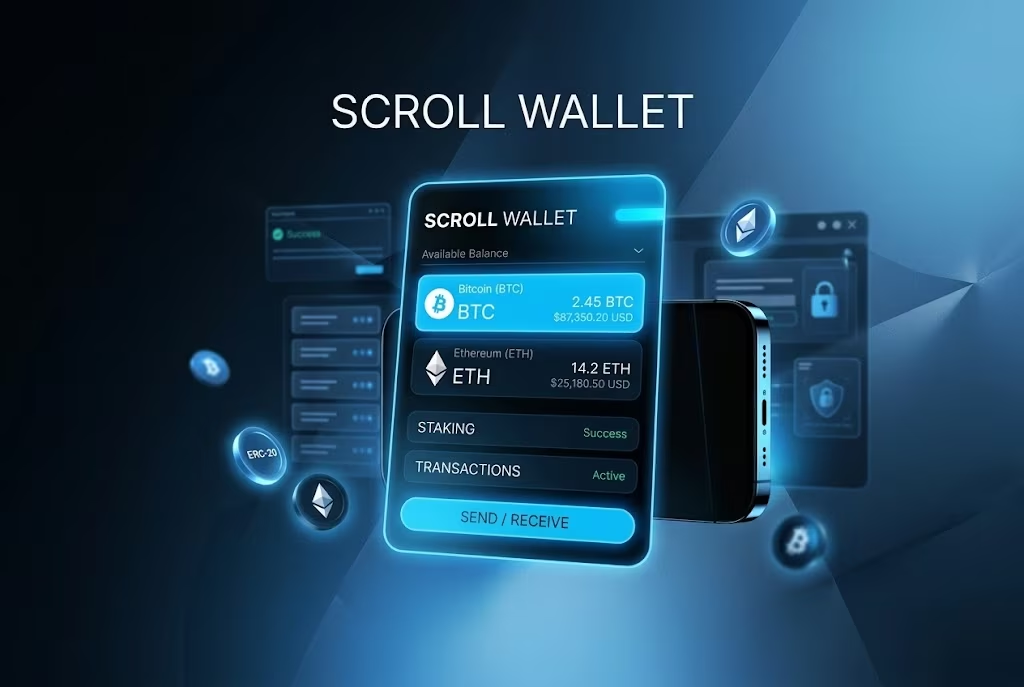
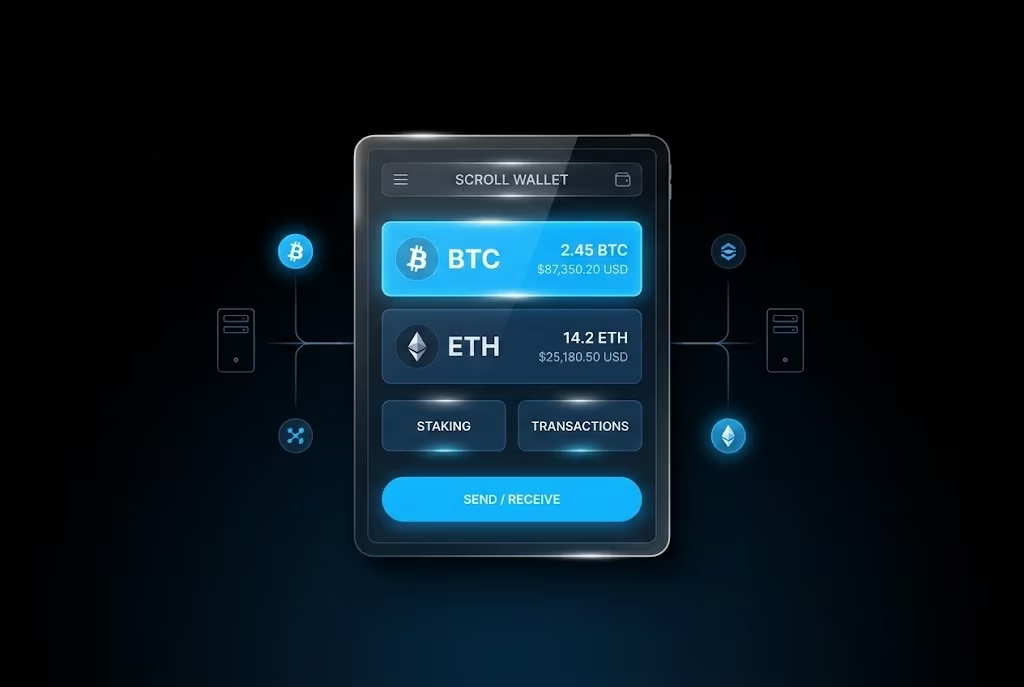
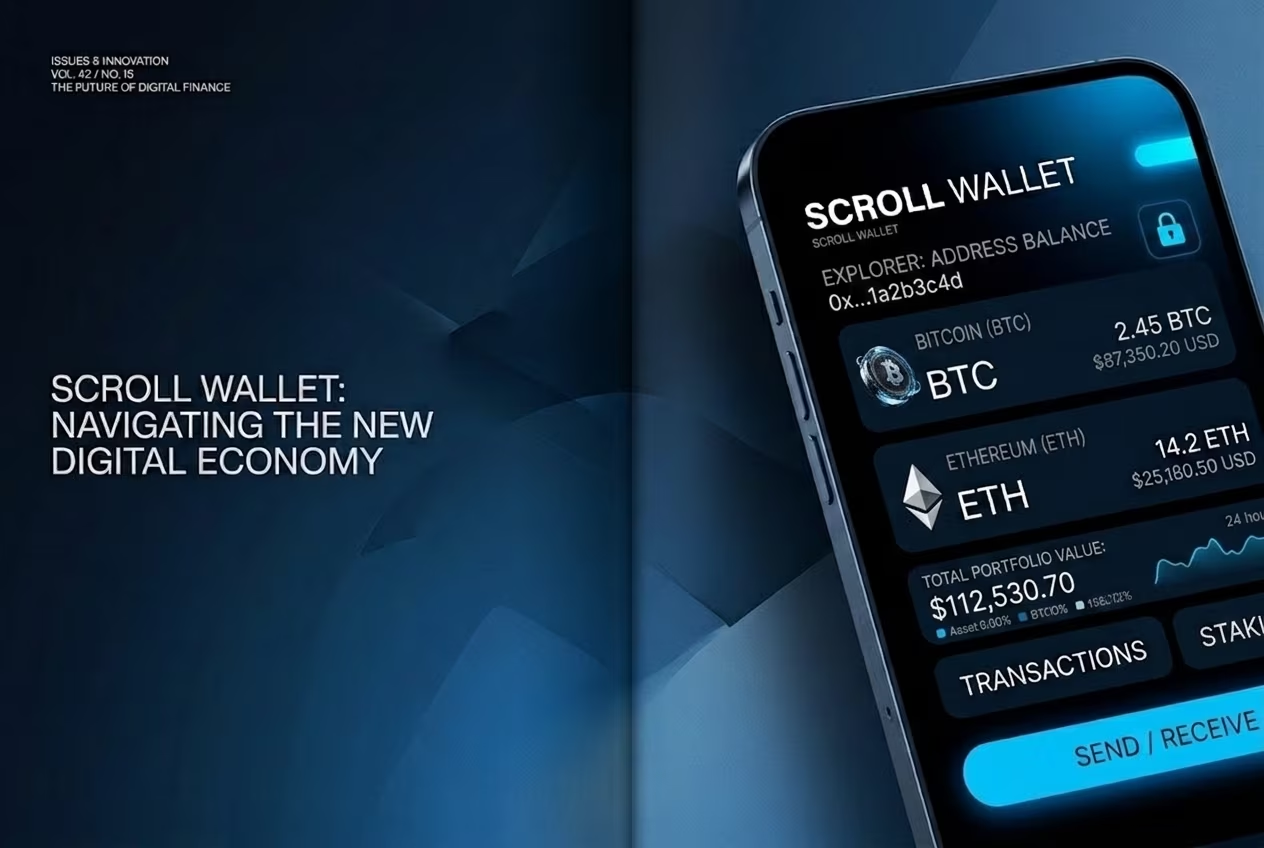
Scroll Wallet consolidates Ethereum and L2 balance visibility into one interface while keeping private keys on the user side. This improves transparency for token, transaction, and NFT checks without introducing custodial dependency.
The source also emphasizes open-audit positioning, integrated swaps/DeFi access, and user-side responsibility around seed management and recovery controls.
For a deeper Ethereum L2 walkthrough, read What Is Scroll Network Wallet? Secure L2 Solution 2026 | Scroll Wallet.
Wallet-balance verification in 2026 depends on clear multi-chain visibility, trusted explorer checks, and strict self-custody hygiene. Scroll Wallet is positioned as a single dashboard for cross-chain balance operations with user-side key control.
Automation can reduce operational friction, but no wallet removes all risk. Users still need disciplined backup routines, device hygiene, and signature review before every transfer.
Recommended routine:
For platform overview, visit the Scroll Wallet homepage.