How To Transfer Crypto Currency Securely Scroll Wallet 2026 | Scroll Wallet
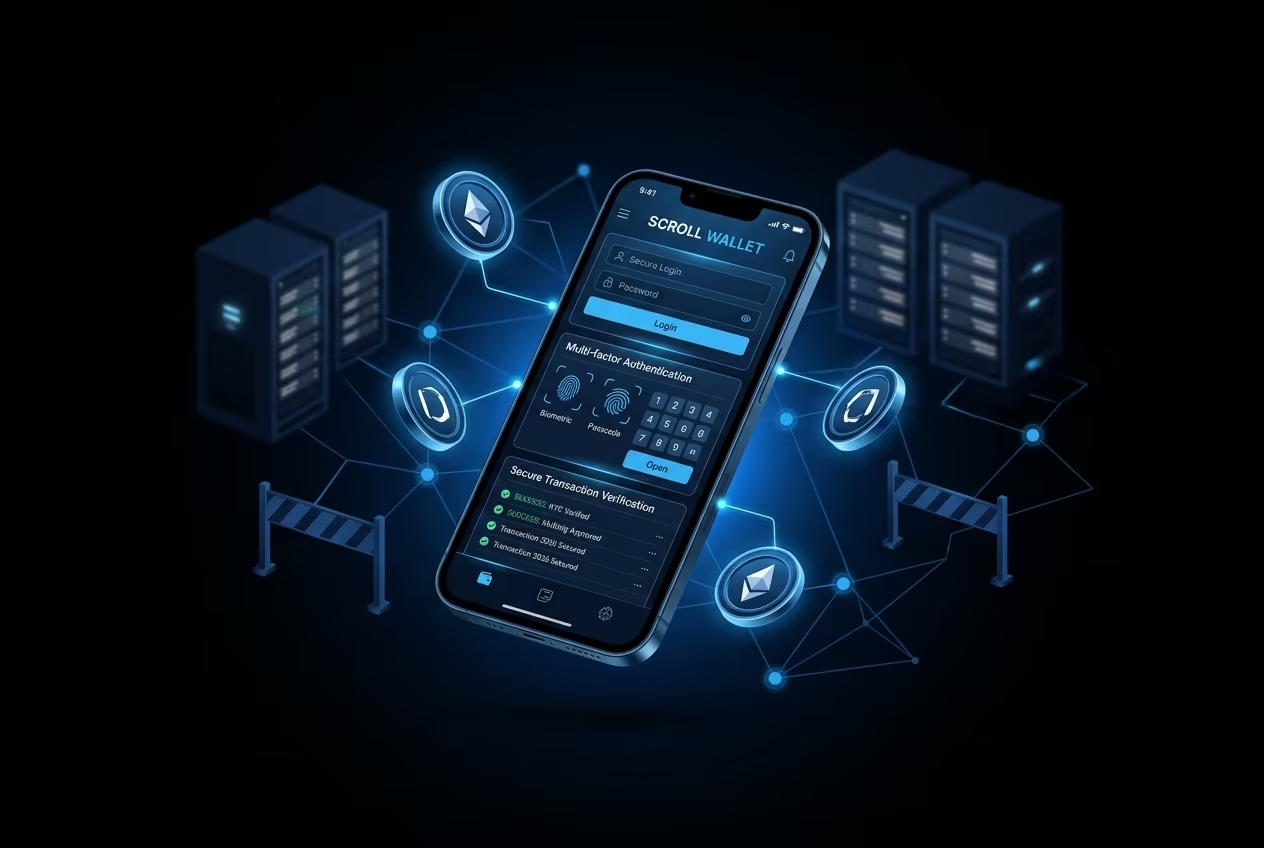
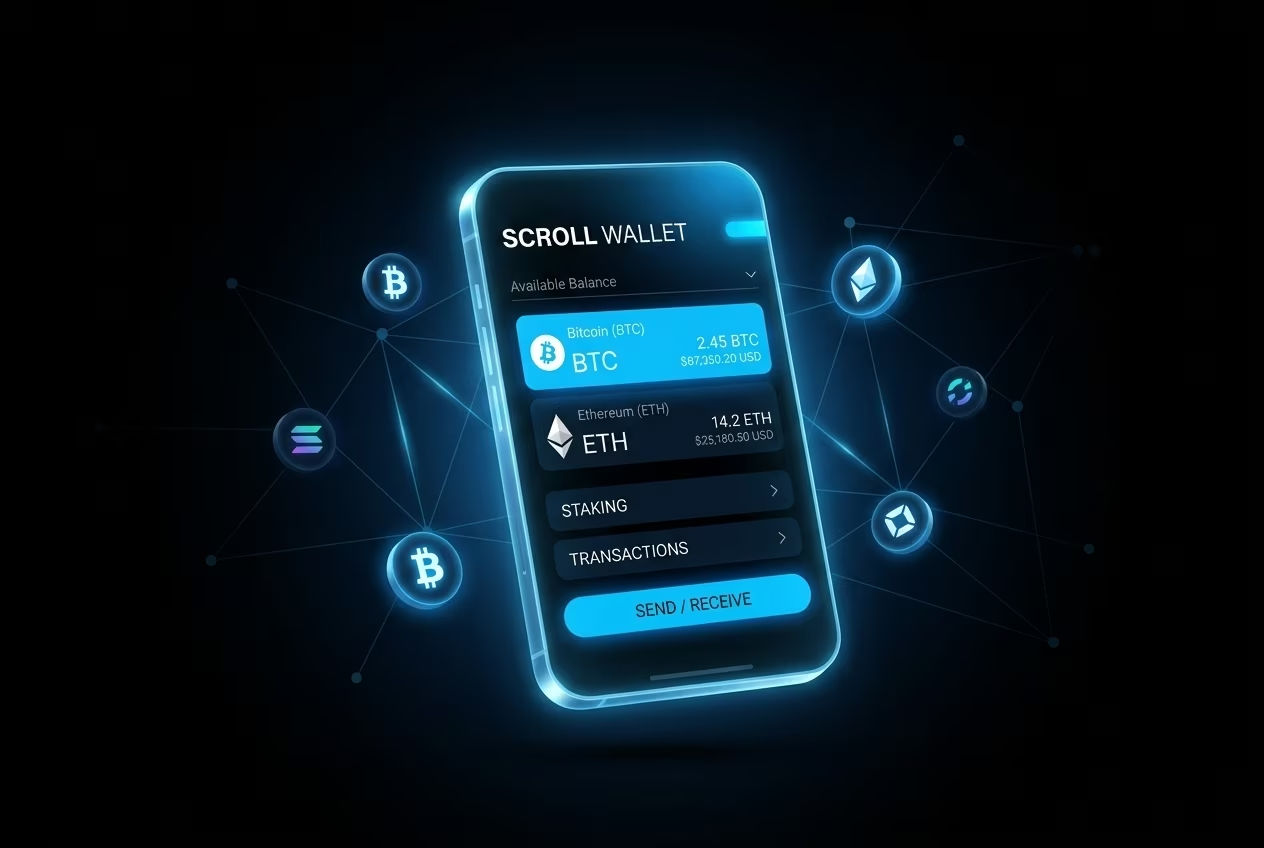
Scroll Wallet is a non-custodial ERC20 tokens wallet designed for secure transfers, lower L2 costs, and transparent self-custody controls across Ethereum and compatible networks.
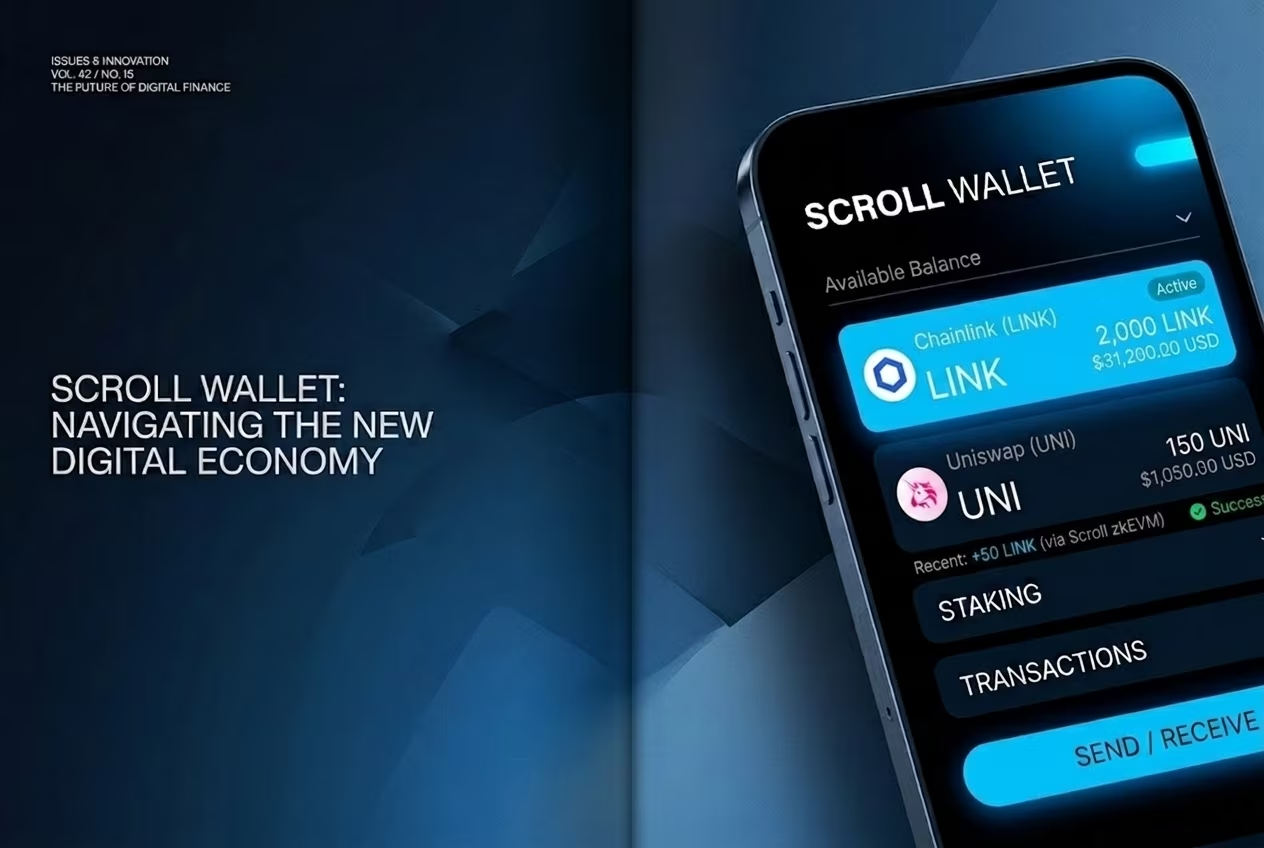
Compare top ERC20 wallets by platforms, security profile, and chain support to match your risk model and day-to-day transaction flow in a multi-chain environment.
| Wallet | Platforms | Security | Supported Chains |
|---|---|---|---|
| MetaMask | Mobile, Browser | Medium-High (hot wallet, no hardware isolation) | Ethereum, EVM chains (BSC, Polygon, others) |
| Trust Wallet | Mobile, Browser | Medium-High (hot wallet, no hardware isolation) | Ethereum, EVM chains (BSC, Polygon, others) |
| MyEtherWallet | Web, Desktop, Mobile | High (hardware integration) | Ethereum and ERC20-focused |
| Exodus | Desktop, Mobile, Browser | Medium-High (optional Trezor pairing) | 300+ assets including ERC20 |
| Trezor | Hardware | Very High (offline key storage) | ERC20 through companion apps |
Source of data: GetBlock wallet comparison review.
Scroll Wallet turns ERC20 transfers into a simple flow while keeping signing local and keys under user control. Users choose token, enter recipient, set amount, review gas, and confirm the transaction in one path.
Typical send flow:
Receiving flow is address-based, while custom assets can be added by contract with symbol and decimals. For cross-chain operations, this model is aligned with secure transfer flow in Scroll Wallet.
Operational baseline remains strict: verify contract IDs, keep recovery material offline, and review dApp permissions before signing.
Use this sequence to configure a non-custodial ERC20 wallet for safer daily use.
Related custody model reference: difference between custodial and non-custodial wallets.
ERC20 wallets power lending, staking, and yield workflows, but execution security matters as much as protocol choice. Scroll Wallet keeps approvals and signing in one interface while maintaining user-side custody.
Common usage paths include:
Risk control baseline: hardware signing for larger balances, strict contract verification, and periodic permission revocation.
Source market framing projects strong wallet growth in North America, while security and compliance complexity rises in parallel. Trend data from Grand View Research highlights high growth expectations for wallet services through the next cycle.
Hot-wallet convenience still drives adoption, but threat exposure remains high for phishing and malicious approvals. This trade-off is also visible in broader online wallet security patterns for US users.
In practice, users now prioritize lower-fee L2 execution, clear approval prompts, and recovery reliability over feature volume alone.
Ethereum L1 fees remain the major friction point for frequent ERC20 transfers, while Scroll L2 execution is typically much cheaper for the same operation class.
| Network | Average ERC20 Fee | Peak Fee |
|---|---|---|
| Ethereum L1 | $15-30 | $150 |
| Scroll L2 | <$0.10 | <$0.30 |
Source data: Scroll Docs - ETH and ERC20 token bridge.
US wallet regulation is tightening around custody, trading features, and AML/KYC obligations when products connect users to financial services. Scope depends on whether a wallet only provides self-custody tooling or also introduces brokerage-like functionality.
For federal compliance context, review FinCEN virtual currency guidance and SEC custody/broker-dealer materials such as the SEC digital asset custody statement.
Operationally, non-custodial design reduces platform-side custodial risk, but users still carry key-management, phishing, and contract-approval responsibility.
ERC20 wallet losses are still dominated by phishing, malicious approvals, key exposure, and operational signing mistakes. Recent exploit tracking from Chainalysis and incident monitoring from Rekt continue to show user-side approval risk as a major attack path.
Seed phrase handling remains a high-impact weak point: cloud backups, screenshots, and plain-text storage create avoidable compromise vectors. Wallet users should keep recovery material offline, separated, and tested.
For stronger architecture patterns, compare with open-source wallet security advantages and enforce transaction simulation plus permission review before each high-value action.
Scroll Wallet combines non-custodial control with lower-fee zkEVM execution for ERC20 operations across L1 and L2. The compatibility model is documented in Scroll technology documentation and allows existing Ethereum tooling patterns to operate with minimal migration friction.
For transfer economics and bridge behavior, see transaction fee mechanics on Scroll and the ERC20 bridge workflow.
Practical user benefit: lower execution costs, clearer approval flow, and safer daily operation with self-custody retained. Related internal guide: Scroll wallet on Ethereum.
ERC20 wallet security in 2026 is less about one feature and more about disciplined execution across custody, approvals, and routing. Scroll Wallet positions this around non-custodial ownership, L2 cost efficiency, and verifiable transaction flow.
Recommended baseline:
With these controls, users reduce avoidable losses while keeping full key ownership.