Browser Cryptowallet Security Risks Solved In 2026 | Scroll Wallet
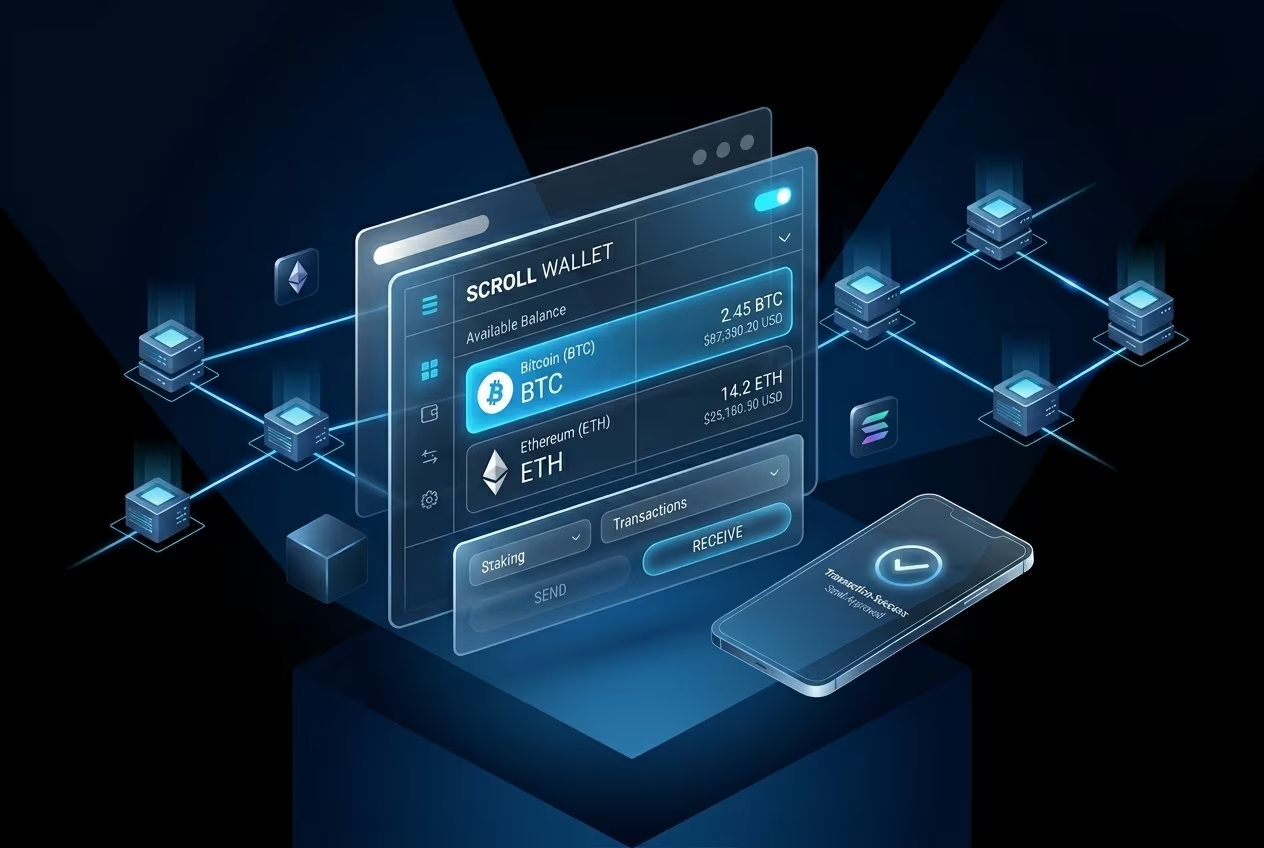
Scroll Wallet eliminates MetaMask's UI clutter and pop-up signing by offering in-app transaction approval, biometric unlock, and built-in gas estimation. It supports seamless multichain navigation, automatic network selection, and low-fee roll-ups on Base, Optimism, and zkEVMs, while keeping private keys under your control. The wallet also integrates passkey authentication to reduce phishing risks.
U.S. crypto wallet market is set to explode from $9.95 bn this year to $74.5 bn by 2032 - a 25.09 % CAGR, according to SNS Insider. The surge signals a hunger for software wallets as Layer-2 solutions spread, multichain support becomes the norm, and users swap seed phrases for passkeys to lock down security. Self-custody headaches-phishing lures, fragmented L2 exploits-loom large, but Scroll Wallet counters them with verifiable infrastructure and a clean UX that trims mistakes across chains. Who needs another wallet nightmare?
As fintech competitors scramble to keep pace, Scroll Wallet distinguishes itself by putting multichain bridges and L2 fragmentation handling front-and-center, letting you juggle assets without hopping chains. Built for the 2026 reality where passkeys augment seed phrases, it slashes phishing risk while you stay in control-though you still need to eyeball each transaction to dodge exploits. Our open architecture logs every move, earning trust through brand reliability, unlike the black-box rivals.
Start with a passkey to unlock fast access, turn on multichain monitoring to catch bridge hiccups early, and enable auto-approvals for low-value moves. That gives you a concrete edge over fintech competitors in tangled on-chain setups, sparing you the nightmare of manual seed backups. We attack real pain points-phishing, chain confusion, loss from exploits-without the hype; your vigilance stays the cornerstone of self-custody success.
MetaMask users battle constant crashes, frozen pop-ups, inflated gas fees, and phantom scam alerts. Those glitches stem from relentless disk churn, background processes chewing your SSD, and fee-guessing algorithms that miss the mark. Ever tried to sign a transaction and watched the dialog freeze like a stuck cassette? Scroll Wallet cuts the noise with a lean L2-focused UI and rock-solid vaults that lean on verifiable infrastructure.
In the MetaMask Community Forum, power users chronicle extension crashes, dead-ended signing windows, and a slow-down that started creeping in 2024 and still haunts 2026 MetaMask Community Forum. Some report SSD wear from a relentless 5 MB/s write stream-up to 500 GB a day-cutting drive lifespan in half. Over-estimated gas leaves transactions hanging, while over-zealous scam filters block legit dApps amid a sea of phishing attacks on fragmented L2s. Our answer? A non-custodial stack outlined in a guide on non custodial wallet principles, where automated risk checks run light on your hardware.
Scroll Wallet confronts 2026's on-chain reality-self-custody pitfalls, bridge hacks, and multi-chain chaos-by delivering frictionless signing, laser-precise gas estimates powered by native L2 logic, and proactive scam detection that learns from a transparent ecosystem instead of reacting to noise. No hidden background tasks, no sluggishness; you flip advanced controls on only when you need them. Pair the wallet with hardened habits-offline seed storage, bridge verification-and you shrink the attack surface while keeping full sovereignty. Ready to swap the crash-course for a smooth ride?
Compare swap fees across popular wallets for a $1,000 trade on Layer-2 networks, where gas costs $0.02-$0.05 per transaction. Trust Wallet saves you the most with 0% platform fees.
| Wallet | Platform Fee | Cost for $1,000 Swap (incl. L2 Gas) |
|---|---|---|
| MetaMask | 0.875% | $8.75 + $0.02-$0.05 |
| Trust Wallet | 0% | $0 + $0.02-$0.05 |
| Coinbase | ~1% | ~$10 + $0.02-$0.05 |
Source of data: MetaMask Help Center - Confirms MetaMask charges a 0.875 % service fee on token swaps
Moving your assets from MetaMask to Scroll Wallet requires careful execution. The safest approach is to create a fresh wallet in Scroll Wallet and transfer your funds via blockchain transaction-not by importing your seed phrase. This protects you against the risks that come with reusing recovery phrases across multiple wallets.
Why this method matters: Importing a seed phrase into multiple wallets creates a security liability. If one wallet is compromised, all wallets using that seed are at risk. By creating a new seed phrase in Scroll Wallet, you isolate your assets and reduce your attack surface. The test transaction step is not optional-it is your verification that the destination is correct before moving significant value.
"`
US crypto wallet rules target custodial services over $3,000, leaving cold wallets untouched. You hold the keys in a self-custody wallet, sidestepping MSB registration and the state-level Money Transmitter Licenses that choke hosted providers. The 2024 FinCEN fact sheet (see FinCEN) repeats the Travel Rule for convertible virtual currency transfers above $3,000 and AML duties for MSBs, yet non-custodial cold wallets slip through by design. With Scroll Wallet we double-down on that loophole, giving you direct control across multi-chain realms-L2s, bridges, you name it-without a single centralized report to worry about.
Cold wallets dodge the 2026 security nightmare of phishing and on-chain exploits. Keep your private keys offline, keep the attack surface tiny. Hosted providers must sign up as MSBs, run KYC under the PATRIOT Act's Customer Identification Program, and file suspicious activity reports. Scroll's architecture is built on verifiable infrastructure: transparent L2 proofs let you watch every transaction, while automated flows cut user error and flag bridge weaknesses. We never custody your funds, so FIT21 Act custodial mandates simply don't apply-just remember to back up your seed. Lose it, and it's gone forever; no rescue squad here.
Play it safe: pair Scroll's clean UX with a hardware cold wallet for big balances. Generate keys in-app, sign offline, push the signed transaction through our interface. The result? Self-custody freedom meets 2026's tangled regulatory maze and the IRS's new $10,000 reporting trigger from the Infrastructure Act. Our brand screams reliability-audited code, zero-trust design, no hype. Start with a tiny transfer, enable multi-sig for larger sums, keep an eye on emerging exploits. You get compliance and security without surrendering control.
| Wallet | Type | Platform | Multichain Support | Best For |
|---|---|---|---|---|
| MetaMask | Hot (Software) | Browser Extension + Mobile | EVM-compatible chains | DApp interaction on Ethereum |
| Trust Wallet | Hot (Software) | Mobile-first (iOS/Android) + Browser | 160+ blockchains | Multi-asset storage, mobile users |
| Coinbase Wallet | Hot (Software) | Mobile + Desktop | Major EVM + limited non-EVM | Exchange-linked trading |
| Phantom | Hot (Software) | Browser Extension + Mobile | Solana-focused, limited bridges | Solana ecosystem users |
| Rabby | Hot (Software) | Browser Extension | EVM chains + multi-chain | DeFi power users |
| Ledger Nano (S/X) | Cold (Hardware) | Desktop + Mobile (via Ledger Live) | Multi-chain via third-party apps | Long-term storage, high security |
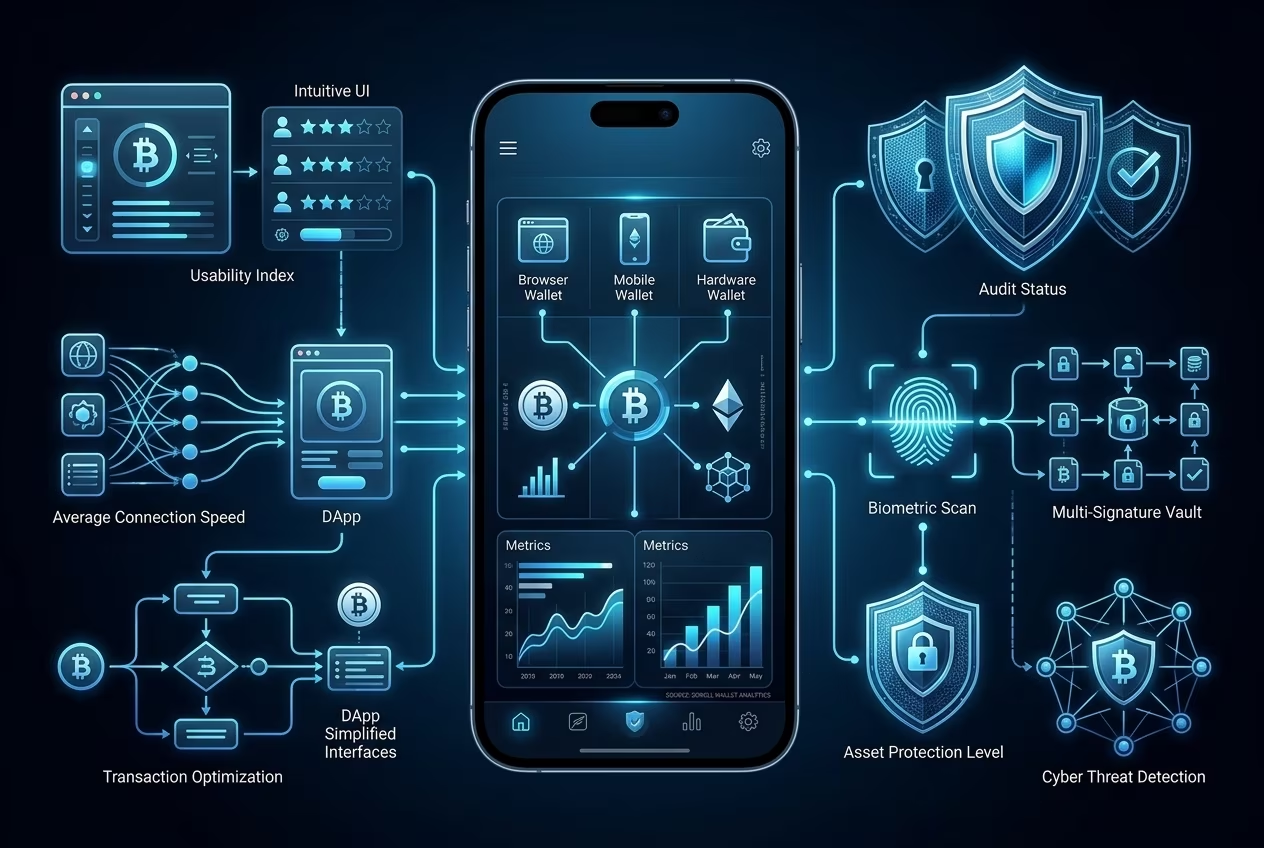
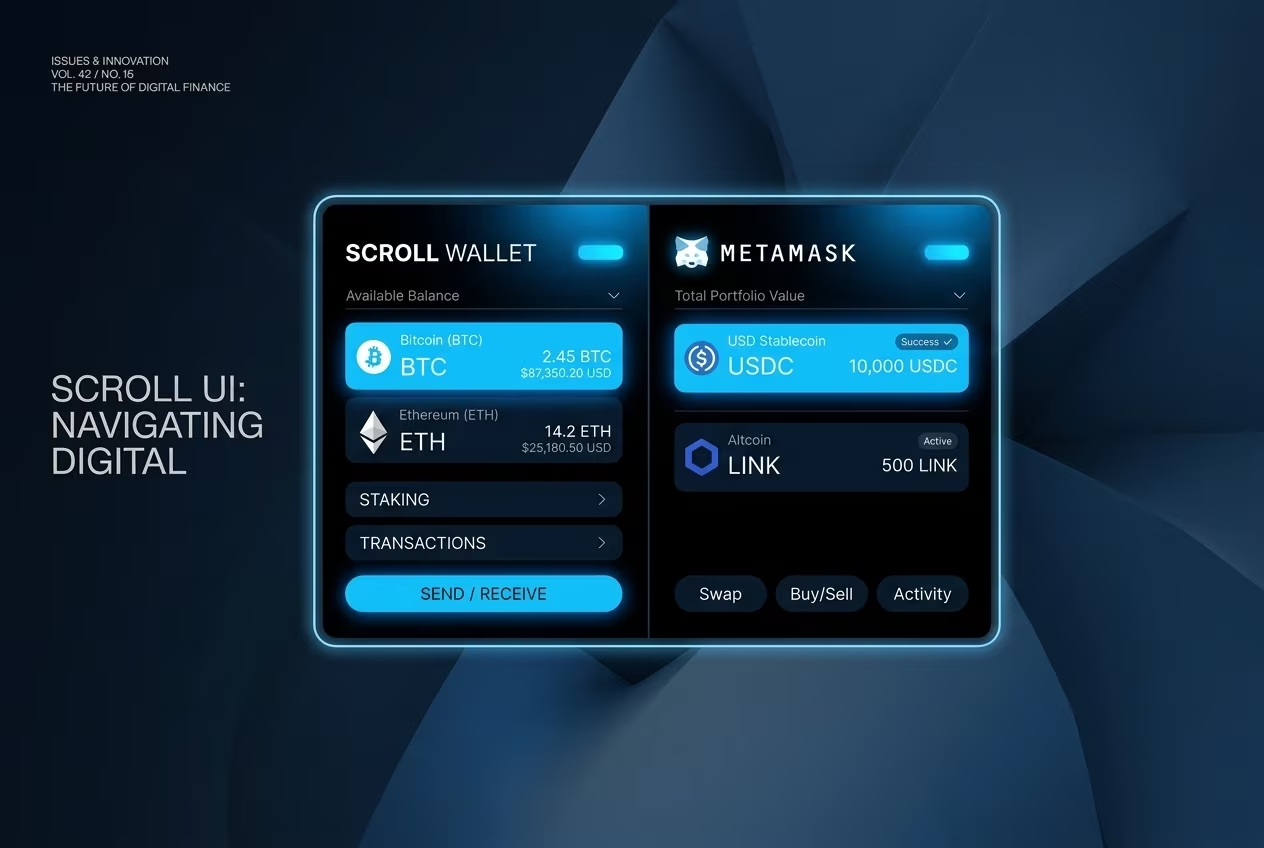
When choosing a wallet, you face a fundamental trade-off: accessibility versus security. Hot wallets (software-based) offer speed and convenience for active trading and DApp interaction. Cold wallets like Ledger Nano isolate your keys offline, eliminating remote attack vectors-but require deliberate steps to transact.
For multi-chain environments in 2026, network breadth matters. Trust Wallet supports 160+ blockchains natively, eliminating manual RPC configuration. MetaMask dominates Ethereum DApp integration but requires custom setup for non-EVM chains. Phantom locks you into Solana unless you bridge assets-a process that introduces additional risk and slippage.
Mobile-first wallets (Trust, Coinbase, Phantom) suit users managing assets on-the-go. Browser extensions (MetaMask, Rabby) integrate tightly with desktop DApps but expose you to browser-based phishing and extension vulnerabilities. Ledger Nano removes this risk entirely by keeping private keys offline, though it requires a paired app (Ledger Live) to broadcast transactions.
30% of wallets will shift to MPC by 2026, tightening security. Next-gen tools such as Scroll Wallet fuse ERC-4337 smart accounts, passkeys and gas-sponsored signing, slashing self-custody risks and phishing across chains.
2026 throws tougher security tests at you: wallet hacks surge, L2s splinter, on-chain moves get messy. Scroll answered with Scroll Wallet, built on ERC-4337 account abstraction. Passkeys lock out phishing; sponsored transactions lift the gas-paying weight off your shoulders. Approve actions without ever flashing a private key. Our MPC thresholds-aiming at 30% of migrations by year-end-scatter key shards across devices, so loss of one piece won't lock you out. Dive into the best crypto wallet features we champion for frictionless multi-chain bridging.
Openfort's analysts say the next wave of wallets will lean on ERC-4337 smart accounts, passkeys, gas-sponsored signing-automating flows, cutting risk. Scroll Wallet lives up to that promise with a visually appealing interface in our Dapp Store, where apps appear, you connect, you go. We put verifiable infrastructure front-and-center-you can audit on-chain proofs yourself. Clean UX battles a tangled ecosystem. Keep 2FA on. Watch bridges for liquidity hiccups. Start small, watch confidence grow in the reliable Scroll arena.
Looking for cheap L2 swaps, a phone-first design, no annoying pop-ups, and Ledger support? Scroll Wallet delivers. We built it on Scroll's zk-EVM L2, where fees consistently dip below $0.001 in 2026. Everyday DeFi becomes cheap enough to fund a coffee. The interface hugs your smartphone, wiping out modal interruptions that trick users into accidental clicks or phishing traps. Pair it with a Ledger Nano, and your private keys stay offline while the app feels as smooth as native mobile banking.
Our architecture pulls the signing engine out of the app layer, slashing the attack surface that haunts many browser wallets. Plug a Ledger Nano, and the device does all the heavy cryptography - the wallet never touches your seed phrase. On top of that, native multi-chain navigation lets you hop between Ethereum, Scroll L2, and other compatible chains without leaping onto sketchy bridges that often become security nightmares.
To use Scroll Wallet safely, follow these steps:
Choosing Scroll Wallet means you get a transparent, verifiable stack that puts user control and rock-bottom costs front-and-center - while reminding you that self-custody always carries responsibility. We audit the codebase constantly and publish the findings, so you can trust the platform without getting caught up in hype.
Scroll Wallet fuses ease, ironclad security, and true multichain fluidity. 2026 users won't settle for a clunky vault; they demand a shield that stops phishing bots in their tracks while handing over assets at the speed of thought. Imagine signing inside a hardware-backed enclave, guarded by multi-factor checks, while an AI-like monitor sniffs out odd patterns. No lag. No compromise.
We lock that promise with audited smart-contract bridges, formal verification of the core, and a fully transparent repo where anyone can eyeball every commit. Self-custody becomes a partnership: social-recovery shards, time-locked backup keys-lost phone? No apocalypse. You stay the master of your funds.
The UI shreds the usual multichain headache. One pane, one click, you hop networks, see balances, fire cross-chain swaps. Behind the scenes, gas-optimizers hunt the cheapest route in real time. Beginners breathe easy; power users grin.
Trust isn't a buzzword here-it's baked in. Ongoing third-party audits, live security dashboards, a reputation earned on uptime, not hype. Keep the app fresh, enable MFA, stash recovery shards offline, and Scroll Wallet slips seamlessly into your daily crypto ritual.