How Does Staking Make Money? Easy Guide For Beginners 2026 | Scroll Wallet
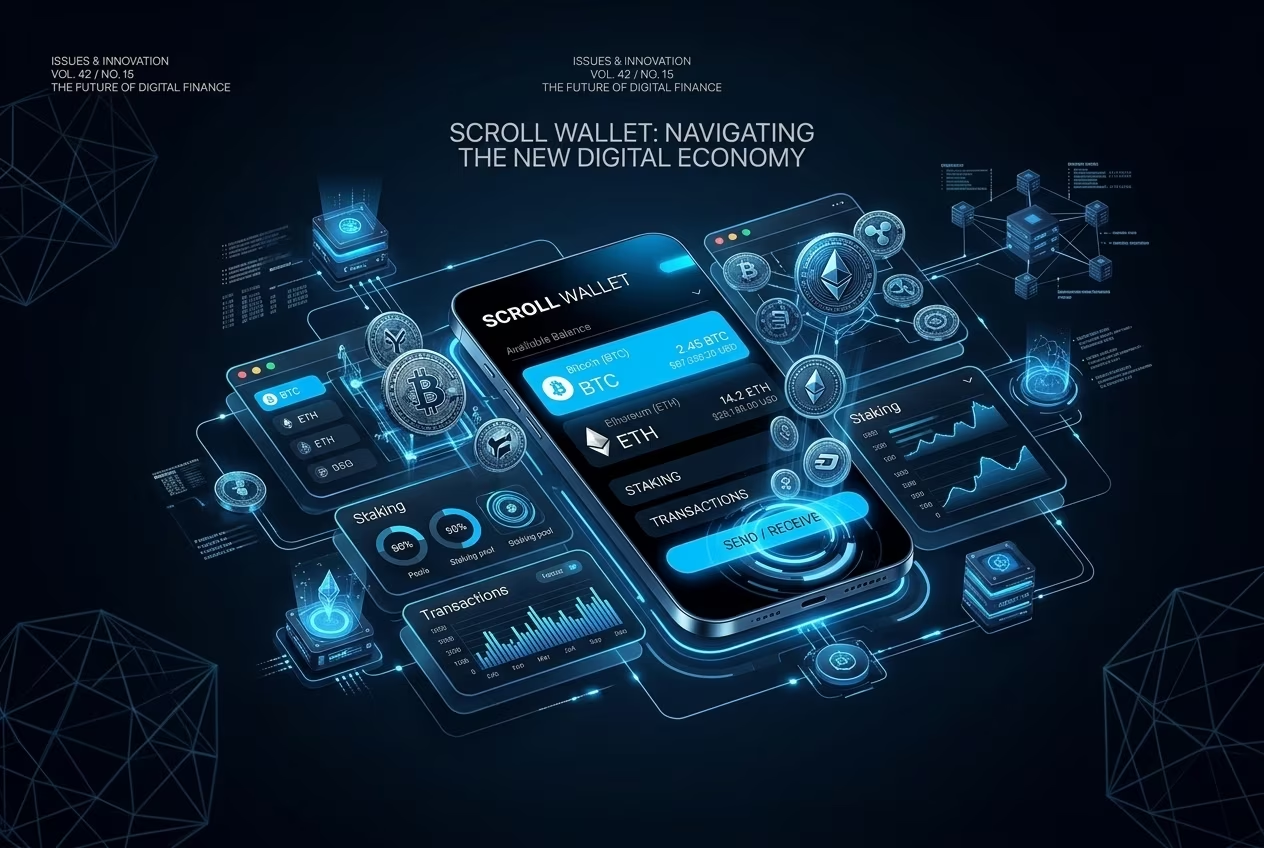
Ethereum remains one of the strongest staking choices for users who want a balance of yield, security, and validator depth. Scroll Wallet extends that flow with self-custody controls, multi-chain routing, and clearer staking operations in one dashboard.
Pick staking assets that combine deep liquidity, resilient validator infrastructure, and sustainable real yield. Ethereum, Solana, and Cardano remain the most practical entry points for users who need reliable market depth during volatile cycles.
The source approach prioritizes market cap, staking ratio, and APY stability over headline yield alone. For a broader staking framework, compare with our How Does Staking Make Money? Easy Guide For Beginners 2026 | Scroll Wallet guide.
When evaluating any coin, check slashing history, validator uptime, unbonding windows, and inflation-adjusted returns. A transparent self-custody interface helps, but disciplined validator selection remains the main protection layer for long-term staking outcomes.
Compare current APY ranges and staking market capitalization across top assets. These figures are reference values and can shift with validator behavior, inflation dynamics, and protocol governance updates.
| Coin | APY Range | Staking Market Cap |
|---|---|---|
| Ethereum (ETH) | 1.9-3.3% | $109.5B |
| Solana (SOL) | 4.2-8% | $51.9B |
| Cardano (ADA) | 1.6-5% | $9.8B |
| Avalanche (AVAX) | 4.5-8% | $2.7B |
| Cosmos (ATOM) | 15-19% | $755.2M |
Source of data: StakingCrypto.io APY and staking-cap reference table.
Staking yield only matters if risk controls are in place. Price volatility, validator slashing, and liquidity lockups can erase reward gains if users delegate without a structured process.
The source highlights that flexible delegation windows and clearer unbonding visibility reduce operational mistakes during market stress. For Cardano-specific delegation detail, see our Best ADA Wallet Guide.
Always separate strategy from execution: define acceptable lock duration, diversify across validators, and treat APY spikes as short-lived unless supported by durable network fundamentals.
Follow this setup flow to start staking with stronger operational safety in Scroll Wallet.
For deeper Cardano delegation context, review Best ADA Wallet Guide.
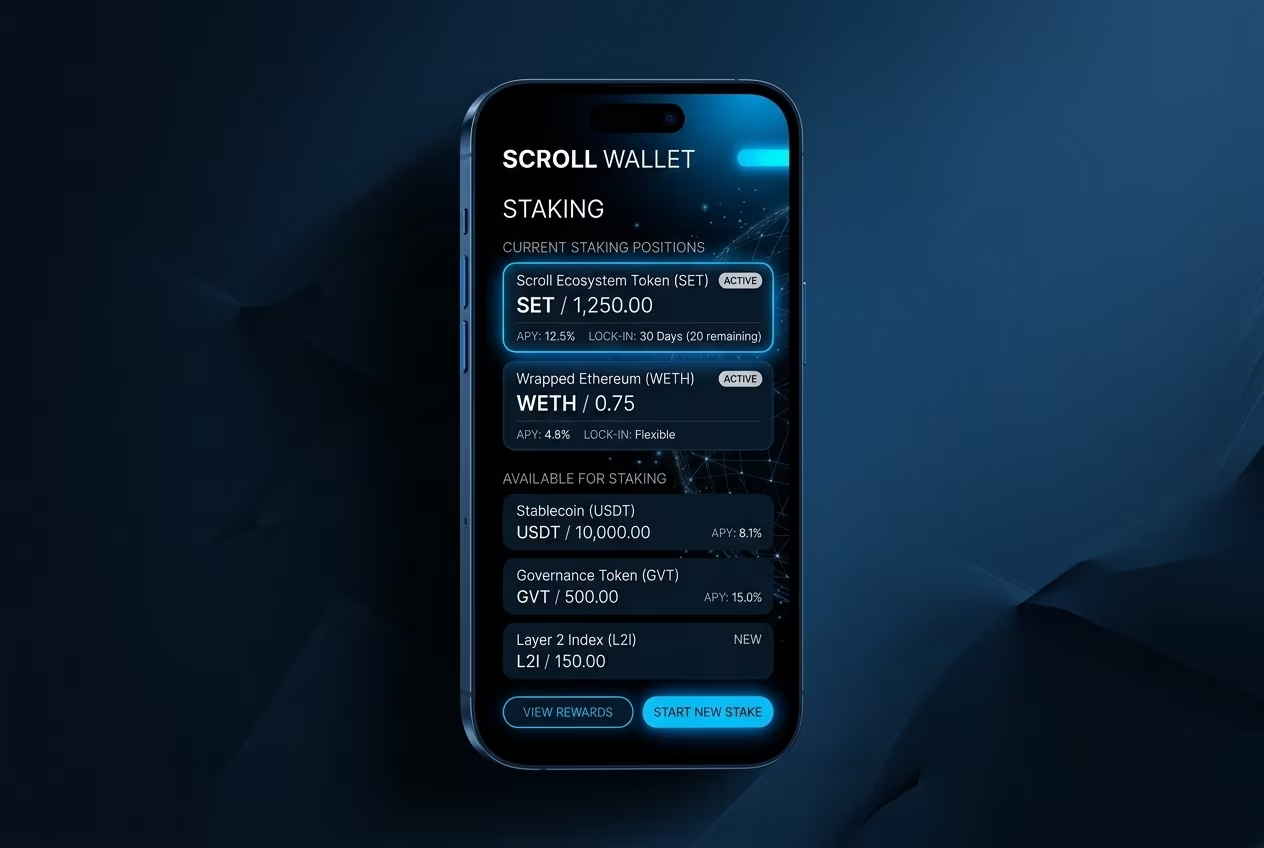
Security in staking workflows depends on local key control, verified contracts, and strict approval review. Scroll Wallet is positioned around self-custody operations where keys remain on the user side and each action can be validated before signature.
The source risk model aligns with current exploit pressure in cross-chain ecosystems. For broader incident context, see Chainalysis 2024 crypto hack loss analysis.
Recommended baseline: hardware signing for high-value positions, transaction simulation before delegation, alerting for abnormal fee or contract changes, and offline recovery phrase storage.
Scroll Wallet currently supports yield generation for USDC and wETH. Other tracked assets may remain visible in portfolio mode without active yield distribution.
| Asset | APY Range |
|---|---|
| USDC | 0.02%-0.1% |
| wETH | 0.02%-0.1% |
| BTC, ETH, DOGE, AVAX, LTC | No yield available |
Source of data: Scroll official website and ecosystem product references.
Scroll Wallet is built to reduce multi-chain execution friction through one self-custody interface. Users can route assets, review transaction context, and manage staking actions without switching across fragmented toolchains.
The source emphasizes faster confirmation behavior on Scroll infrastructure and clearer bridge handling for users operating in Layer-2 environments. For adjacent product context, see What Is Scroll Network Wallet? Secure L2 Solution 2026 | Scroll Wallet.
No interface removes all risk, so execution discipline still matters: verify bridge targets, avoid unknown dApps, and run low-value tests before large position changes.
Ethereum remains the source-preferred staking baseline because of validator scale and mature infrastructure. Polygon and Cosmos are also positioned as high-interest options when users need broader diversification.
Before staking, run this minimum checklist: enable hardware or biometric protection, validate contract addresses, set alert thresholds, and keep backup credentials fully offline.
For strategy-level staking context, compare with What Is The Purpose Of Staking Crypto? Earn Rewards In 2024 | Scroll Wallet.
Scroll Wallet source content outlines three operational custody models: self-custody, custodial service, and hybrid custody. Each model changes who controls keys and who absorbs operational risk.
Reward distribution in the source is tied to activity and route usage, with bridge and transaction economics affecting user outcomes over time. Choose custody style based on your threat model, not just convenience.
The best staking setup in 2026 combines realistic yield, validator reliability, and strict security operations. Ethereum remains a strong baseline, while diversified delegation and risk-aware execution improve long-term consistency.
Scroll Wallet positions this workflow inside one self-custody interface with clear delegation controls, reward monitoring, and multi-chain support. The strongest outcomes still come from user discipline, not automation alone.
Final operating checklist:
For full onboarding flow, visit the Scroll Wallet homepage.