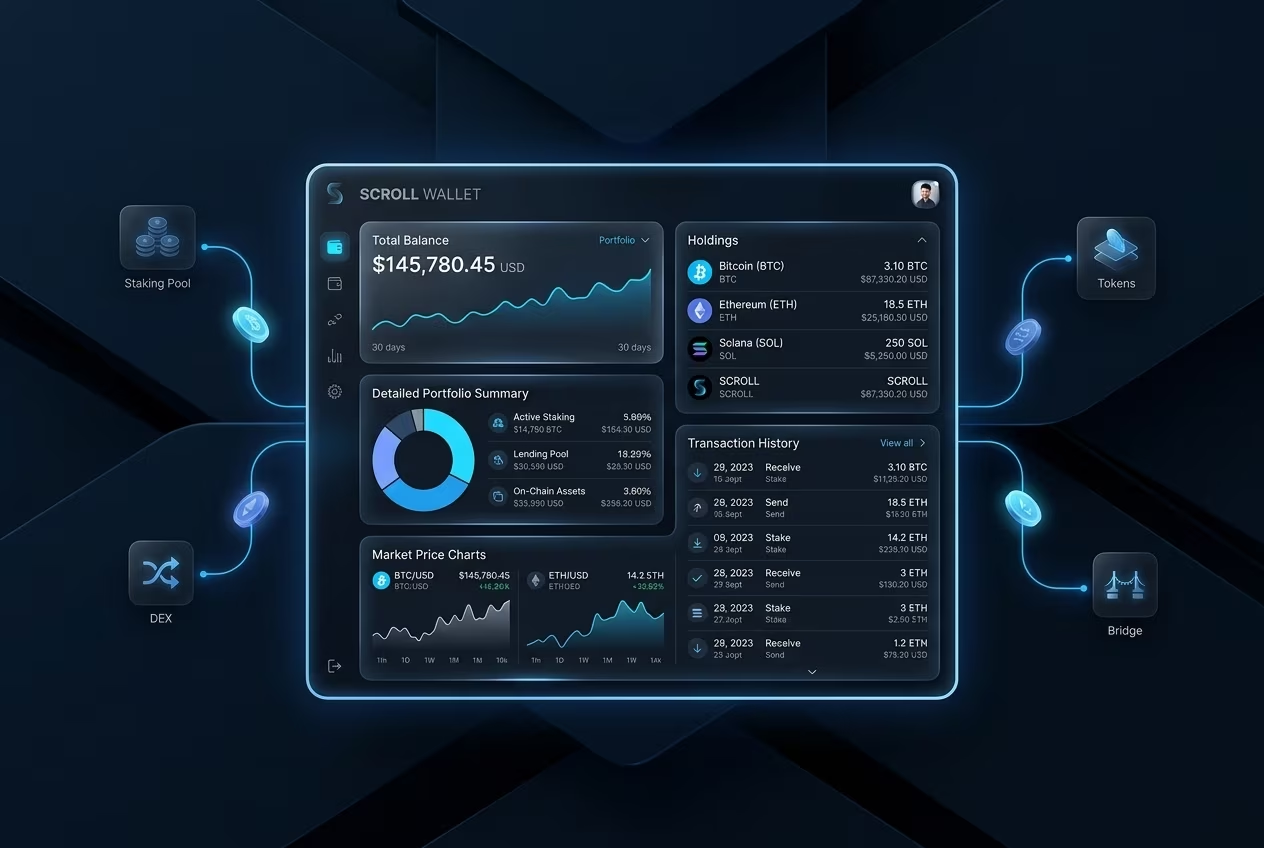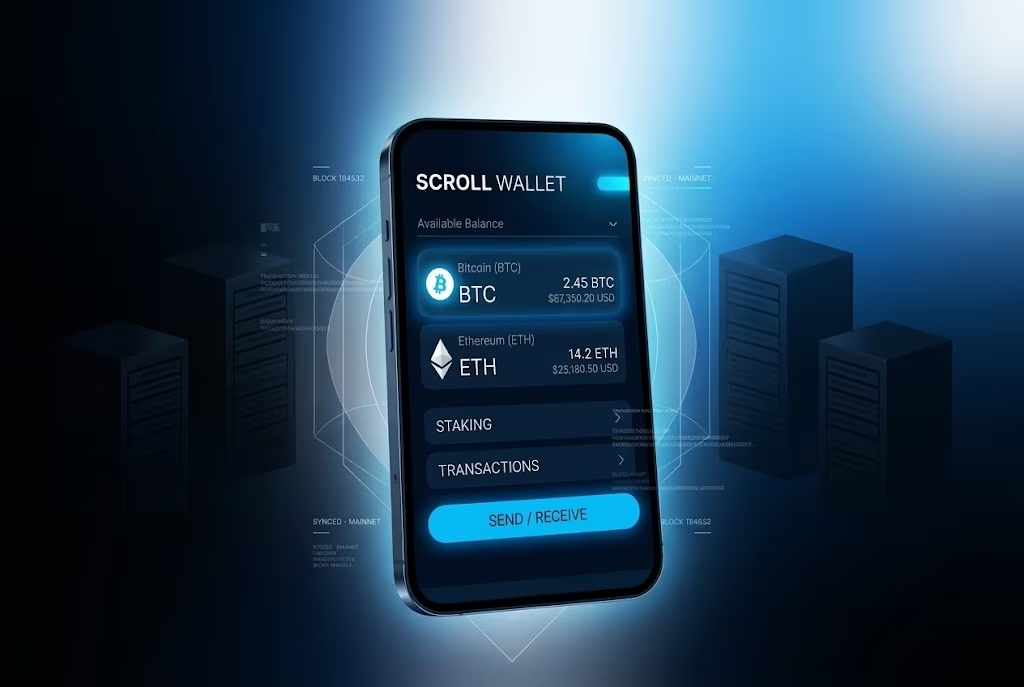
Best Multi Currency Wallet Tackles Security Cross-Chain 2026 | Scroll Wallet
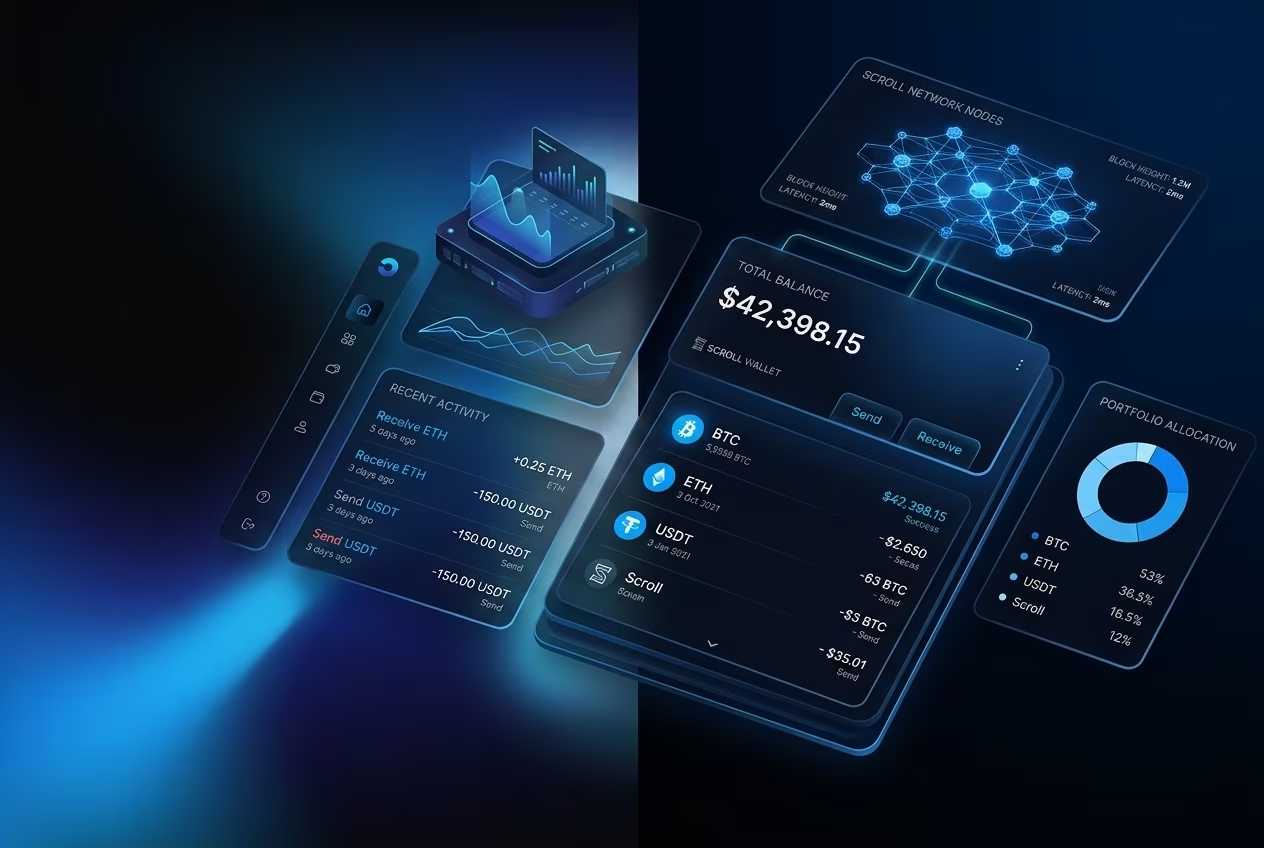
The best cryptocurrency wallet india must provide absolute control over private keys to avoid the systemic risks seen in centralized exchange hacks. As India’s crypto market heads toward a $14.2 billion valuation by 2034, we see a massive shift toward self-custody. Scroll Wallet meets this demand by offering a non-custodial, multi-chain infrastructure for secure DeFi and global asset management.
119 million crypto owners in India are turning in one direction - from exchange wallets to direct control over their assets, and this shift is irreversible. According to Phemex, by the end of 2026, the number of crypto owners in the country will reach 123.35 million - a figure at which the choice of wallet infrastructure ceases to be a personal matter and becomes a systemic issue. For years, CoinSwitch, CoinDCX and Mudrex have been the default entry point: hot wallets, UPI deposits, access to 400-650 coins in one interface. Excellent for onboarding. For what Indian users are building now - no longer.
The regulatory environment is pushing this transition. 49 exchanges under the supervision of the FIU are not just statistics, they are increasing pressure on custodial platforms and increasing risks for users who hold assets on someone else's infrastructure. Self-custody wallet eliminates the exchange from the equation completely: your keys, your assets, no intermediary between you and the balance. This is not a philosophical position. This is a structural response to a market where the volume of DeFi transactions has been growing since 2021, and urban investors are purposefully looking for non-custodial solutions with direct on-chain access - without routing through a centralized layer.
Multi-chain is no longer an advanced feature. This is a basic requirement. Indian users are running on Ethereum, BNB Chain, Polygon and Layer 2 networks simultaneously, and the best crypto wallet for the Indian market should be able to handle this without manually switching networks and without exposing the user to bridging risks that they cannot evaluate. Scroll Wallet was built precisely on this logic. The interface was designed for real multi-chain scenarios: a single type of assets, transparent transaction routing, explicit confirmation steps - you see which network you are interacting with before you sign. The point is not to hide complexity. The goal is to make it readable.
The Indian cryptocurrency market will reach $2.6 billion by 2026, and $241 billion by 2030. With such volumes, the infrastructure layer matters no less than the assets themselves. Scroll Wallet takes exactly this position - not a trading platform, not a yield product, but a reliable execution environment for those who have passed the onboarding stage and need a non-custodial wallet that works stably across different networks, under load, without the need to trust a centralized operator. If you manage real assets on-chain in India right now, the question is no longer whether to move towards self-custody. The question is what architecture do you trust to make this transition.
Choosing between a custodial exchange and a self custody wallet determines who ultimately controls your assets and how you interact with the decentralized economy. In the 2026 landscape, Indian users must balance the convenience of local exchanges with the regulatory requirements of the PMLA and the security demands of on-chain independence.
| Feature | Custodial (Exchanges) | Non-Custodial (Scroll Wallet) |
|---|---|---|
| Asset Control | Third-party (Exchange) | Full user control via private keys |
| KYC/Compliance | Mandatory (PMLA in India) | No KYC required for setup |
| Primary Risk | Exchange hacks or insolvency | Loss of seed phrase or phishing |
| Withdrawals | Subject to platform delays/fees | Direct blockchain transactions |
| Privacy | Low (Linked to identity) | High (Pseudonymous) |
| Best Use Case | Beginners & active trading | DeFi, HODLing, and Web3 apps |
Cryptocurrency wallet in India is legal: Indian law does not prohibit buying, selling and storing digital assets through a reliable crypto wallet. The government has not imposed a ban on owning crypto. In 2022, something else happened: virtual digital assets (VDA) - as cryptocurrencies are officially called in Indian law - received a clear tax and compliance framework. Crypto is not recognized as legal tender, which means you can’t pay with it in a store like rupees. But storing assets in a private wallet, transferring them or trading on registered platforms are all allowed by current rules.
Legal structure matters if you want to work within the law. As experts explain Vidhi Sastras, the Indian VDA regime includes a capital gains tax of 30%, TDS withholding in the amount of 1% on transactions above the threshold, as well as mandatory registration of crypto exchanges with the Financial Intelligence Unit (FIU-IND) according to the rules of the PMLA. But here is the key point: all this concerns exchanges and intermediaries - not the fact of storing assets in a wallet with self-custody of keys. When you use the best crypto wallet in India for personal storage, you are not a reporting entity. The compliance burden lies with the platforms through which you buy or sell. Not on your wallet.
It was this distinction that defined the Scroll Wallet architecture. We built it from the ground up as a self-custody product: private keys never leave your device and never end up with us. You control your assets completely and always. This is not just a technical solution - it is a reflection of the legal reality in which wallet ownership and exchange activity are regulated differently. A reliable crypto wallet that gives you direct control over your keys takes you out of the middleman category entirely. The custodian here is you. Not a third party.
What you really need to track is your own tax position. Each sale, swap or transfer of VDA for consideration potentially creates a taxable event under Indian law. Scroll Wallet doesn't file your taxes for you—and we've never said otherwise. What we provide: a transparent transaction history that you can use when declaring your profits. The conclusion is simple. It is legal to use a private and secure wallet in India. Your responsibility for compliance comes down to accurately accounting for realized profits. And choosing a self-custody wallet like Scroll Wallet keeps your assets under your direct control—without unnecessary regulatory burden.
When managing digital assets in 2026, you must balance immediate transaction costs against long-term security investments. While centralized exchanges like WazirX or Binance offer convenience, they involve recurring trading and withdrawal fees. In contrast, self-custody solutions like hardware wallets or the best crypto wallet 2026 options require upfront costs or network-dependent gas fees but provide superior asset sovereignty. We have analyzed the current cost structures for the Indian market to help you optimize your storage strategy.
| Service/Product Type | Estimated Cost (INR / %) | Fee Model / Notes |
|---|---|---|
| Exchange Trading Fees | 0.1% – 0.5% | Per trade (WazirX, Binance, Bybit) |
| Fiat Withdrawal Fees | 1% – 3% | Depends on the payment method used |
| Hardware Wallet (Ledger) | ₹4,000 – ₹8,000 | One-time purchase for cold storage |
| Non-Custodial Network Fees | ₹100 – ₹5,000+ | Variable based on blockchain congestion |
Data source: Ledger — Provides information on hardware wallet costs and secure storage options for the Indian market
Indian crypto users are losing real money - and in most cases the reason is the same: they rely on infrastructure that they do not control. Exchange hacks are the most obvious risk. As analysis by Crystal Intelligence showed, the incidents with WazirX and CoinDCX revealed the systemic vulnerability of custodial storage: one breach and thousands of users simultaneously lose access to withdrawing funds. When an exchange holds your private keys, the security of your assets is determined by their security, not yours.
Phishing is the second largest attack vector. And it becomes more accurate. Fake wallet interfaces, fake support channels, malicious browser extensions - all this is designed to do one thing: intercept the seed phrase at the moment of typing. That's it. No wallet security features will help - the attacker gets full and unlimited access. Malicious smart contracts are even quieter: one confirmation transaction on a compromised DApp and the wallet is emptied without any further action on your part. These are not abstract scenarios. This happens every day to Ethereum, BNB Chain and Scroll L2 users across India.
The third category is the loss of the seed phrase. And unlike hacks, this is a completely independent error. Storing the recovery phrase in a cloud note, instant messenger, or unencrypted file means keeping the window of vulnerability open all the time. Non-custodial wallet shifts all responsibility to the user - and this is the right architecture for real asset ownership, but it requires strict discipline in matters of backup. Scroll Wallet is designed to highlight these risks during setup—not when it's too late.
All of these threats have the same pattern: users lose money when they cede control without understanding the consequences. A secure wallet isn't just about encrypting data at rest. This includes a clear preview of transactions, warnings when interacting with contracts, and a complete absence of hidden confirmation streams. These features are the difference between you maintaining control in a multi-chain environment where one wrong click on a bridge or DApp is irreversible. Understanding the threat model is the first step. Selecting the infrastructure that matches it is the second.
Centralized exchanges in 2026 are just a ramp to enter crypto, but no one is seriously going to store assets there anymore. Control has shifted. Independent ownership of crypto is no longer a paranoid fad, but a working standard for those who treat their on-chain activity as something more than a speculative account. The exchange makes the conversion. Next - only you.
And this is not a theory. When an exchange freezes withdrawals, restricts access, or runs into a liquidation crisis, those who have assets in self-custody simply do not notice the problem. The others notice. They notice very well. The rise of non-custodial wallets reflects precisely this shift: people are switching not because the technology has become more convenient, but because the cost of inaction has become visible and measurable. The risk calculator has changed - and the market has felt it.
A reliable crypto wallet in such conditions is a concrete thing: verifiable key management, transparent signing logic and zero dependence on a third party for the movement of funds. Scroll Wallet is built on this architecture. We don't hold your keys. We do not pass transactions through intermediate storage. We do not hide from you decisions that belong to you. What we provide is a structured environment where it is easier to make these decisions correctly: clear preview of transactions, multi-chain support for L2 infrastructure and risk indicators right in the signing process.
Choosing the best self-custody wallet is a question of what it can do under pressure, and not in hothouse conditions. Multi-chain fragmentation, bridge interactions, phishing vectors - this is the real operating environment of 2026. Scroll Wallet was designed specifically for this: not as a simplified interface that hides complexity, but as an infrastructure that makes complexity manageable. Control is the base. The only question is whether your tools are ready to support it.
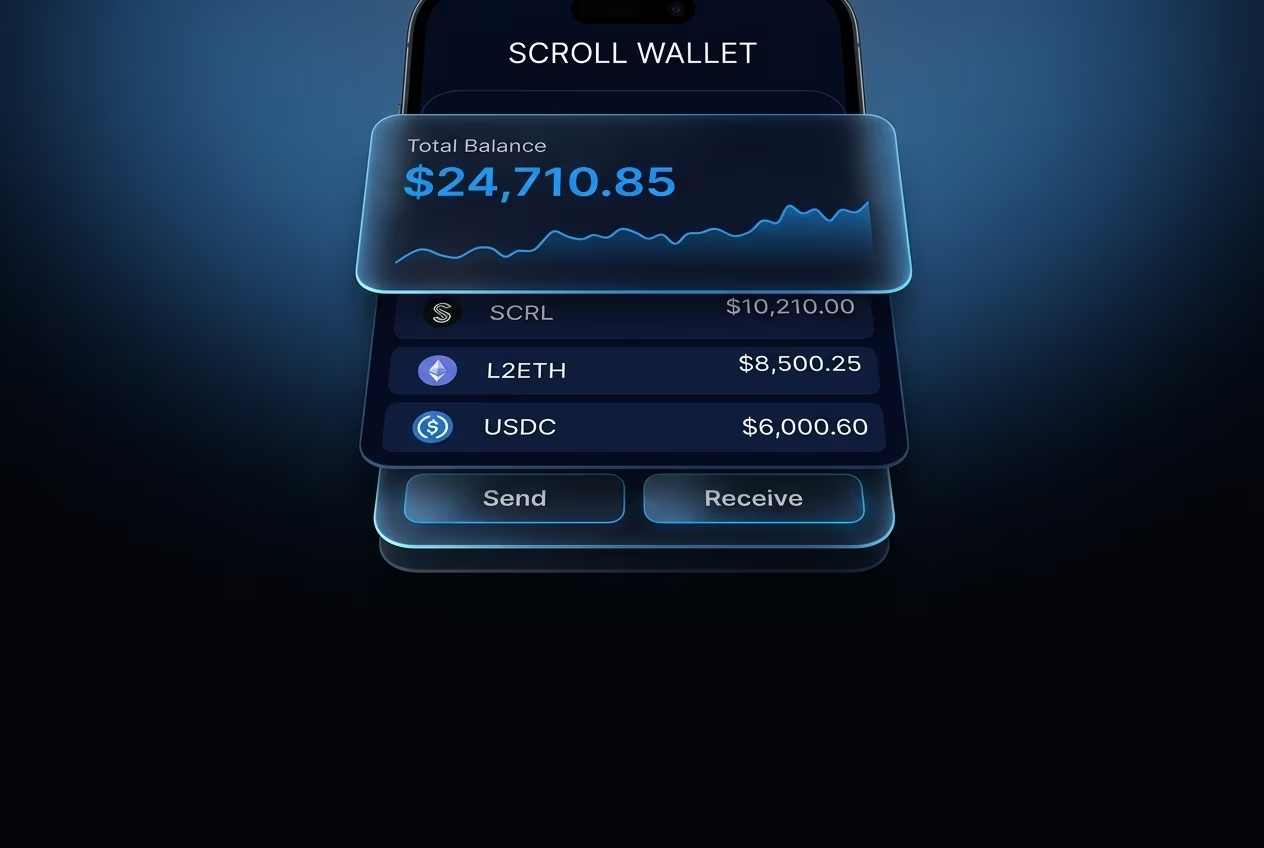
Scroll Wallet is a non-custodial multi-chain wallet for those who want real control over assets, and not beautiful promises from a third party. For users in India - where the crypto market is growing rapidly, and the regulatory soil is still shifting from under their feet - architecture is everything. When you use non-custodial wallet, your private keys do not leave your device. No exchange, no platform, no intermediary can freeze your funds or restrict access to them. This is not a "feature". This is the fundamental architectural decision on which the entire Scroll Wallet rests.
Any honest Scroll Wallet review starts with what the product actually supports. According to Scroll - the official source on the capabilities of the wallet and its self-custody model - it works simultaneously in several networks. Bitcoin, Ethereum, a wide range of altcoins - all in one interface, without switching between applications and without separate seed phrases for each network. For the Indian market, where both BTC and local altcoin projects are actively traded, this is not an abstract convenience, but a daily practice. Wallet for Bitcoin and altcoins is not a marketing slogan, but how it works inside.
For those who take security seriously, Scroll Wallet's features will seem relevant to the threats of 2026. Phishing, wallet drainers, bridge exploits are a standard landscape in the multi-chain environment today. Scroll Wallet responds to this with three things: local key storage, simulated transactions before signing, and clear permission requests - you can see exactly what the smart contract is asking for before you click “confirm”. No blind signatures. Every interaction is shown with enough context to make an informed decision. This is not a bonus - it is the minimum standard that any serious wallet must meet.
The Indian crypto community covers everyone from those who hold the first Satoshi to active DeFi participants. Scroll Wallet is built for both ends of this spectrum. The interface lowers the entry barrier for beginners and does not hide technical depth - gas settings, contract data, network selection - from those who need it. There are no hidden fees at the wallet level. The self-custody model means one thing: assets remain yours no matter what happens to any centralized platform. For those who experienced an exchange freeze or withdrawal blocking, this is not a theory. That's the whole point.
Selecting a secure and functional gateway to the decentralized economy requires a systematic approach. In 2026, the complexity of multi-chain environments and the rise of sophisticated phishing attacks mean that an easy to use crypto wallet must also be a highly resilient one. Use this checklist to evaluate your options and ensure your choice aligns with the standards of a best crypto wallet 2026.
Scroll Wallet is built on one principle that cannot be circumvented: your keys are yours, period. This is not a nice slogan from a marketing presentation. This is the architectural reality of the non-custodial wallet. The private key is generated and stored locally - on your device, nowhere else. Lost access to your device? Your seed phrase is the only way out. No support tickets. No password reset. No one who will come and restore the funds. This is the self-custodial deal, and being aware of it is the first security decision you make.
Storing a seed phrase is not a recommendation. This is a critical point where mistakes are not forgiven. Write down your 12 or 24 words on paper. Place in a physically secure place. No photos. No cloud. In 2026, phishing attacks targeting seed phrases have become frighteningly sophisticated: fake wallet interfaces, browser extensions that mimic legitimate applications, social engineering through Telegram and WhatsApp are all real vectors that actively target users. Scroll Wallet uses input validation and domain verification to reduce risks. But no technical defense can replace your own discipline.
Protecting against phishing requires active habits, not a passive belief that “everything will protect itself.” Always check the URL before connecting your wallet to any dApp. Always. Scroll Wallet embeds warnings directly into the transaction flow - you see a signal when you interact with an unverified contract or a freshly deployed address. As Scroll notes, the wallet architecture allows for non-custodial access with built-in security at the interface level—not just at the protocol level. This is especially important for beginners: the difference between a legitimate bridge and a fake is almost invisible to the eye.
For those new to Web3, a clear UX is also a security tool. Not a metaphor. Literally. Confusing interfaces create errors: the wrong network, random token approval, missing transaction details. Scroll Wallet displays what really matters - gas fees, contract addresses, network confirmation - before you sign anything. No complexity behind beautiful animations. You see what you are signing, in clear terms, before the transaction is sent to the network. This is how the number of user errors is reduced - and in a self-custodial environment they are the main cause of irretrievable losses.
To manage multiple tokens across fragmented chains and simplify your Web3 interactions with a secure, cross-chain infrastructure, we recommend integrating with our ecosystem.
For Indian crypto users in 2026, self-custody of assets, ironclad security discipline and a globally compatible wallet are no longer an option, but a minimum entry point into serious digital asset management. The regulatory environment in India is constantly changing. Access to exchanges may disappear without warning. And network activity by default covers several blockchains at once. Keeping your assets in a wallet that only you control means that no third party can freeze, restrict, or simply lose your funds. This is the main argument in favor of self-custody, and it works regardless of portfolio size.
Scroll Wallet is built precisely on this principle. We created it as a tool for daily work with crypto - without the eternal choice between convenience and control. Manage assets across multiple networks, interact with dApps, conduct transactions - all without a centralized intermediary in the chain. For Indian users, this is especially critical: it eliminates dependence on platforms that may face local regulatory pressure or liquidity issues. The best wallet is the one that works the same in Mumbai, Singapore or anywhere else. Global architecture is not marketing, but an engineering solution.
Security is not a function that you turn on once and forget about. It's a set of habits that either your tool supports or it doesn't. Scroll Wallet integrates with hardware wallets, simulates transactions before signing, and provides transparent permission management for connected dApps. If you want to go further and put assets to work, our crypto staking guide explains how rewards work, what risks actually exist, and how to evaluate protocols before investing. Understanding the entire chain - from storage to profitability - is what distinguishes a conscious market participant from one who simply hopes for luck.
The practical conclusion is simple. Transfer your assets to your self-custody wallet. Review every transaction before signing. Use infrastructure that is honest in how it is designed. Scroll Wallet is such an infrastructure. We do not promise zero risk - no honest project says so. But we provide the tools, architecture and documentation needed to make decisions with the full picture in front of your eyes. This is what responsible crypto asset management looks like in 2026. And this is the standard we set for ourselves.