Genesis Crypto Wallet: Secure Recovery and Access | Scroll Wallet
The core difference between custodial and non custodial wallets lies in who holds the private keys: a third-party platform or you. In a custodial setup, an exchange manages your funds, meaning you lack true ownership. Conversely, non custodial solutions like Scroll Wallet give you absolute control, ensuring no central authority can freeze your assets or restrict your financial freedom.
Choosing between a custodial wallet and a non-custodial solution like Scroll Wallet defines your level of sovereignty and risk in the Web3 ecosystem. While third-party providers offer convenience, they require you to trust their infrastructure and compliance policies. In contrast, non-custodial architecture ensures you remain the sole authority over your assets, though it shifts the full weight of security responsibility to you.
| Feature | Custodial Wallets | Non-Custodial (Scroll Wallet) |
|---|---|---|
| Private Key Control | Third-party managed | User controlled |
| Account Recovery | Via provider support | Impossible if seed is lost |
| Asset Freezes | Possible by provider/authorities | Technically impossible |
| Transaction Fees | Network + Platform fees | Network fees only |
| Privacy (KYC) | Mandatory identification | Anonymous / No KYC |
| User Responsibility | Low | Full responsibility |
| Ideal Use Case | Beginners | Experienced users / Full control |
Data source: Bleap Finance — Provides detailed comparison table covering key control, security risks, and privacy.
The transition from exchange wallets to personal ones is accelerating - and behind this there are not trends, but real losses, regulatory pressure and a strong desire to control one’s assets independently. According to Morningstar, a survey of 3,172 US crypto users found that 66% consider self-custody important, and 46% cite fear of exchange hacking as the main reason for moving assets from centralized platforms. This is not abstract paranoia - stock market collapses and leaks have already cost users billions. And the pattern doesn't stop. When you hold assets on a CEX, you have a claim on the exchange. Not an asset. The difference is fundamental.
The debate about an exchange wallet versus a personal wallet has long gone beyond the scope of theory. While 66% of users value self-custody, 88% still hold assets on centralized exchanges, and only 33% use cold wallets. This gap between intention and action is not laziness or indifference. It's a friction issue: Most self-storage tools have historically been too complex, too fragmented, or too risky to use confidently on a day-to-day basis. Height non-custodial wallets - fact. But it turns into sustainable adoption only when the infrastructure behind it is reliable, understandable and tailored for multi-chain environments. Scroll Wallet solves exactly this problem - not by simplifying the complexity to the point of disappearance, but by making it manageable.
Regulatory shifts are pushing this migration further. SAB 122, the GENIUS Act, updated OCC guidelines - all this is pushing both institutions and private users to direct control over assets. Large players are building their own custodial infrastructure instead of delegating it to others. This is not a niche trend - it is normalization. The numbers confirm: Tangem recorded a 102% increase in revenue and a 50% increase in monthly audience in 2025. The market reacts. Hardware and non-custodial solutions are gaining real weight, and not just hype.
What has changed most is the definition of self storage. It's no longer just about “keeping assets safe offline.” In 2026, self-custody is the ability to store, grow and spend assets directly: through L2 networks, bridges, multi-chain environments - without giving up control at any stage. Scroll Wallet is built around this extended model. We do not view custodianship as a passive state. This is an active infrastructure solution - requiring clear UX, verifiable architecture and an honest conversation about where exactly the risks exist. If you are assessing whether to withdraw assets from the exchange, the question is not whether self-storage is safer in principle. The question is whether the wallet you choose will handle the entire real-life scenario of your work with crypto.
A custodial wallet hands you instant, frictionless crypto access — and simultaneously hands your private keys to someone else. Getting the full custodial wallet picture means holding both truths at once: the genuine convenience is real, and so is the structural trade-off you accept the moment key management leaves your hands. For most newcomers to Web3, that trade-off feels invisible. Until it very much isn’t.
The practical upside of a platform-controlled wallet? Measurable and concrete. Account recovery via email or phone. No seed phrase to engrave on a steel plate and bury in your backyard. A login flow that feels exactly like any web app you’ve used since 2009. Transactions move without you wrestling with gas settings, and there’s actual customer support if things go sideways. In 2026 — where multi-chain environments, L2 fragmentation, and bridge complexity create real operational pain for self-custody users — these advantages aren’t trivial. Scroll Wallet is built with this friction in mind: we design UX flows that cut operational risk without papering over the underlying architecture.
The risks, though, aren’t hypothetical. They’re structural. As Forvis Mazars makes clear, custodial digital asset arrangements carry serious counterparty and operational exposure — your access to funds depends entirely on the platform’s solvency, security posture, and regulatory standing. Custodian gets hacked? Freezes withdrawals? Goes insolvent? Receives a government order? Your assets can vanish behind a wall you didn’t build and can’t open. These aren’t tail risks dreamed up by paranoid cypherpunks. They’re documented outcomes from multiple real platform collapses.
At Scroll Wallet, we treat this trade-off as a design constraint — not a PR problem to smooth over with reassuring copy. We’re direct about what custodial architecture means for your actual control over assets, and we build toward verifiable infrastructure wherever the product allows it. If you’re using a custodial setup for convenience, do it with eyes open: know exactly what you’re delegating, and keep only what you’re actively using inside a platform-controlled wallet. Everything else belongs in a self-custody environment that answers to you and nobody else.
Non custodial wallet is one idea taken to completion: you hold a private key, which means you hold an asset. No third party will freeze your funds, roll back your transaction, or require identity verification before you can access your balance. This is not a feature. This is the architectural foundation of how a self-custody wallet works. When you generate a wallet in Scroll Wallet, a private key is created and stored locally on your device. We do not transfer it, do not store it on the server, and are technically unable to restore it for you - not at all.
Ownership in the full control model is verified directly on the blockchain. Your address is a cryptographic identity derived from your private key. Every signed transaction is proof of control. As explains Stripe, self-custody changes the ownership model itself: keys with the user mean that access, authorization and management of assets belong to the wallet holder, and not to the platform or intermediary. In practice, this means: you interact with any smart contract, bridge or L2 protocol without asking permission from Scroll Wallet or anyone else. Permissionless access is not a marketing thesis. This is a direct consequence of key ownership.
The responsibility in this model is entirely yours, and the trade-off is absolutely real. I lost the seed phrase - no support ticket will return the funds. Signed a malicious transaction - no platform will roll it back. In 2026, phishing attacks and wallet drainers have become much more sophisticated: they target multi-chain environments, bridge approvals and L2 interactions in a targeted manner. Understand that self custody wallet requires from you operationally - not additional knowledge. This is the minimum for safe work with it. Scroll Wallet shows transaction details, contract addresses and approval areas before signing - so that you make informed decisions, not blind ones.
The practical meaning of full ownership is simple: your assets exist regardless of any company's solvency, changes in its policies or regulatory pressures. You are not a client with an account - you are a key holder with on-chain access. Scroll Wallet is built to support this model across the Scroll L2 ecosystem and connected networks, providing the infrastructure to realize this ownership without unnecessary friction. The architecture does not change depending on market conditions. Your key remains yours.
Choosing between custodial and non-custodial solutions involves balancing immediate transaction costs against long-term security and recovery risks. While custodial platforms simplify the recovery process through support teams, they impose various platform fees. In contrast, non-custodial options like Scroll Wallet eliminate intermediary charges, though they require you to manage your own security and stay informed about cold storage trends to protect assets offline.
| Cost Category | Custodial (Exchanges) | Non-Custodial (Scroll Wallet/Hardware) |
|---|---|---|
| Withdrawal Fees | $1 – $20 ($30–$50 for ETH peak) | $0 (Platform fee) |
| Network Fees (Gas) | Included in withdrawal fee | Direct network gas only |
| Setup/Hardware Cost | $0 | $50 – $170 (e.g., Ledger Nano X, Trezor Safe 5) |
| Trading/Fiat Fees | 0.1% – 0.5% (Trade), 1% – 2% (Fiat) | DEX fees + network gas |
| Recovery Burden | Low (Identity verification) | High (Loss of keys = permanent loss) |
Data source: Plisio — Withdrawal fees (1-20 USD), hardware costs (50-170 USD), and recovery burden comparison.
When a platform holds your private keys, it holds your money — and can cut you off from it whenever it wants. Custody isn’t a technical footnote buried in a terms-of-service document. It’s a legal relationship with real consequences. On centralized platforms, your balance is a line item on their books — a liability they owe you. And when a platform faces regulatory heat, insolvency, or flags your account through an automated compliance sweep? That liability can be frozen, restricted, or locked without your consent and with zero immediate recourse on your end.
This isn’t hypothetical. In 2022 and 2023, multiple centralized exchanges froze withdrawals mid-crisis, leaving users locked out of their own assets for weeks. Sometimes months. Since then, regulatory pressure hasn’t eased — it’s intensified. By 2025 and 2026, compliance-driven account restrictions became a standard operating procedure for platforms running under AML and KYC frameworks. One transaction flagged by an algorithm. One hold placed automatically. No human review required. The gap in funds control between a custodial account and a self-custody wallet comes down to one brutal distinction: conditional access versus unconditional control. As analysts at Forvis Mazars have noted, custody-linked risk exposure is a growing concern for both institutional and retail users — especially around the legal ambiguity of who actually owns the asset when a platform is involved.
Self-custody removes the platform layer entirely. When you hold your own private keys — which is exactly what Scroll Wallet is built to support — no third party can freeze your wallet, block a transaction, or comply with a government order by locking your balance. That’s the architectural reality at the center of the centralized wallet vs self-custody debate: one model asks you to trust an institution, the other asks you to trust the protocol and your own key management. The trade-off is real. Lost keys, phishing attacks, signing errors — these are user-side threats that no platform shields you from once you’re operating fully on-chain. Scroll Wallet is built to reduce those risks through clear UX, transaction previews, and structured key recovery flows. But we don’t eliminate the responsibility. Nobody can.
For a full breakdown of how these two models compare in practice, see our guide on custodial vs non-custodial wallets. The custody decision isn’t about convenience. It determines who has final authority over your funds when something goes wrong — a dispute, a regulatory event, a platform collapse. In 2026, across multi-chain environments and tightening compliance pressure in every major jurisdiction, that decision carries more weight than it ever has. Scroll Wallet’s position hasn’t changed: we build infrastructure that puts control in your hands, and the tools to use it without burning yourself.
Private key control isn’t a preference — it’s the only thing that actually separates «your crypto» from «crypto you’re hoping someone else doesn’t lose.» Every time you park assets on an exchange or custodial platform, you’re extending trust to a third party holding your keys. That trust has a track record. Exchange freezes, sudden insolvencies, targeted exploits — billions gone, from wallets users were certain were theirs. «Not your keys, not your coins» stopped being early-adopter folklore a long time ago. Now it’s a documented pattern with a body count measured in lost savings.
Experts at Forvis Mazars put it plainly: custody risk ranks among the most chronically underestimated factors in long-term digital asset protection. The distinction between custodial and non-custodial structures isn’t academic — it determines who actually controls your funds when a crisis hits. A self custody wallet removes the counterparty layer entirely. No platform to freeze your account. No company to go under with your assets on its balance sheet. No third-party decision that overrides your access. The private key is the asset — not the number displayed on a dashboard.
Long-term holders face a specific trade-off: convenience versus control. Custodial platforms offer smoother UX, faster onboarding, interfaces that feel familiar. Fine. But those advantages come at the cost of true asset ownership in crypto — and that cost compounds over time. Scroll Wallet rejects the premise that this trade-off must exist. Our architecture gives you direct key ownership without gutting usability, because the complexity of key management belongs at the infrastructure level. Not on the user. If you’re holding assets across multiple chains, or planning to hold through full market cycles, own your crypto in the most literal sense possible: control the keys yourself.
The practical rule for 2026 is blunt: if you can’t sign a transaction independently, you don’t fully own your crypto. Full stop. Scroll Wallet enforces this by design — keys are generated and stored locally, never transmitted to our servers, never held by us under any condition whatsoever. We don’t offer a recovery path that bypasses your key. Why? Because that bypass would be the vulnerability. For anyone serious about holding on-chain assets, understanding this architecture isn’t optional. It’s the starting point. Everything else is just hoping nothing goes wrong.
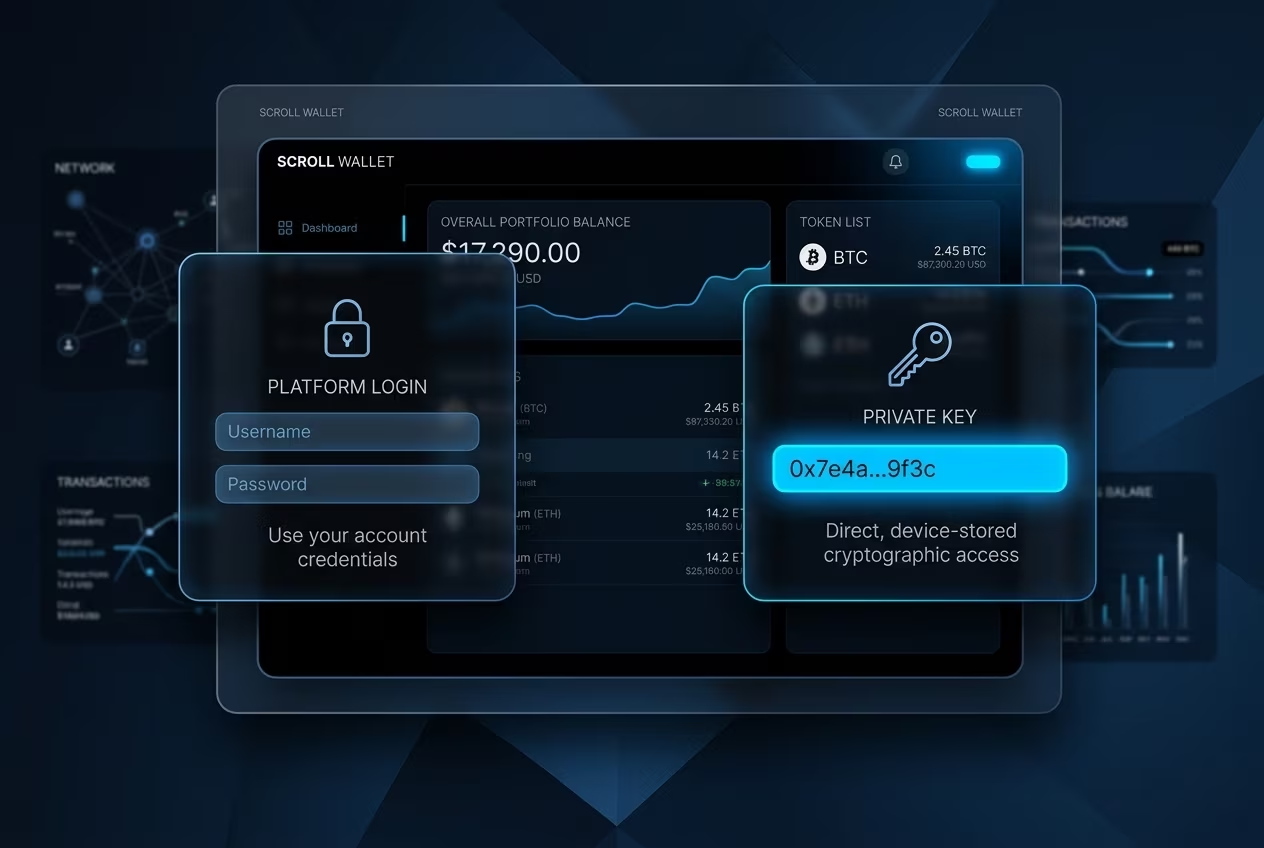
Selecting the right infrastructure for your digital assets depends on your specific operational needs and risk profile. At Scroll Wallet, we prioritize verifiable security, but we recognize that the choice between custodial and non-custodial solutions requires a systematic evaluation of your habits and goals.
The gap between security and convenience in crypto wallets has finally closed—and that changes everything you can ask for from a self-custody tool in 2026. For years, the choice was simple and cruel: either you trust your funds to a third party, or you take a steep dive into the technical jungle and manage the keys yourself. This dilemma no longer exists. Smartly designed self custody wallet today offers local key storage, transparent transaction flows and support for multiple networks - without requiring you to understand every protocol layer under the hood.
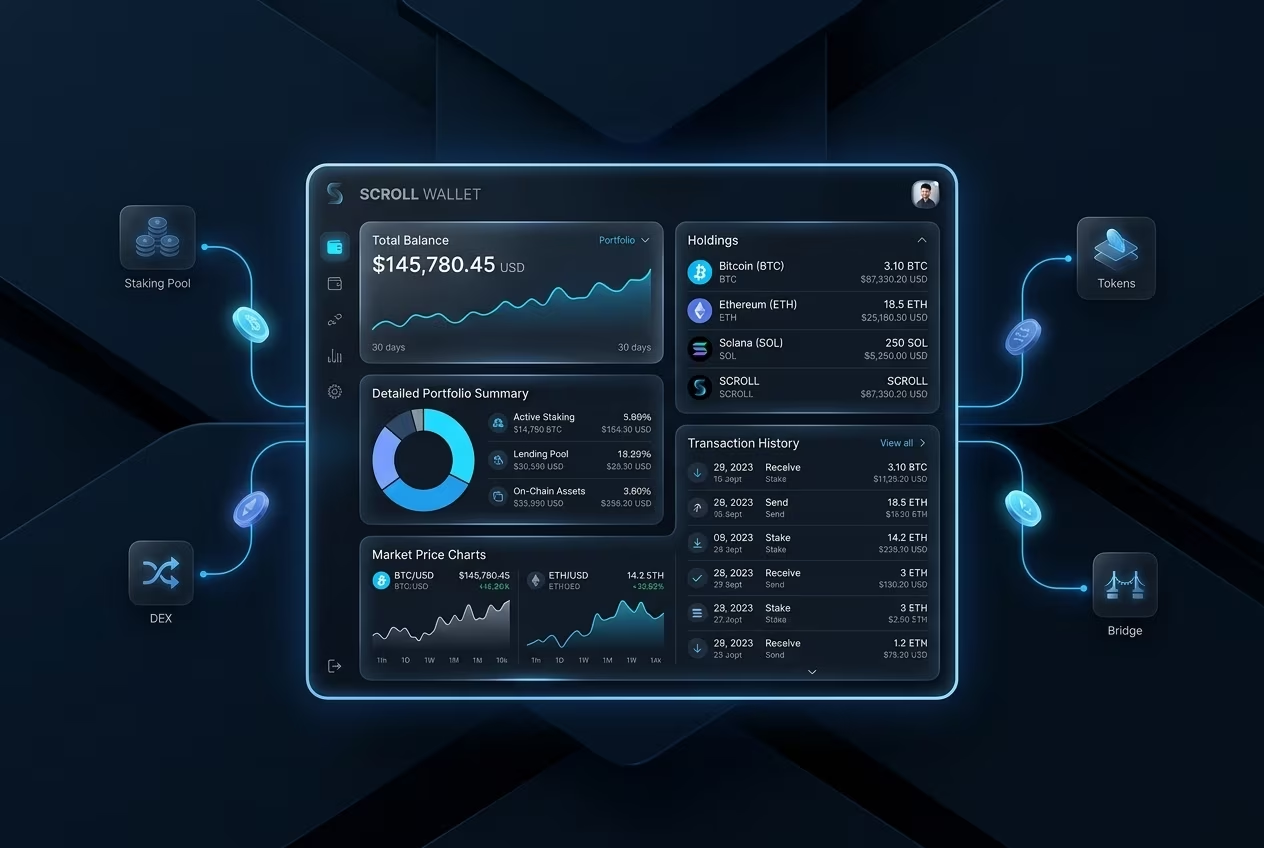
The interface is where most users either win or lose everything. Old non-custodial tools were built for developers: bare seed phrases, manual gas settings, zero context about what is actually happening in the transaction. Scroll Wallet is done differently. The interface is built around decision points: what exactly are you signing, what network are you on, what is the expected result. This is not cosmetics. This is a direct response to the fact that phishing attacks and blind signature exploits are still among the top causes of loss of funds in 2026. When you see that you approve, you are less likely to approve of what you shouldn’t.
As experts record ChainUp, convenience and security have become central criteria for choosing a non-custodial wallet - rather than secondary options. A convenient self custody wallet is not a simplified version of a serious tool. This is a serious tool from which unnecessary friction has been removed, keeping every critical control in your hands. Scroll Wallet stores keys locally on your device, never transfers them to external servers, and gives you full access to export and restore your wallet at any time.
The secure non-custodial wallet model only works when users actually interact with it—which means removing the barriers that have historically driven people toward custodial alternatives. Multi-chain environments, L2 fragmentation, interaction with bridges - all this has made working on the network more difficult, not easier. Scroll Wallet responds to this by automatically detecting the network, displaying relevant risk signals before transaction confirmation, and providing a unified interface across all chains. The goal is not to hide complexity from you. The goal is to show the complexity that matters and filter out the noise that doesn't.
Scroll Wallet is built on one principle: your keys are generated directly on the device and never leave it. Not a marketing slogan - an architectural solution built into the foundation. When creating a wallet, the private key is generated locally, settles in a secure enclave of the device and does not go to any server. No third party holds a copy. Not a single recovery service will get to your funds without your direct action.
The benefits of self storage are best seen during a disaster. In 2025–2026, several centralized platforms froze withdrawals or lost user assets due to hacks and bankruptcies. Owners of self-storing wallets were not affected - their assets remained accessible because control did not go away. Scroll Wallet puts you in this position by default. Authentication is local. Signing transactions locally. Interaction with the Scroll L2 network - without passing credentials through any intermediaries. This is what true freedom is in crypto: the ability to act regardless of whether any platform is even alive.
UX is where most self-storage solutions fall apart. Confusing seed processes, unclear backup prompts, and unclear transaction screens all push users toward custodial alternatives. And this compromise carries real risk. We designed Scroll Wallet to remove friction without removing control. Onboarding takes less than three minutes. Backup tips are contextual and explained in human language. Transaction previews show you exactly what you sign before you confirm. For those who are following growth of non-custodial wallets in the ecosystem, the pattern is obvious: sustainable adoption is achieved by those wallets that combine real key ownership with accessible UX.
The third layer is device protection. Scroll Wallet integrates with biometric authentication and hardware key storage where the operating system supports it. Even if the device is compromised at the software level, extracting the private key will require bypassing hardware protections - this is a fundamentally different level for the attacker. We do not claim that the wallet is invulnerable. Phishing, social engineering, physical access to the device - all these are real threats. But the architecture eliminates the most common attack vector: server-side key leakage. The rest depends on how you manage your device and seed - and we have clear step-by-step instructions for both.
It all comes down to one question: who holds the private keys - you or someone else. If a third party holds the keys, you trust them with your money. Dot. If you have the keys, you bear full responsibility and get full control. Neither model is better than the other by default. It all depends on your experience, asset size and how much operational risk you are willing to absorb.
Custodial wallets are about convenience. They are suitable for those who are just entering crypto, who need the ability to restore access, or who trade actively and frequently. Small balances, regular transactions, fear of losing the seed phrase and losing everything - this is their natural environment. But the compromise doesn’t go away: you are open to platform risks, regulatory freezes and other people’s security holes. For a detailed analysis of how these models work in practice, see our guide to custodial and non-custodial wallets.
A full ownership wallet is when you generate and store the keys yourself. No intermediaries. No permission to transfer funds. This is the foundation of true crypto freedom. In 2026, with multi-chain environments, L2 fragmentation, and phishing becoming increasingly sophisticated, self-storage requires much more than just downloading an app. You need to understand the security of seed phrases, recognize malicious contract approvals, manage keys across multiple networks - without creating a single point of failure. Scroll Wallet is designed specifically to reduce this operational burden without taking away control from you.
Our position is simple: ownership is not a function. This is an architectural decision. Scroll Wallet gives you verifiable control over your keys while automating risk mitigation steps that most users simply skip. Are you switching from a custodial wallet? New to managing assets across multiple networks? The infrastructure is here to make self-storage practical—not just theoretically possible. The choice is yours. Tools are here.