Bluemove Sui Wallet: Access NFTs and Fast Trading | Scroll Wallet
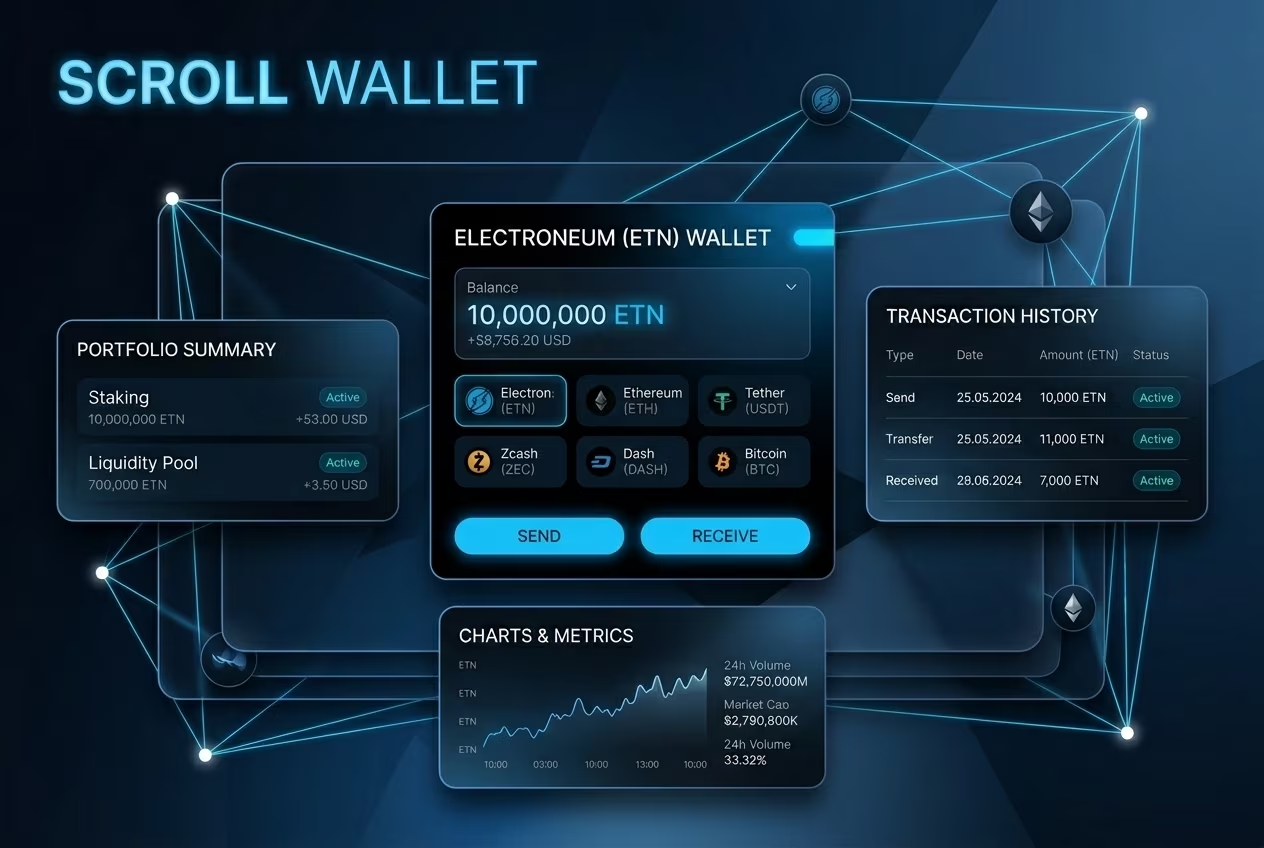
A reliable wallet for Electroneum must now support EVM compatibility to handle the Aurelius protocol shift and ensure 5-second transaction finality. As niche apps struggle with sync bugs and zero-balance glitches, users require sophisticated multi-chain interfaces. We provide the infrastructure to manage your ETN alongside decentralized applications while maintaining strict self-custody and regulatory transparency for 2025 standards.
The Project Aurelius upgrade in March 2024 completely broke the old ETN storage logic - the network ceased to be an isolated chain and became a full-fledged EVM-compatible Layer 1 blockchain. Before this migration, users were in a closed ecosystem: specialized ETN wallets, no compatibility with Ethereum tools, no bridges to the outside. After Aurelius everything changed. Your ETN wallet now runs on the same technical base as any ERC-20 compatible wallet. This means that choosing a wallet for ETN is no longer a niche decision. These are infrastructure choices with real consequences.
How to analyze in detail Planet ETN, the Electroneum 2.0 upgrade brought transaction finality in 5 seconds, commissions below $0.01 and the Istanbul Byzantine Fault Tolerance consensus mechanism with verified validators. Full Solidity support means one thing: the ETN network is now open to MetaMask, Hardhat and all standard Ethereum tooling. The old ETN mobile app is still here - it still works for payments in 140+ countries. But this is no longer the only or main interface for managing ETN on-chain. A desktop wallet in an EVM environment opens up smart contracts, DeFi integrations and cross-chain bridges that simply did not exist in the architecture before Aurelius.
Migration has also raised the bar of security - in both directions. EVM compatibility provides real advantages, but at the same time opens up the same attack vector that Ethereum users live with: phishing through malicious contract approvals, browser extension exploits, cross-chain bridge risks. We built the Scroll Wallet architecture specifically for these realities. Account abstraction, for example, allows you to automate approval limits and session permissions - one bad transaction will not empty your entire account. How this works in practice is discussed in our guide to account abstraction, including application to ERC-compliant assets like the post-Aurelius ETN.
The conclusion is simple and harsh: if you held ETN until March 2024, your storage strategy needs to be revised to the standards of the EVM era. An ETN wallet today must support custom RPC configuration, interaction with contracts, and - ideally - hardware signing or permission control through abstraction. 5-second finality and sub-cent fees make ETN one of the most efficient EVM networks to operate. But efficiency isn't worth anything if the wallet infrastructure doesn't protect what you're moving. Scroll Wallet was designed precisely for such conditions: fast chains, minimal commissions and self-storage solutions, where the cost of an error is close to zero.
Choosing between a legacy single-chain solution and a modern multi chain wallet requires understanding the trade-offs between specialized performance and ecosystem-wide utility. While niche ETN wallets offer deep optimization for one network, modern infrastructure like Scroll Wallet prioritizes cross-chain visibility and advanced security measures to manage 2026’s complex on-chain environments.
| Feature | Niche ETN Wallet | Modern Multichain Wallet |
|---|---|---|
| Asset Support | Single-chain only | Multiple chains & L2s |
| Security Model | Optimized for one chain | MPC / Multi-measure |
| Swaps & Bridging | None (External only) | Built-in cross-chain |
| Device Support | Limited / Desktop only | Multi-device & Hardware |
| Transaction UX | Fast but basic | Simulation & Visibility |
| Fee Structure | Lower (Native) | Variable / Higher |
Safely storing ETNs in 2025 comes down to one thing: either you hold the keys or you don't own the asset. No exceptions. No "buts". When do you use non-custodial wallet, no third party will be able to freeze your funds, limit withdrawals or reset your balance as a result of the collapse of the platform. A private key is a cryptographic proof of ownership. Without it, you will not sign any transaction. And without a signature, nothing moves on the network.
The second level of protection is a correctly saved seed phrase. Your 12 or 24 words are the master key to restore your wallet. Is your device lost, stolen or broken? Only the seed phrase will return access. Write it down on paper, store it in two physically different places, and never—you hear me, never—take a picture of it and upload it to the cloud. A digital copy of a seed phrase is already a compromised seed phrase. In Scroll Wallet, we have built mandatory verification of the phrase directly into onboarding: the user cannot receive funds until he confirms that he wrote it down correctly. One step that eliminates the main cause of deadweight loss.
Recovery is no less important than the initial setup. In a multi-chain environment and L2 fragmentation, your ETNs can exist in different network states. Scroll Wallet uses deterministic key derivation: one seed restores access to all accounts on all supported networks - no separate backups for each chain. Less complexity, same level of security. And one more point that many people miss: if the wallet interface goes offline, full control over private keys will allow you to import them into any compatible wallet and maintain access to funds - regardless of the provider.
A practical checklist for secure ETN storage is three items that are not discussed: direct control of private keys through a non-custodial wallet, offline storage of the seed phrase in multiple locations, and testing the recovery process before it is needed. Phishing, fake apps, social engineering - this is what leads to the loss of ETN in 2025. Not protocol bugs. The infrastructure can be flawless, but the risk still lives at the user level. Scroll Wallet reduces this attack surface through a clear UX, verified app distribution, and transparent architecture—but the final responsibility for key management remains with you. Always.
Understanding the cost efficiency of your ETN transactions is essential for maintaining a high-performance portfolio. While centralized exchanges often apply flat withdrawal surcharges to cover their operational overhead, the Electroneum network itself operates on a gas-based model that rewards direct on-chain interaction. By moving your assets to a self-custody solution like Scroll Wallet, you bypass exchange-imposed friction and pay only the actual network cost, which remains negligible even during periods of moderate activity.
| Transaction Type | Estimated Fee (ETN) | Speed / Finality | Cost Logic |
|---|---|---|---|
| On-Chain Transfer (Standard) | ~0.000252 ETN | 5 Seconds | 21,000 gas × (10+2) gwei |
| Exchange Withdrawal | Variable (High) | Manual Approval | Platform-specific markup |
| Network Base Fee | Dynamic | Instant | Burns ETN to manage supply |
As of 2026, US regulatory requirements have transformed transaction history from a convenient option to a mandatory element of responsible wallet use. IRS Revenue Procedure 2024-28 fixed cost base tracking at the individual wallet level — and now every address you manage must have a complete record of receipts, expenses, and balances. Do you hold ETN in multiple addresses or networks? Gaps in logs are not just an inconvenience. This is a direct tax liability. Scroll Wallet is built for this reality: address-level records and a clear audit trail by default.
As confirmed CoinTracking, IRS Revenue Procedure 2024-28 establishes a third-party tracking approach as the standard for American taxpayers. This means one thing: your wallet is required to release detailed, address-specific data upon first request. ETN portfolio tracking is no longer a convenience—it's a compliance feature. Scroll Wallet displays real-time balances for each address and captures each transaction at the protocol level, so reporting records are already structured exactly as regulators expect.
The main practical problem for ETN users is fragmentation. Moving assets between L2 networks, bridges, or multiple self-storage addresses? Manually rebuilding a coherent transaction history is a waste of time with guaranteed errors. Scroll Wallet puts this picture together without any raw data export from different explorers. A complete picture of ETN portfolio tracking — by addresses, networks, timeframes — in one interface. This is not a reporting tool bolted on the side. This is an architectural solution laid from the very beginning.
Understanding that crypto wallet compliance requires in practice, helps to choose the infrastructure consciously. Real-time balances, full transaction history, granularity down to the address level are not premium features. This is the minimum threshold for responsible work in the American market in 2026. Scroll Wallet provides this as standard. Because the cost of missing records is measured in fines — not just inconvenience.
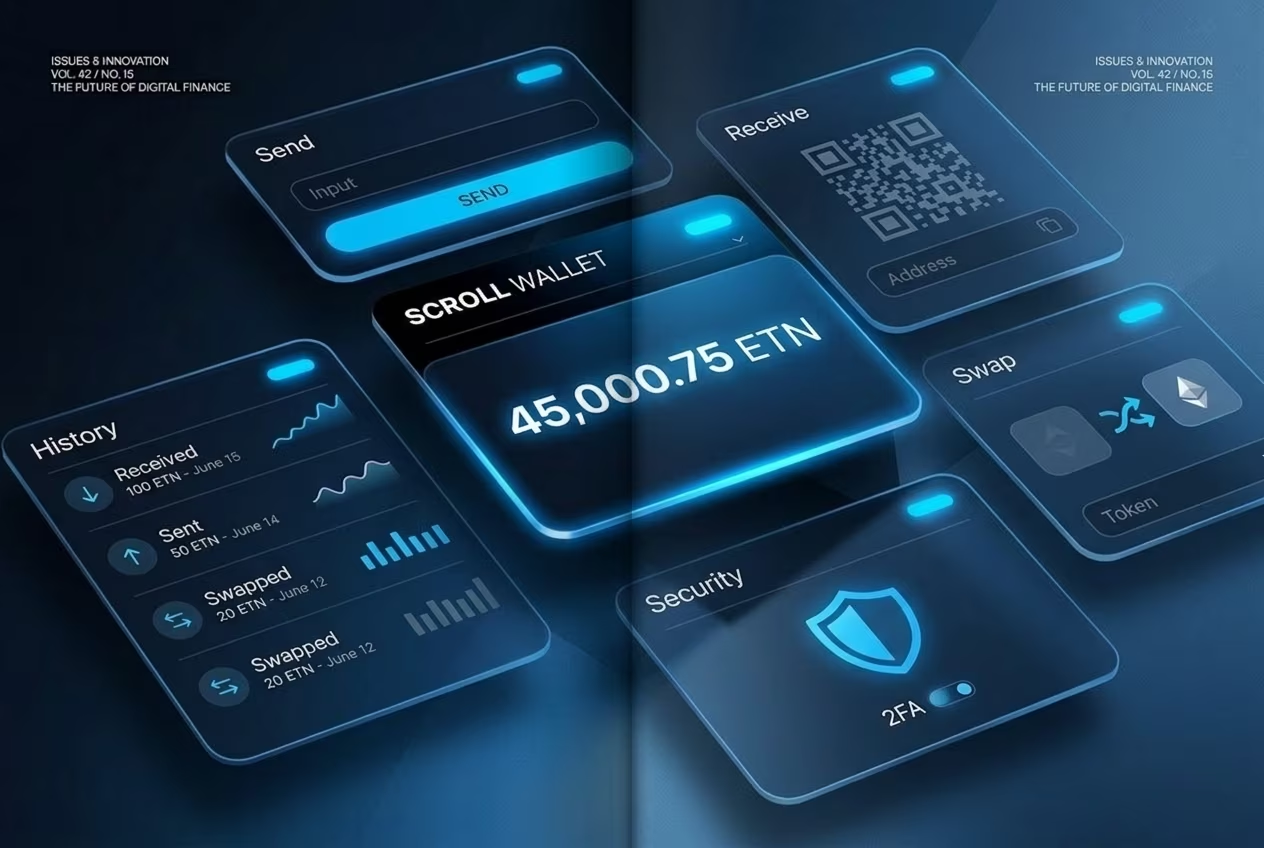
Old Electroneum wallets are a time bomb: they block access to funds, slow down transactions, and leave you without a working recovery when you need it most. We're not talking about exotic failures. These are documented patterns that hit everyone who clings to outdated builds without updates. Working with ETN through the old interface? You are using an infrastructure that no one designed for the current state of the network.
Zero balance is the most disorienting glitch. The wallet shows 0 ETN, although the blockchain confirms the opposite. The reason is simple and unpleasant: the local client cannot synchronize with the current state of the chain - due to outdated links to nodes and dead API endpoints, which old assemblies continue to stubbornly knock on. Synchronization delays only aggravate the picture: some legacy wallets reflect confirmed transactions after hours, or even days. How do you make decisions about sending or receiving ETN if you don't know the actual balance? No way.
But the real structural threat is weak access restoration. Many older ETN wallets were created before BIP-39 became the norm. This means that your backup could be a proprietary key format, a spend key + view key pair, or a wallet file without a portable recovery path. The application will break, the device will die, the service will close - and access will disappear forever, even if you carefully saved what you thought was the seed phrase. Mobile crypto wallet modern standards remove this ambiguity: compatible seed formats work in any client that supports the protocol.
At Scroll Wallet, we treat these failure scenarios as design requirements—not as items in a “known issues” section. A reliable crypto wallet must correctly handle synchronization failures, display accurate balances even under network load, and provide recovery that does not depend on whether a particular vendor is alive. If your current ETN wallet does not cover these three conditions, the risk is not theoretical. It's structural. The transition to infrastructure created for the realities of 2026 is not reinsurance. This is common sense.
In 2026, it’s clear: single-asset wallets tailored for one coin are no longer a tool, but a burden for anyone who works in several networks. Scroll Wallet reflects this shift right at the architectural level. ETN users, like most active on-chain participants, today routinely interact with bridges, L2 environments and cross-chain protocols. A single-coin wallet creates friction at every step - forcing you to switch between instruments, double-check addresses, and take unnecessary risks at every transition point.
According to IQ.wiki, Electroneum's technical transition has made modern wallet tools significantly more viable for its users - and this directly confirms that ETN holders are no longer receiving adequate service from legacy single-tasking applications. Context is everything when assessing what a reliable wallet should actually provide. Scroll Wallet is built as a cross-platform wallet that integrates asset management, transaction signing, and network switching into a single interface. Fewer points of attack. Less operational chaos from juggling multiple applications.
Experts have time and again identified three points of failure in mono-coin wallets: outdated security models, lack of support for multi-chain flow, and weak UX, which itself provokes user errors. All three are structural problems. Not bugs that are covered with a patch. When you lean on multichain wallet, designed taking into account these points of failure, you get a fundamentally different risk profile. Scroll Wallet covers each of them - through a verifiable infrastructure, transparent transaction logic, and an interface designed to reduce the likelihood of costly mistakes, not just to look pretty.
Avoiding niche wallets is not a matter of taste. This is a response to the real complexity of the on-chain environment in 2026. If your wallet can't follow you across networks, it becomes a vulnerability, not a tool. Scroll Wallet is designed to move with you: supports the networks you need, provides the information you need at the moment of decision-making, and keeps your self-custody workflow coherent—without requiring you to have expertise in every protocol you touch.
To store Electroneum safely in 2026, you must prioritize infrastructure that grants you full control over your private keys. We recommend using a non custodial wallet to eliminate third-party counterparty risk and ensure easy ETN access across different network layers. Follow these technical steps to secure your assets:
Scroll Wallet is not just a wallet for Scroll L2: it is a full-fledged ETN wallet infrastructure on zk-rollup rails, where fast finalization, penny fees and native compatibility with Ethereum work without any reconfiguration of your stack. Zypto and similar ETN-oriented solutions cover their niche honestly - mobile mining, crypto cards, withdrawal through MoneyGram. But Scroll Wallet was built for a different purpose: verifiable transaction execution, composable smart contracts, and a security model rooted in the Ethereum base layer. Working with ERC-compliant assets and need more than just transferring tokens? Then the difference in architecture is not a detail. This is all.
Safety. This is where the Scroll Wallet philosophy comes into full play. By 2026, the attack surface for self-custody wallets has grown so much that phishing, wallet drainer scripts and bridge exploits are no longer exotic, but the working routine of attackers. Scroll Wallet responds to this by abstracting accounts: you set the transaction rules yourself, set spending limits and remove the single point of failure in the form of a lost private key. How exactly this works at the contract level is discussed in our account abstraction guide, with a focus on mechanics critical for ERC token holders in Layer 2.
How does it fix Nightly, the Scroll ecosystem supports simulated transactions, internal swaps, and compatibility with hardware wallets—something that niche single-chain solutions typically don't even consider as a priority. Transaction simulation is a separate matter. You see the exact result before the signature. An entire class of user errors and attacks via malicious contracts simply disappears. This is not cosmetics in the interface. This is an infrastructure solution that directly determines whether your assets will remain under your control.
A fair compromise looks like this. If your main scenario is Electroneum-native functionality: mining rewards, ETN payments to merchants, cash-out via MoneyGram - a specialized ETN wallet remains a more direct tool. No questions asked. Scroll Wallet wins where you need a multi-level programmable environment with Ethereum-level security guarantees, compression of commissions through zk-rollup and an interface tailored for complex on-chain interactions, and not for transfers of a single asset. The choice is determined by the actual workflow. Not the length of the feature list.
An ETN wallet is not a matter of convenience, it is a matter of whether you will keep your assets at all. As the Electroneum ecosystem continues to grow, wallet choice is evolving from a consumer solution to a fundamental infrastructure one. A wallet with full control over private keys, clear display of ETN balances, and minimal friction at every step is not a premium option. This is the minimum standard for those dealing with crypto assets in 2026.
Effectively managing an ETN requires more than just storing the seed phrase in a safe place. You need a wallet that shows the right information at the right time: transaction history, network status, fee estimates, confirmation status. Scroll Wallet is built precisely according to this logic. Every interface solution is tested with one question: does it reduce the likelihood of user error, which costs him money? If yes, the feature comes out. If it adds complexity without reducing risk, no.
Self-custody remains the only truly reliable model for ETN holders. No third party holds your keys. No amount of platform freezing will block access. No exchange bankruptcy will reset the balance. But self-custody only works if the wallet itself supports it - with transparent recovery procedures, clear signature requests and no hidden dependencies on the centralized infrastructure. These are not additional features. This is architecture.
The criteria for choosing long-term storage for an ETN are simple: full ownership of the keys, readable transaction data, active development, and a team that treats security as a design constraint rather than a marketing thesis. Scroll Wallet was created specifically for these criteria. The goal is not to be the most feature rich product on the market. The goal is to be the most reliable for those who take their assets seriously.