What Does Cold Storage Mean? Protect Offline Keys 2026 | Scroll Wallet
TON wallet apps combine non-custodial control with staking, swaps, QR transfers, and dApp access. In 2024, TON usage accelerated sharply, increasing both practical utility and wallet-security pressure for everyday users.
2024 showed rapid TON expansion: 36.2 million new wallets, 12.4 million monthly active wallets, and 880,000 daily active addresses. At this scale, users need wallet infrastructure that reduces manual risk in a multi-chain environment.
Data published by TON.org supports the growth trend and explains why secure UX and clear signing controls became critical in 2026 operations.
Scroll Wallet positions this with transaction previews, risk signaling, and user-side key ownership. Self-custody still requires recovery discipline, but structured safeguards reduce avoidable signing errors.
The main TON wallets available in 2026 all support essential functions: sending, receiving, and dApp connectivity. Differences appear in staking workflow, NFT support depth, and integration quality.
| Wallet | Send & Receive | Staking | dApp Integration | NFT & Jetton Support |
|---|---|---|---|---|
| Tonkeeper | Yes | Built-in | Comprehensive | Full support |
| MyTonWallet | Yes | Built-in | Comprehensive | Full support |
| Tonhub | Yes | Via interface | Supported | Supported |
| TON Wallet (Official) | Yes | Supported | Supported | Supported |
Data source: TON.org wallet directory and feature overview.
All listed wallets are non-custodial, so private-key control remains with the user. The trade-off is full responsibility for backups and recovery phrase hygiene.
TON wallets combine fast transfers, staking access, and dApp connectivity inside non-custodial flow. Users can send to raw addresses or username-mapped formats, scan QR addresses, and operate at low network fee levels.
Staking operations are available directly in major wallet interfaces. For broader staking context, see crypto staking rewards mechanics and validator-risk trade-offs.
For active usage in DeFi, NFT, and game applications, permission hygiene remains critical. Strong baseline controls include biometrics, transaction preview, and conservative approval scope.
Importing a legacy TON wallet into Scroll Wallet requires precise steps to maintain custody safety:
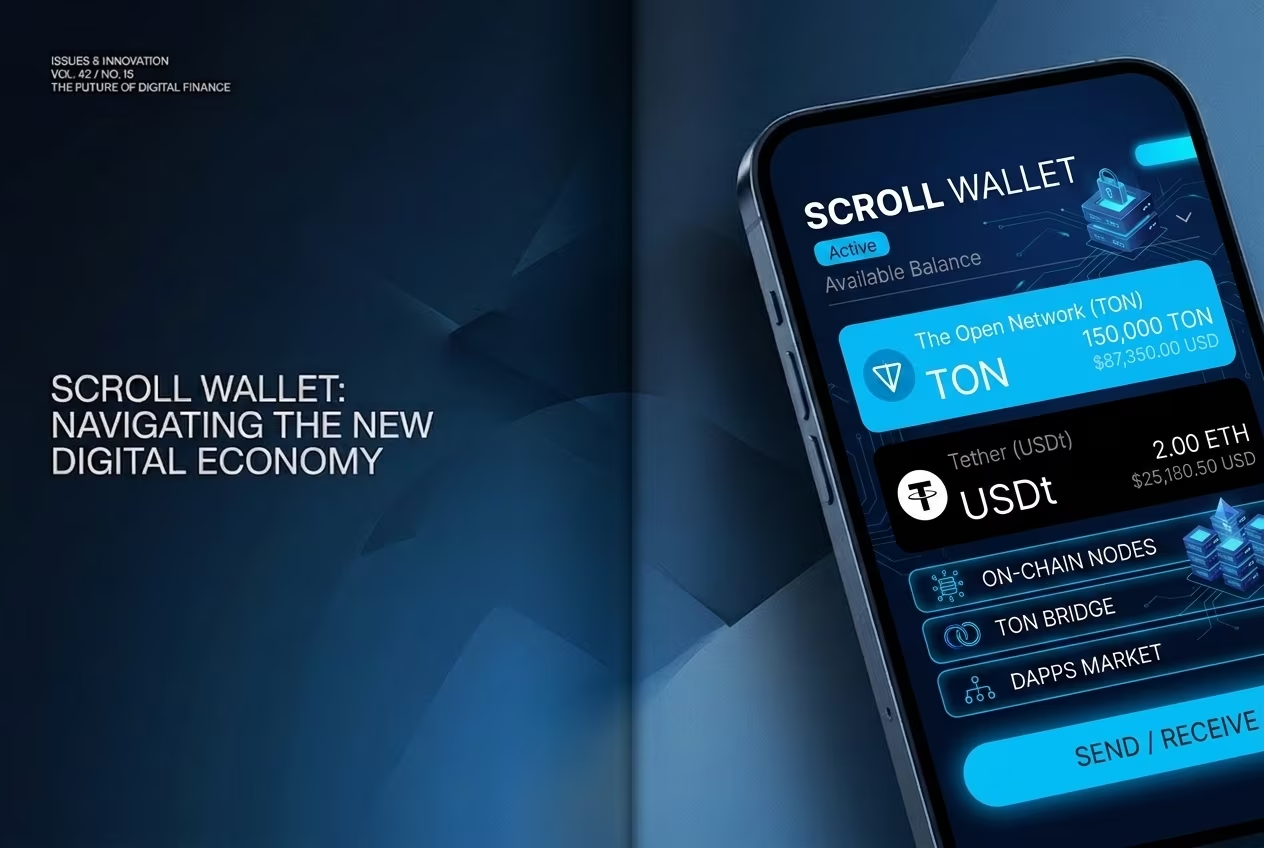
TON wallet usage sits between convenience and high phishing exposure, especially in Telegram-linked scam funnels. Fraud patterns include fake airdrops, malicious bots, and zero-value bait messages that lead to wallet drain attempts.
Recent reporting from DailyCoin and broader Telegram scam analysis from Plisio describe persistent attack growth targeting TON users.
Risk controls remain practical: verify all links, avoid urgent-pressure prompts, keep recovery phrases offline, and enable layered authentication. For additional hardening, use wallet passphrase protection alongside test-size bridge transfers.
Compliance context: the TON wallet rollout in Telegram and fiat-ramp KYC boundaries are summarized by OKX Learn. Peer-to-peer self-custody flow differs from custodial fiat gateways; for related U.S. framing see FinCEN-linked custody context.
TON network fees for simple transfers are typically under $0.01, while fiat ramp services add percentage-based processing fees.
| Transaction Type | Typical Fee |
|---|---|
| Simple TON Transfer | 0.003-0.0055 TON (<$0.01) |
| Jetton Transfer | ~0.037 TON (~$0.05) |
| NFT Minting | ~0.08 TON |
| Fiat On-Ramp | 1-2% + small fixed fee |
Source data: TON documentation fee model.
Scroll Wallet is positioned around multi-chain execution and EVM-compatible flow, while TON-native wallets remain primarily ecosystem-scoped. In practice, this means users can route across Ethereum and supported L2 paths without fragmenting operational controls across separate interfaces.
Scroll architecture references include zk-rollup design and fee behavior on Scroll, with transfer flow examples in secure transfer guide.
For active users, the trade-off is between ecosystem depth and cross-chain flexibility. A practical onboarding path is to start with low-value transfers, verify destination contracts, and use hardware-backed approvals for larger balances.
TON wallet apps provide strong non-custodial utility, but users need structured safeguards as phishing pressure and chain fragmentation increase.
Scroll Wallet is presented as a broader multi-chain operating layer with transaction simulation, security monitoring, and low-friction routing across supported paths.
Recommended baseline:
For implementation depth, compare with multi-chain security operating patterns.