Stronghold Crypto Wallet: Best Secure Storage Guide | Scroll Wallet
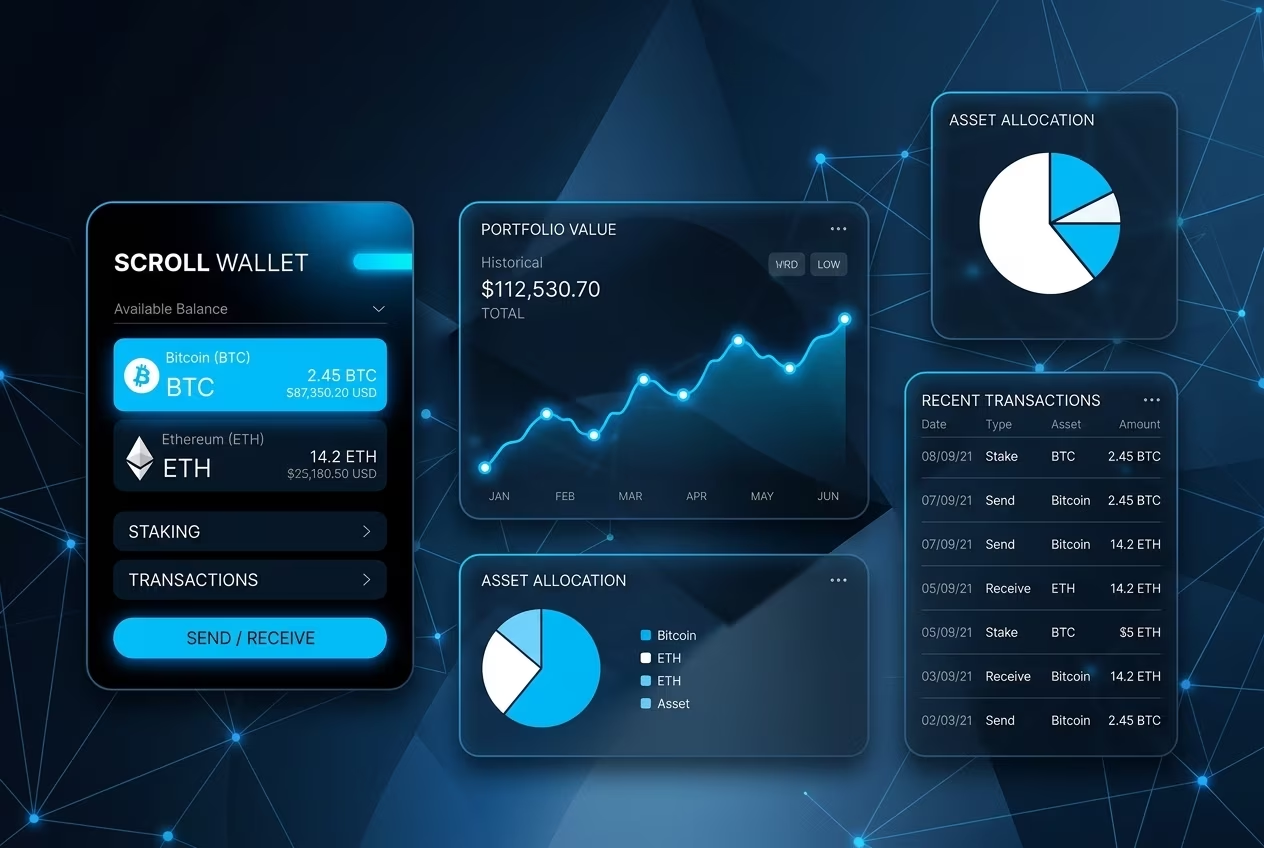
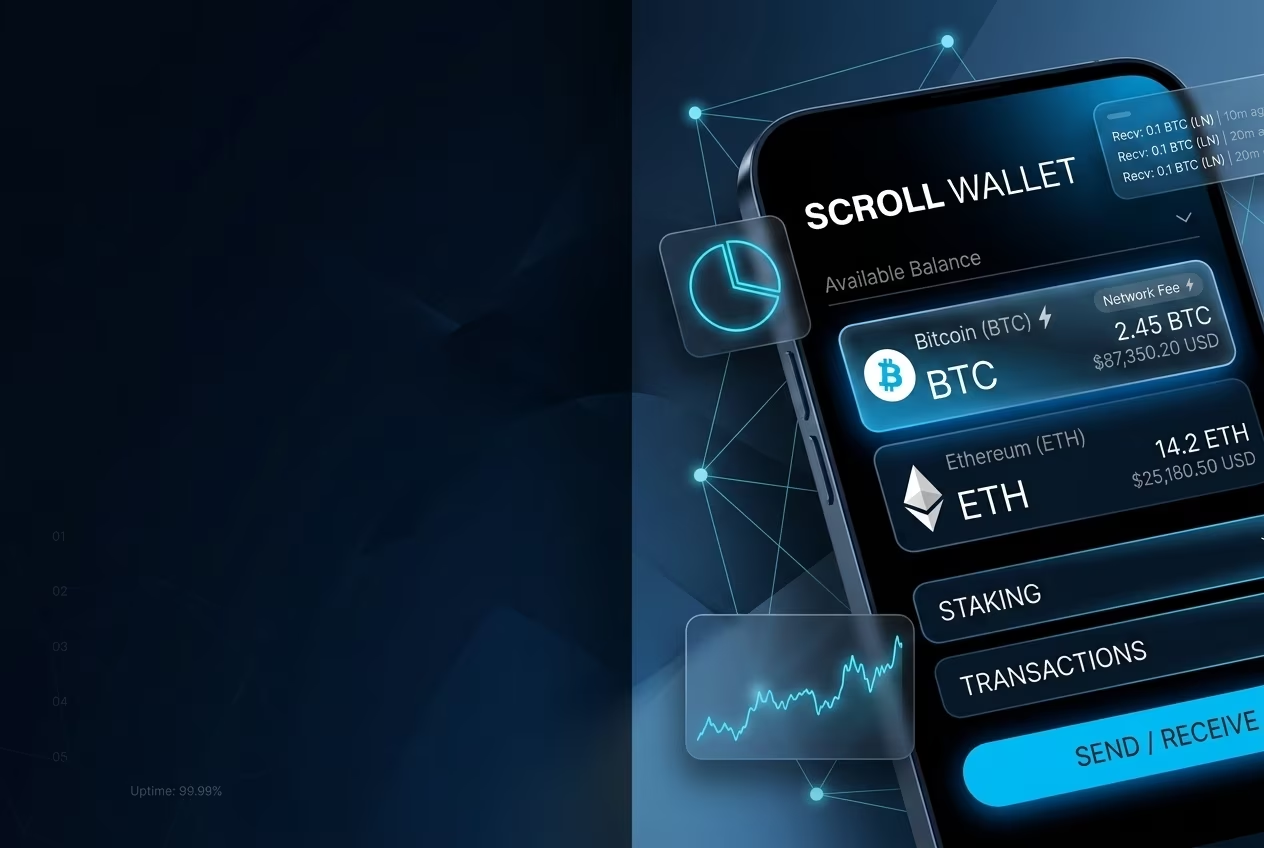
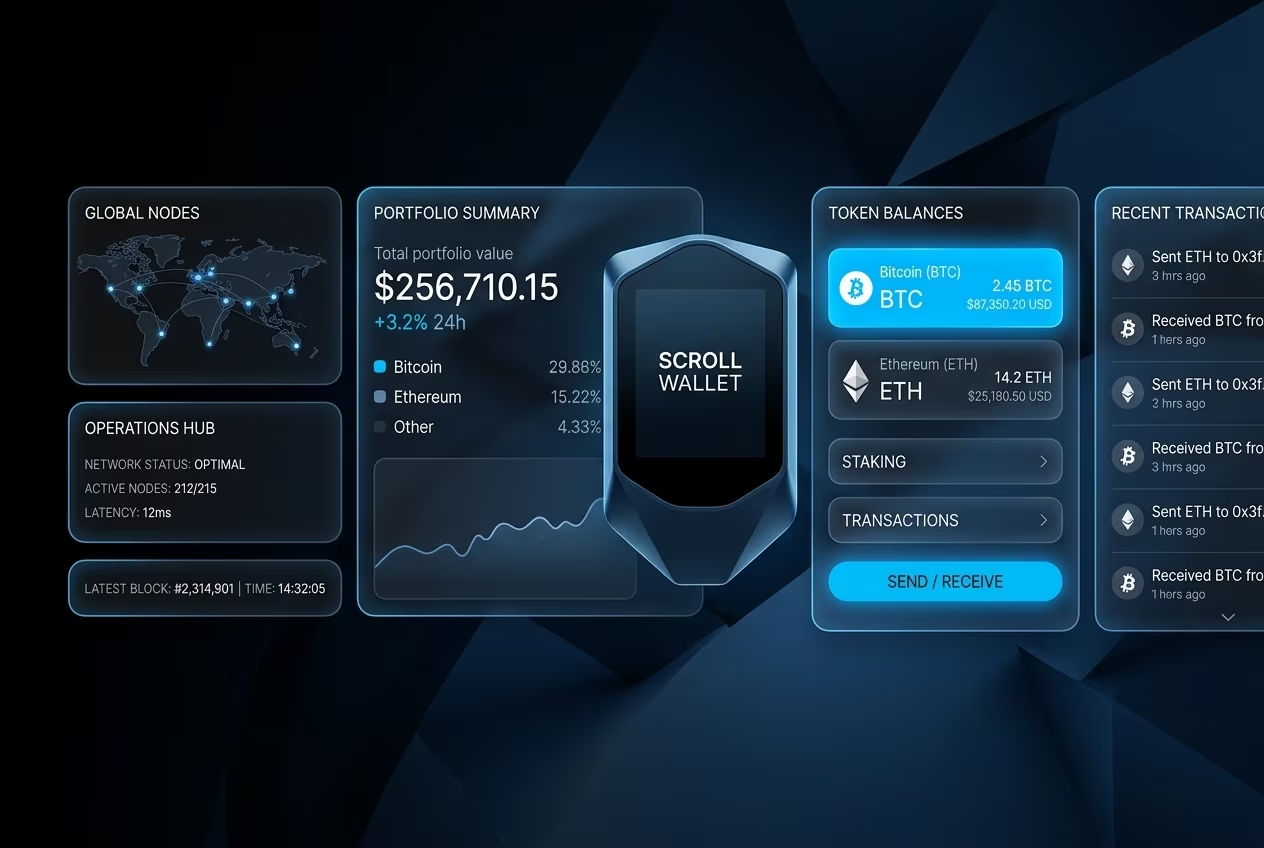
Users seeking a genesis crypto wallet solution are typically looking to recover frozen assets or migrate from failed centralized lending platforms to secure self-custody. Following the high-profile collapse of Genesis Global Capital, the industry has shifted toward non-custodial tools like Scroll Wallet to eliminate counterparty risks. We provide the infrastructure necessary for you to maintain absolute control over your private keys and digital wealth.
The collapse of Genesis Global Capital in January 2023 turned an abstract discussion about the risks of holding assets into an immediate, tangible disaster for more than 100,000 creditors. When Genesis froze withdrawals - after cascading losses of $2.36 billion from the default of Three Arrows Capital and additional losses due to the collapse of FTX - users suddenly realized: storing assets on a yield platform meant not holding crypto, but only demanding its return. About 29,000 New Yorkers participating in Gemini Earn were among those locked out—more than $1.1 billion became unavailable overnight. The question of access to the wallet ceased to be theoretical exactly at the moment when these accounts went dark.
The regulators only confirmed what the market has already demonstrated to be stricter than any regulations. US Securities and Exchange Commission brought charges against Genesis and its parent company Digital Currency Group for misleading investors about the real risks of custodial yield products - risks that ordinary market participants had no way to evaluate or hedge. This enforcement precedent exposed a structural problem: the platform risk that users assumed when placing funds in yield accounts was not disclosed with a degree of accuracy that would allow informed decisions. The architecture of such products placed the user's funds inside a chain of counterparties - and not in a wallet that the user managed himself.
These events accelerated a measurable behavioral shift among American crypto users toward self-custody solutions. The logic is straightforward to the point of cruelty: no private keys - no asset. There is only someone's promise. The rise of non-custodial wallets, recorded after the Genesis freeze, does not reflect a change in preferences - it is a structural reaction to the clearly demonstrated failure of the counterparty. Users have recalculated their risk model and gone to a place where access to funds is determined by cryptographic ownership, and not by the solvency of the platform.
At Scroll Wallet, we think of this story as a design constraint—not a marketing thesis. The Genesis situation showed what happens when the risk of holding assets is hidden behind the user interface: the product feels like a savings account, but under the hood there is a lending table with opaque positions. Our position is clear: the wallet infrastructure should make storage mechanics visible and verifiable, and not hide it behind interest rates. You need to know exactly where your assets are, what controls you have, and under what conditions access may be restricted—and know this before you need the information in a crisis.
Understanding the architecture of your assets is critical for security in 2026. While custodial platforms like Genesis offer familiar account recovery, they introduce a 15% annual risk of account lockout and subject your funds to third-party withdrawal limits. In contrast, using a non custodial wallet ensures you maintain absolute ownership through direct blockchain interaction, a preference shared by 59% of users today.
| Feature | Custodial (Genesis-style) | Non-Custodial (Scroll Wallet) |
|---|---|---|
| Private Key Control | Third-party managed | User-controlled (Seed phrase) |
| Withdrawals | Subject to limits/freezes | Direct blockchain access |
| Recovery Options | Email / Support desk | Seed phrase only (No support) |
| Legal Exposure | High (KYC/AML/Seizure) | Minimal (Censorship-resistant) |
| Lockout Risk | 15% Annually | 0% (User error only) |
Genesis wallet login problems almost always come down to one thing: the platform holds your keys - and it is she who decides whether to let you into the money or not. This is not a bug or a server failure. This is architecture. If an intermediary controls your private keys, then your “wallet access” is not access to cryptocurrency, but access to someone else’s database where your balance is recorded. Feel the difference. The login has fallen - and you are no longer the owner, you are a creditor of the platform, which may no longer be solvent.
Custodial platforms give you a login and password for their system. Not from your assets - from their interface. Cryptocurrency lives in their infrastructure, on their servers, under their jurisdiction. When Genesis-like platforms freeze withdrawals or go offline, users are surprised to discover that there was no wallet. No private key for export, no seed phrase for recovery, no single on-chain transaction that you can initiate yourself. Nothing. The only reliable way to break this dependence is to hold assets in self-custody crypto wallet, where you have the keys, and the status of the platform does not concern you.
Scroll Wallet is built precisely on this principle. We don't hold your keys. Dot. When creating a wallet through Scroll, the private key is generated directly on your device and never leaves it - in any form, on any servers. Access to your funds is not affected by our uptime, our compliance decisions, or legal action against us anywhere in the world. Do you want to transfer funds? You initiate a transaction directly on the blockchain. Without our approval, without a queue for withdrawal, without a platform barrier. The dependency is eliminated at the architectural level - this is not a tick in the settings, it is the foundation.
The conclusion is simple and unpleasant at the same time: genesis wallet login errors are a symptom of a storage model that did not initially assume user sovereignty. If you currently hold assets on a custodial platform and cannot access them, the first question is one: do you have a seed phrase or private key? If not, you do not have access to the crypt, you have a requirement for the platform. Switching to a non-custodial wallet like Scroll Wallet does not eliminate all risks. But it completely removes one specific one: that some company will one day decide whether you can manage your own money today.
The SEC went after Genesis for custodial yield products — not your self-custody wallet, not your open-source signing software. When the final settlement landed, documented by the U.S. Securities and Exchange Commission, the charge was simple: Genesis offered yield-bearing accounts to retail users without securities registration. That’s a structurally different animal from holding your own keys in a non-custodial wallet. And right now, in an enforcement climate that’s only getting louder, that distinction is the most actionable thing a U.S. user can internalize.
Platform risk in crypto is real. But it clusters around specific product types. Custodial yield accounts — where a company holds your assets and promises a return — have now drawn regulatory fire multiple times. Genesis controlled account access. The user didn’t. That single architectural fact created the entire regulatory surface. When you use a self-custody solution like Scroll Wallet, you hold your private keys directly. No intermediary sits on your funds. No yield promise gets made in your name. The legal structure regulators targeted? Gone entirely.
Crypto wallet transparency isn’t a marketing phrase — it’s a compliance-relevant design decision. Scroll Wallet was built so every transaction you sign is visible, verifiable, and initiated only by you. No pooling of user funds. No internal lending desk. No off-chain yield mechanism running in the background. That architecture means Scroll Wallet doesn’t fit the legal definition of an investment contract under the frameworks regulators applied to Genesis. For U.S. users navigating an increasingly aggressive enforcement environment, that gap matters more in 2026 than it ever did three years ago.
The practical rule is brutally simple: if a platform holds your assets and pays you a return, you’re carrying platform risk and regulatory risk at the same time. If you hold your own keys and interact directly with on-chain protocols, the risk profile shifts — and the regulatory exposure becomes yours to manage, not a company’s to absorb on your behalf. Scroll Wallet gives you the infrastructure to operate in that second category. Does it eliminate risk? No. But it removes the specific category of risk that pulled Genesis into enforcement proceedings in the first place. That’s not nothing. That’s everything.
When choosing between centralized platforms and self-custody, you must weigh immediate hardware costs against long-term recurring fees and systemic risks. While centralized exchanges (CEX) offer convenience, they often hide costs in spreads and withdrawal fees, alongside the ever-present risk of asset freezes. In contrast, moving to a self-custody model with Scroll Wallet allows you to leverage cold storage trends while benefiting from the significantly lower transaction costs of the Scroll L2 network.
| Storage Method | Setup & Hardware Cost | Transaction & Operational Fees | Primary Risk Factors |
|---|---|---|---|
| Centralized Exchange (CEX) | $0 (Initial) | 0.1%–0.75% per trade; withdrawal fees (0.0005–0.01 BTC) | Account freezes, platform insolvency, hacking of central hot wallets |
| Ethereum L1 Self-Custody | $149–$219 (Hardware) | $1–$10+ per transaction (Gas) | Seed phrase loss, high gas costs during congestion |
| Scroll L2 (Scroll Wallet) | $100–$250 (Total setup) | $0.001–$0.01 per transaction | Smart contract risk, user-side phishing attempts |
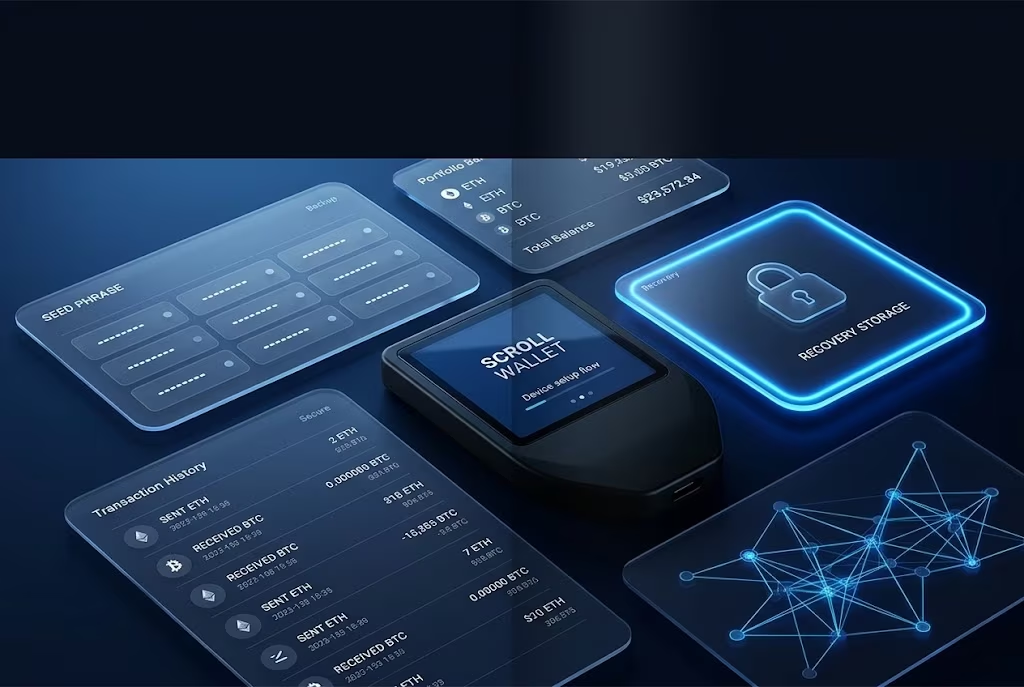
Transitioning to self-custody is the most effective way to eliminate counterparty risk and ensure your assets remain under your direct control. By moving away from centralized platforms, you shift from being a creditor to a true owner. Understanding the technical nuances of custodial vs non-custodial environments is the first step toward securing your financial independence in the 2026 on-chain economy.
Genesis wallet recovery and owning a seed phrase are two fundamentally different things, and confusing them means playing Russian roulette with your assets. Genesis wallet recovery is essentially a support service for the custodial service: identity verification, mail access, platform intervention. Seed phrase - 12 or 24 words - that's a different story. This is a cryptographic key that gives you control over funds personally, without intermediaries, without platforms, without anyone’s permission.
When you work with non-custodial wallet like Scroll Wallet, access restoration is based solely on the seed phrase. No tickets. No identity verification. No platform will come to the rescue. Lost the seed phrase - lost the funds forever, without the right to appeal. This is not a feature of Scroll Wallet - it is an architectural principle of self-storage. The seed phrase is the wallet. Whoever holds it owns the assets.
Genesis wallet recovery is convenient - but behind this convenience there is a strict dependence: the platform must work, remain within the legal framework and be ready to help you. In 2026, as regulatory pressure hits records, platforms shut down, and custodial infrastructure becomes a favorite target for exploits, this dependence is a measurable risk. Scroll Wallet was built on the opposite principle. The seed phrase is generated locally on your device. It is never transmitted to our servers. We don't store it. Zero exposure on our part and full responsibility on yours. This compromise is conscious and honest.
The difference between genesis wallet recovery and seed recovery is not just a technical detail. This is a practical solution that determines how you store the phrase, how you make backups, and how you prepare for the loss of your device. Write down the seed phrase on paper. Store in two physically different places. Never - hear me, never - enter it on sites or applications outside of a proven recovery process. In Scroll Wallet, this process is local and works offline - precisely in order to cut the attack surface that phishing and social engineering love so much.
Scroll Wallet is a direct blow to the custodial model: your private keys live only with you, and no third party cares about them. In 2026, the choice between custodial and non-custodial infrastructure is no longer a matter of technical preference. It's a matter of asset survival. A custodial service means that your funds exist according to someone else’s access rules. The rules may change. The service may be hacked. Or just freeze it. WITH self-custody crypto wallet like Scroll Wallet, the private key never leaves the device. No server leak will get to your money. This is not marketing. This is an architectural solution laid out from day one.
Scroll Wallet's security is built around real threats - not abstract ones, but those that are already working against users right now. Phishing attacks that hunt for seed phrases. Wallet drainers embedded in malware dApps. Bridging exploits in fragmented L2 environments. Against all this are local key storage, simulated transactions before signing, and clear permission requests: you see exactly what the contract asks of you before you click “confirm.” No blind faith in the interface. Only verifiable information at every step. This is what kills the main vector of most exploits - user confusion and opaque approval flows.
Scroll Wallet works as an alternative to both purely hardware solutions and browser extensions tightly tied to one network. Multichain and L2 environments are supported natively. Scroll Network's own L2 infrastructure provides low fees and fast finalization within the ecosystem, and cross-chain compatibility does not lock you into one environment. For those who manage assets in several protocols at once - DeFi positions, NFTs, bridge transactions - this is critical. Fewer manual steps. Fewer points of failure. Fewer errors.
The practical argument for Scroll Wallet comes down to three things: you hold your keys, you can see what you're signing, and you work across chains without changing tools. We do not promise zero risk - self-custody means personal responsibility for the seed phrase, and no wallet cancels out the human factor. But we provide an architecture where the risk remains with you, and not with a centralized custodian who can be hacked, frozen or simply turned off. For those who want real control over their on-chain activity, this is the right compromise.
The 2024 regulatory blow to Genesis is not just a scandal for one company, it is a death knell for the entire US crypto custodial model, and it directly changes how platform risk crypto should be assessed right now. The New York Attorney General forced a $2 billion settlement and placed strict restrictions on Genesis on custodial crypto lending after documented harm to users and outright fraud. As confirmed New York State Attorney General's Office, the agreement sets new standards for user protection and fundamentally limits how platforms can store and use customer assets. This is not a temporary compliance setting. This is a structural shift in what custodial models are legally allowed to do at all.
The SEC's parallel $100 million fine against Genesis in 2024, plus enforcement actions against the Gemini Earn program, all indicate one thing: regulatory pressure on custodial architectures will only increase by 2026. Unregistered lending is actually prohibited. Segregation and isolation of assets is now a requirement, not a recommendation. For any platform operating according to the genesis digital asset wallet model with pooling or lending of user funds, the compliance burden has become existential. These are not hypothetical risks. These are the documented consequences of operating a custodial infrastructure without full regulatory compliance. If your assets are located inside a custodial platform, they are subject to its legal risks, and not just its technical security.
It is this regulatory reality that underlies what we have built at Scroll Wallet: growth non custodial wallet - not a fashion trend and not a matter of preference. This is a direct response to verifiable platform risks. When a custodial provider receives a lawsuit, a settlement, or a freezing order, users' funds are automatically dragged into litigation, regardless of the user's behavior. Crypto wallet independence means one thing: your assets are controlled by your private keys, not by the platform's balance or its regulatory status. Scroll Wallet is built on this principle. We don't hold your keys. We do not lend to your assets. We do not expose your funds to other people's compliance failures.
The practical conclusion for 2026 is simple and harsh. Custodial models that survived previous regulatory cycles now operate under judicial restrictions, mandatory audits and asset isolation requirements. The price of this compliance is passed on to users: reduced profitability, withdrawal limits, operational uncertainty. Non-custodial architecture removes this dependency completely. With Scroll Wallet, your on-chain position is yours: verifiable, portable and not tied to anyone's global agreement. The Genesis case is not a warning about one company. This is a clear signal of the structural limits of any model where a third party holds your assets.
If you are looking for access to Genesis Wallet, you do not need a brand, but real control over assets, reliable recovery and a wallet that will not die along with someone else’s server. Genesis is no longer in business. Users who relied on it received frozen funds, inaccessible accounts and a complete lack of return. This is not the tragedy of one product - it is a logical result of any system where your ownership of assets is tied to someone else’s infrastructure, and not to your private keys.
Crypto wallet security in 2026 is a different game. Multi-chain environments, L2 fragmentation, and cross-chain bridges have expanded the attack surface to the limit. Phishing campaigns now target seed phrases directly. Exploits are increasingly targeting browser extensions and mobile applications with leaky key storage. Protecting assets in these circumstances requires one thing: an architecture where the private key never physically leaves your device, where backing up the seed is your responsibility and yours alone, and where the code is verifiable and actively maintained.
Scroll Wallet is built precisely according to this logic. We do not store your keys. We do not control your seed phrase. We don't need a centralized account for you to access your money. Every product solution starts with one question: what would happen if our servers went down tomorrow? Your wallet should continue to work. Your assets should remain yours. This is not marketing - this is an architectural requirement from which we do not deviate.
Whether you're leaving a platform that has gone out of business or choosing a wallet for the first time, the criteria are simple: self-custody by default, open and verifiable code, multi-chain with no forced bridges, and a recovery model you control from start to finish. Scroll Wallet meets these requirements. But don't take our word for it - check the code, test the recovery process, and make a decision based on what you can confirm for yourself.